

89
4.4 Resistance in Fungi
Fungal pathogens cause many life-threatening diseases (e.g., fungaemia, meningitis, pneumonia) and severe chronic conditions (e.g., chronic pulmonary aspergillosis, allergic bronchopulmonary aspergillosis, and chronic obstructive pulmonary
disease). Fungal infections are normally associated with underlying health conditions (e.g. immunosuppression) and the favourable outcome is linked with early
diagnosis and effective antifungal therapy (Brown et al. 2012). Antifungal drug
resistance occurs with all drug classes and the gain of resistance to one class or more
complicates, since antifungal options are limited (e.g. azoles, echinocandins, polyenes, and flucytosine) (Odds et al. 2003; Perlin et al. 2017). The use of fungicides in
agriculture further increase the drug resistance and results in reservoirs for resistant
pathogens and can exclude most/all treatment options (Perlin et al. 2017).
Furthermore, the formation of biofilms is associated with resistance to most drug
classes (Ramage et al. 2012). To overcome the dissemination of resistance, antimicrobial stewardship programs, which are distinctive for each institution/health care
centre, and diagnostic driven approaches are essential and can reduce the overall
cost without decreasing health (Andes et al. 2009; Barnes et al. 2009; Perlin
et al. 2017).
The most troubling drug resistant pathogens are azole resistant Aspergillus species and of multi drug resistant Candida glabrata and C. auris. A few symptoms
caused by those and other fungi are often mistaken as bacteria driven infections (e.g.
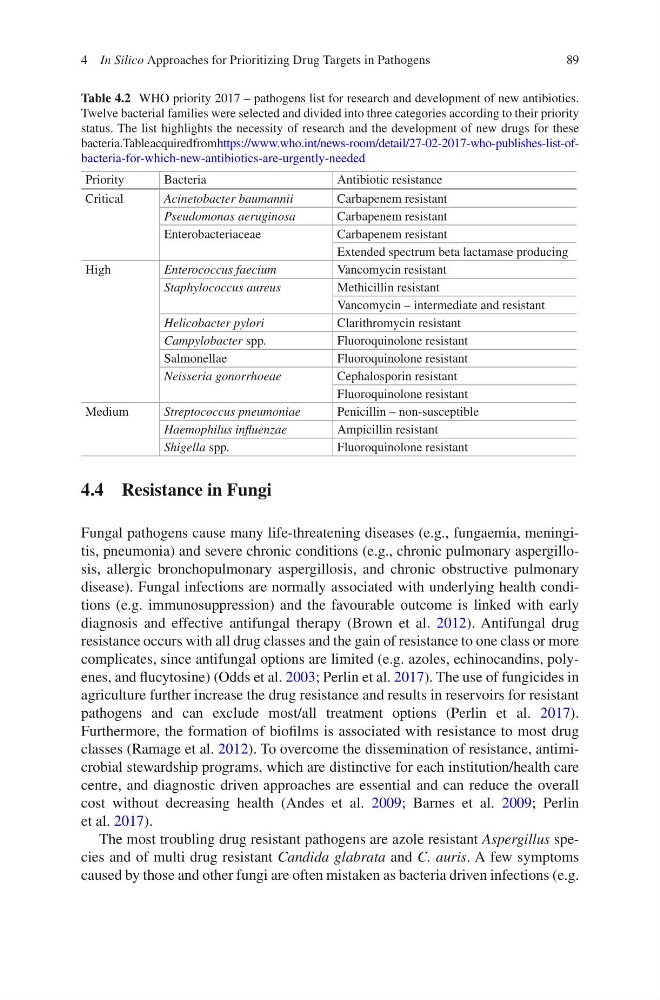
Table 4.2 WHO priority 2017 – pathogens list for research and development of new antibiotics.
Twelve bacterial families were selected and divided into three categories according to their priority
status. The list highlights the necessity of research and the development of new drugs for these
bacteria. Table acquired from https://www.who.int/news-room/detail/27-02-2017-who-publishes-list-ofbacteria-for-which-new-antibiotics-are-urgently-needed
Priority
Bacteria
Antibiotic resistance
Critical
Acinetobacter baumannii
Carbapenem resistant
Pseudomonas aeruginosa
Carbapenem resistant
Enterobacteriaceae
Carbapenem resistant
Extended spectrum beta lactamase producing
High
Enterococcus faecium
Vancomycin resistant
Staphylococcus aureus
Methicillin resistant
Vancomycin – intermediate and resistant
Helicobacter pylori
Clarithromycin resistant
Campylobacter spp.
Fluoroquinolone resistant
Salmonellae
Fluoroquinolone resistant
Neisseria gonorrhoeae
Cephalosporin resistant
Fluoroquinolone resistant
Medium
Streptococcus pneumoniae
Penicillin – non-susceptible
Haemophilus influenzae
Ampicillin resistant
Shigella spp.
Fluoroquinolone resistant
4 In Silico Approaches for Prioritizing Drug Targets in Pathogens
4.4 Resistance in Fungi
Fungal pathogens cause many life-threatening diseases (e.g., fungaemia, meningitis, pneumonia) and severe chronic conditions (e.g., chronic pulmonary aspergillosis, allergic bronchopulmonary aspergillosis, and chronic obstructive pulmonary
disease). Fungal infections are normally associated with underlying health conditions (e.g. immunosuppression) and the favourable outcome is linked with early
diagnosis and effective antifungal therapy (Brown et al. 2012). Antifungal drug
resistance occurs with all drug classes and the gain of resistance to one class or more
complicates, since antifungal options are limited (e.g. azoles, echinocandins, polyenes, and flucytosine) (Odds et al. 2003; Perlin et al. 2017). The use of fungicides in
agriculture further increase the drug resistance and results in reservoirs for resistant
pathogens and can exclude most/all treatment options (Perlin et al. 2017).
Furthermore, the formation of biofilms is associated with resistance to most drug
classes (Ramage et al. 2012). To overcome the dissemination of resistance, antimicrobial stewardship programs, which are distinctive for each institution/health care
centre, and diagnostic driven approaches are essential and can reduce the overall
cost without decreasing health (Andes et al. 2009; Barnes et al. 2009; Perlin
et al. 2017).
The most troubling drug resistant pathogens are azole resistant Aspergillus species and of multi drug resistant Candida glabrata and C. auris. A few symptoms
caused by those and other fungi are often mistaken as bacteria driven infections (e.g.
Table 4.2 WHO priority 2017 – pathogens list for research and development of new antibiotics.
Twelve bacterial families were selected and divided into three categories according to their priority
status. The list highlights the necessity of research and the development of new drugs for these
bacteria. Table acquired from https://www.who.int/news-room/detail/27-02-2017-who-publishes-list-ofbacteria-for-which-new-antibiotics-are-urgently-needed
Priority
Bacteria
Antibiotic resistance
Critical
Acinetobacter baumannii
Carbapenem resistant
Pseudomonas aeruginosa
Carbapenem resistant
Enterobacteriaceae
Carbapenem resistant
Extended spectrum beta lactamase producing
High
Enterococcus faecium
Vancomycin resistant
Staphylococcus aureus
Methicillin resistant
Vancomycin – intermediate and resistant
Helicobacter pylori
Clarithromycin resistant
Campylobacter spp.
Fluoroquinolone resistant
Salmonellae
Fluoroquinolone resistant
Neisseria gonorrhoeae
Cephalosporin resistant
Fluoroquinolone resistant
Medium
Streptococcus pneumoniae
Penicillin – non-susceptible
Haemophilus influenzae
Ampicillin resistant
Shigella spp.
Fluoroquinolone resistant
4 In Silico Approaches for Prioritizing Drug Targets in Pathogens