

learning has shown its superiority in image classification and image recognition
(Ciregan et al. 2012; Krizhevsky et al. 2012).
Figure 6.5 shows an example of the artificial neural network for the prediction of
crop type from the historical crop cover maps. As shown in the figure, the network is
organized in layers which are made up of a number of interconnected neurons. A
typical artificial neural network consists of input layer, hidden layers, and output
layer. The network shown in the figure has only one hidden layer, but many
complicated networks have multiple hidden layers. Each layer contains a series of
neurons. Studies have shown that the artificial neural network is an effective and
efficient approach for the prediction of crop mapping (Zhang et al. 2019a) and
refinement of historical crop cover maps (Zhang et al. 2020b).
When processing a digital image, each node stands for each pixel. For example, if
we process a 16*16 grayscale image, the network would have 16*16 input neurons.
Then, by training weights and biased in the network, the output could be generated.
For an agricultural digital image classification task, if we want to categorize the
image with 1 of 200 cover types, the output layer of the network would have
200 neurons. Each neuron stands for one of the cover types such as corn, soybeans,
wheat, and other crop types. If the neuron has an output near 1 (let’s say the value of
each neuron ranges from 0 to 1), the image would be categorized as the specific
crop type.
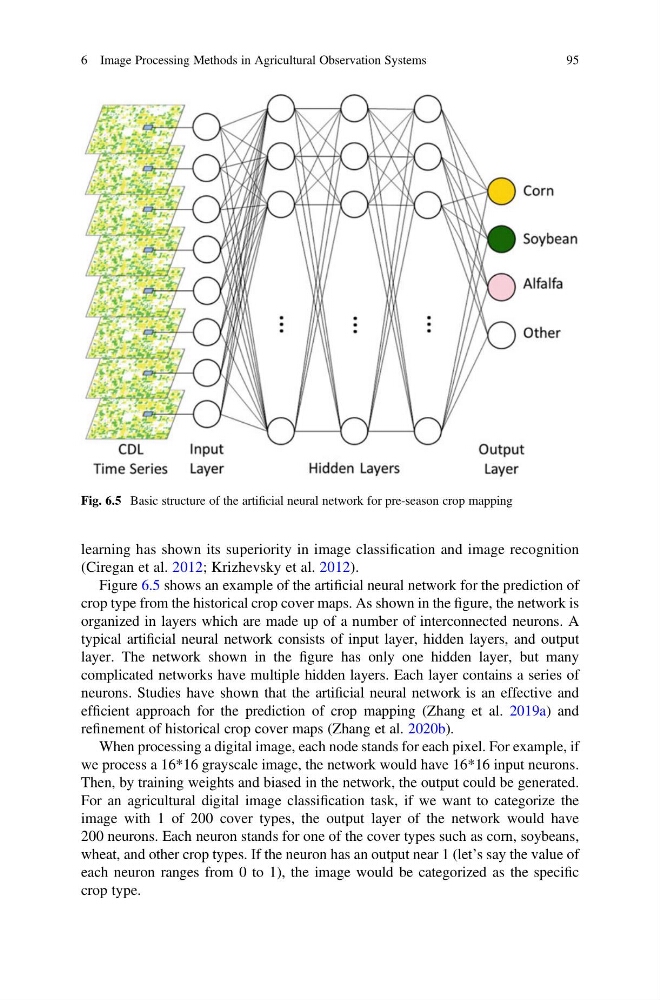
Fig. 6.5 Basic structure of the artificial neural network for pre-season crop mapping
6 Image Processing Methods in Agricultural Observation Systems
95
(Ciregan et al. 2012; Krizhevsky et al. 2012).
Figure 6.5 shows an example of the artificial neural network for the prediction of
crop type from the historical crop cover maps. As shown in the figure, the network is
organized in layers which are made up of a number of interconnected neurons. A
typical artificial neural network consists of input layer, hidden layers, and output
layer. The network shown in the figure has only one hidden layer, but many
complicated networks have multiple hidden layers. Each layer contains a series of
neurons. Studies have shown that the artificial neural network is an effective and
efficient approach for the prediction of crop mapping (Zhang et al. 2019a) and
refinement of historical crop cover maps (Zhang et al. 2020b).
When processing a digital image, each node stands for each pixel. For example, if
we process a 16*16 grayscale image, the network would have 16*16 input neurons.
Then, by training weights and biased in the network, the output could be generated.
For an agricultural digital image classification task, if we want to categorize the
image with 1 of 200 cover types, the output layer of the network would have
200 neurons. Each neuron stands for one of the cover types such as corn, soybeans,
wheat, and other crop types. If the neuron has an output near 1 (let’s say the value of
each neuron ranges from 0 to 1), the image would be categorized as the specific
crop type.
Fig. 6.5 Basic structure of the artificial neural network for pre-season crop mapping
6 Image Processing Methods in Agricultural Observation Systems
95