

52
Improvements must be targeted throughout every part of the value chain: better
harvesting and storage practices, better livestock care to reduce disease, improvements to the cold chain and the transportation infrastructure it relies on, reductions
in waste at the processing and retail levels, and changes in consumer behavior.
Reducing loss and waste on a wide scale depends on government investments in
public goods, such as infrastructure. An enabling policy environment that supports
private sector innovation in harvest and storage technologies and stimulates behavior change by consumers is also vital. In addition, there are opportunities to increase
the productive use of unconsumed food and agricultural byproducts (Box 2.7).
These are potential sources of bio-energy, animal feed, fertilizer, and new products.
Reducing loss and waste and creating more opportunities to use waste productively will help meet the growing global demand for agricultural products, generate
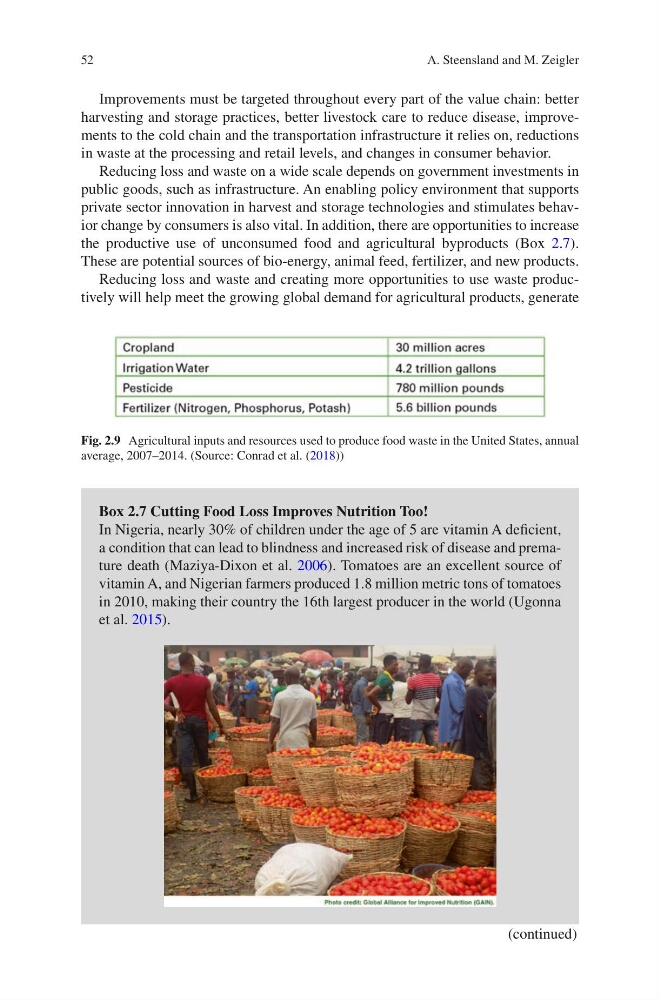
Fig. 2.9 Agricultural inputs and resources used to produce food waste in the United States, annual
average, 2007–2014. (Source: Conrad et al. (2018))
Box 2.7 Cutting Food Loss Improves Nutrition Too!
In Nigeria, nearly 30% of children under the age of 5 are vitamin A deficient,
a condition that can lead to blindness and increased risk of disease and premature death (Maziya-Dixon et al. 2006). Tomatoes are an excellent source of
vitamin A, and Nigerian farmers produced 1.8 million metric tons of tomatoes
in 2010, making their country the 16th largest producer in the world (Ugonna
et al. 2015).
(continued)
A. Steensland and M. Zeigler
Improvements must be targeted throughout every part of the value chain: better
harvesting and storage practices, better livestock care to reduce disease, improvements to the cold chain and the transportation infrastructure it relies on, reductions
in waste at the processing and retail levels, and changes in consumer behavior.
Reducing loss and waste on a wide scale depends on government investments in
public goods, such as infrastructure. An enabling policy environment that supports
private sector innovation in harvest and storage technologies and stimulates behavior change by consumers is also vital. In addition, there are opportunities to increase
the productive use of unconsumed food and agricultural byproducts (Box 2.7).
These are potential sources of bio-energy, animal feed, fertilizer, and new products.
Reducing loss and waste and creating more opportunities to use waste productively will help meet the growing global demand for agricultural products, generate
Fig. 2.9 Agricultural inputs and resources used to produce food waste in the United States, annual
average, 2007–2014. (Source: Conrad et al. (2018))
Box 2.7 Cutting Food Loss Improves Nutrition Too!
In Nigeria, nearly 30% of children under the age of 5 are vitamin A deficient,
a condition that can lead to blindness and increased risk of disease and premature death (Maziya-Dixon et al. 2006). Tomatoes are an excellent source of
vitamin A, and Nigerian farmers produced 1.8 million metric tons of tomatoes
in 2010, making their country the 16th largest producer in the world (Ugonna
et al. 2015).
(continued)
A. Steensland and M. Zeigler