

49
Food and agriculture systems are vulnerable to a variety of risks, including
extreme weather events and climate change, market volatility, and political instability. During times of crisis, agricultural producers seek to minimize their losses without putting their future productivity at risk. Good innovations and an enabling policy
environment can ensure they stay productive during seasons of risk. This also helps
stabilize the supply and price of food and agriculture products (Box 2.6).
Public and private insurance programs, such as crop insurance or weather index
insurance, help preserve producer incomes and enable them to keep their most productive assets and to more effectively manage risk. Some producers participate in
conservation programs that reward them for protecting their soil and water resources.
Those without access to insurance and conservation programs face difficult choices.
During hard times, small-scale farmers usually raise cash by selling cattle and
equipment or by leasing their land; the poorest farmers have little to sell. Instead,
they reduce their consumption of food and may resort to pulling children from
school and into labor. They also reduce the already less than optimal proportion of
family income spent on providing access to health services for children and women,
particularly lactating and pregnant women. These coping strategies have negative,
long-lasting impacts on the health and economic prospects of the family as well as
their farm operations.
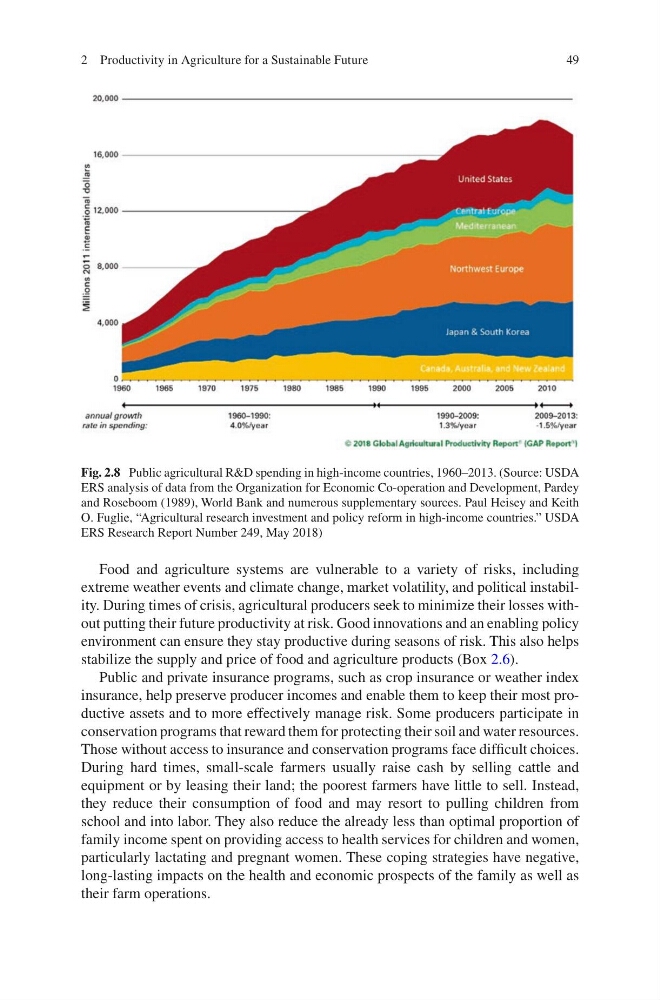
Fig. 2.8 Public agricultural R&D spending in high-income countries, 1960–2013. (Source: USDA
ERS analysis of data from the Organization for Economic Co-operation and Development, Pardey
and Roseboom (1989), World Bank and numerous supplementary sources. Paul Heisey and Keith
O. Fuglie, “Agricultural research investment and policy reform in high-income countries.” USDA
ERS Research Report Number 249, May 2018)
2 Productivity in Agriculture for a Sustainable Future
Food and agriculture systems are vulnerable to a variety of risks, including
extreme weather events and climate change, market volatility, and political instability. During times of crisis, agricultural producers seek to minimize their losses without putting their future productivity at risk. Good innovations and an enabling policy
environment can ensure they stay productive during seasons of risk. This also helps
stabilize the supply and price of food and agriculture products (Box 2.6).
Public and private insurance programs, such as crop insurance or weather index
insurance, help preserve producer incomes and enable them to keep their most productive assets and to more effectively manage risk. Some producers participate in
conservation programs that reward them for protecting their soil and water resources.
Those without access to insurance and conservation programs face difficult choices.
During hard times, small-scale farmers usually raise cash by selling cattle and
equipment or by leasing their land; the poorest farmers have little to sell. Instead,
they reduce their consumption of food and may resort to pulling children from
school and into labor. They also reduce the already less than optimal proportion of
family income spent on providing access to health services for children and women,
particularly lactating and pregnant women. These coping strategies have negative,
long-lasting impacts on the health and economic prospects of the family as well as
their farm operations.
Fig. 2.8 Public agricultural R&D spending in high-income countries, 1960–2013. (Source: USDA
ERS analysis of data from the Organization for Economic Co-operation and Development, Pardey
and Roseboom (1989), World Bank and numerous supplementary sources. Paul Heisey and Keith
O. Fuglie, “Agricultural research investment and policy reform in high-income countries.” USDA
ERS Research Report Number 249, May 2018)
2 Productivity in Agriculture for a Sustainable Future