

14
Europe, IndiGo in India, Azul in Brazil, Lion Air in Indonesia, and Sky Airline in
Chile, have successfully challenged incumbent, larger airlines.
These no-frill air carrier fleets usually have only a single type of aircraft to reduce
maintenance costs. They fly to smaller, secondary airports which are cheaper to
operate.
10
The cheap fleets reduce staff by issuing tickets and boarding passes digitally. They charge high fees for checking in with a staff person. This shift has
enabled these companies to tap into a mass of consumers who would otherwise use
cars, trains, or buses or just not travel at all. In other words, low-cost carriers do not
necessarily compete against other airlines. Instead, they cater to the very large number of customers that would have not previously considered travelling by air.
In the case of low-cost air travel, the financial advantage of innovation came as a
result of improving the quality of life of its users by making air travel affordable.
A relentless focus on the needs of users should also be aimed at by agricultural
and agrifood systems innovations. If individual innovators address the unmet needs
of users, returns on investment will increase.
In Africa, innovators who address the daily unmet needs of low-income consumers have a larger likelihood of success than if they chased after higher margin opportunities arising from the growth of the middle class. This market creation mindset is
behind the shift from poverty to prosperity in Taiwan, South Korea, Singapore, and
Hong Kong.
10 In the case of London, Luton airport offers much cheaper fees to air carriers than flagship airports
such as Gatwick and Heathrow. In the state of California, Oakland airport offers cheaper landing
and taxiing fees than its neighbor, San Francisco airport.
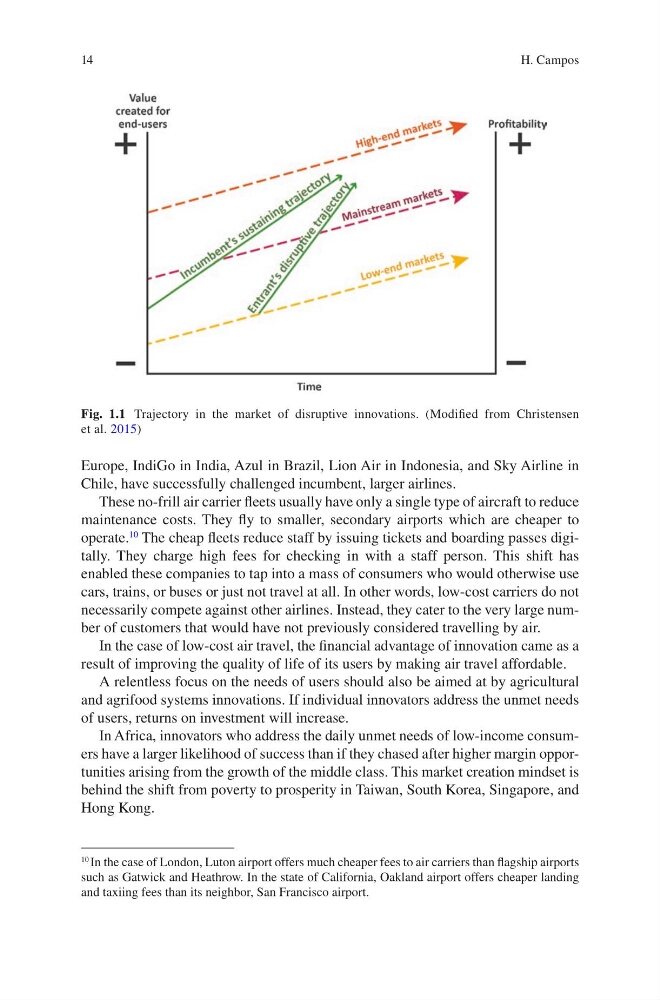
Fig. 1.1 Trajectory in the market of disruptive innovations. (Modified from Christensen
et al. 2015)
H. Campos
Europe, IndiGo in India, Azul in Brazil, Lion Air in Indonesia, and Sky Airline in
Chile, have successfully challenged incumbent, larger airlines.
These no-frill air carrier fleets usually have only a single type of aircraft to reduce
maintenance costs. They fly to smaller, secondary airports which are cheaper to
operate.
10
The cheap fleets reduce staff by issuing tickets and boarding passes digitally. They charge high fees for checking in with a staff person. This shift has
enabled these companies to tap into a mass of consumers who would otherwise use
cars, trains, or buses or just not travel at all. In other words, low-cost carriers do not
necessarily compete against other airlines. Instead, they cater to the very large number of customers that would have not previously considered travelling by air.
In the case of low-cost air travel, the financial advantage of innovation came as a
result of improving the quality of life of its users by making air travel affordable.
A relentless focus on the needs of users should also be aimed at by agricultural
and agrifood systems innovations. If individual innovators address the unmet needs
of users, returns on investment will increase.
In Africa, innovators who address the daily unmet needs of low-income consumers have a larger likelihood of success than if they chased after higher margin opportunities arising from the growth of the middle class. This market creation mindset is
behind the shift from poverty to prosperity in Taiwan, South Korea, Singapore, and
Hong Kong.
10 In the case of London, Luton airport offers much cheaper fees to air carriers than flagship airports
such as Gatwick and Heathrow. In the state of California, Oakland airport offers cheaper landing
and taxiing fees than its neighbor, San Francisco airport.
Fig. 1.1 Trajectory in the market of disruptive innovations. (Modified from Christensen
et al. 2015)
H. Campos