

186
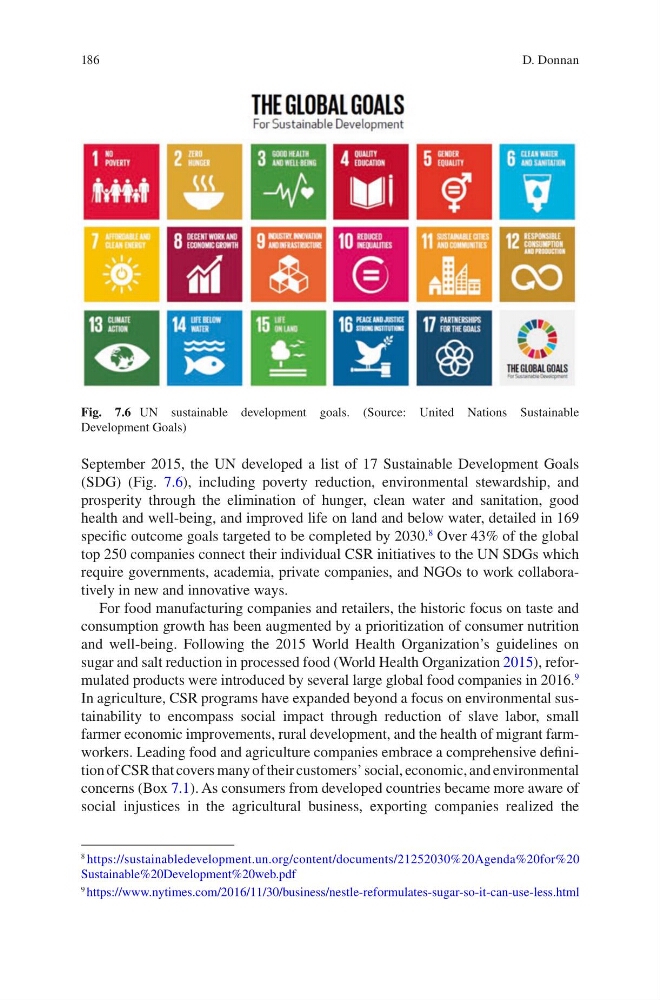
September 2015, the UN developed a list of 17 Sustainable Development Goals
(SDG) (Fig. 7.6), including poverty reduction, environmental stewardship, and
prosperity through the elimination of hunger, clean water and sanitation, good
health and well-being, and improved life on land and below water, detailed in 169
specific outcome goals targeted to be completed by 2030.
8
Over 43% of the global
top 250 companies connect their individual CSR initiatives to the UN SDGs which
require governments, academia, private companies, and NGOs to work collaboratively in new and innovative ways.
For food manufacturing companies and retailers, the historic focus on taste and
consumption growth has been augmented by a prioritization of consumer nutrition
and well-being. Following the 2015 World Health Organization’s guidelines on
sugar and salt reduction in processed food (World Health Organization 2015), reformulated products were introduced by several large global food companies in 2016.
9
In agriculture, CSR programs have expanded beyond a focus on environmental sustainability to encompass social impact through reduction of slave labor, small
farmer economic improvements, rural development, and the health of migrant farmworkers. Leading food and agriculture companies embrace a comprehensive definition of CSR that covers many of their customers’ social, economic, and environmental
concerns (Box 7.1). As consumers from developed countries became more aware of
social injustices in the agricultural business, exporting companies realized the
8 https://sustainabledevelopment.un.org/content/documents/21252030%20Agenda%20for%20
Sustainable%20Development%20web.pdf
9 https://www.nytimes.com/2016/11/30/business/nestle-reformulates-sugar-so-it-can-use-less.html
Fig. 7.6 UN sustainable development goals. (Source: United Nations Sustainable
Development Goals)
D. Donnan
September 2015, the UN developed a list of 17 Sustainable Development Goals
(SDG) (Fig. 7.6), including poverty reduction, environmental stewardship, and
prosperity through the elimination of hunger, clean water and sanitation, good
health and well-being, and improved life on land and below water, detailed in 169
specific outcome goals targeted to be completed by 2030.
8
Over 43% of the global
top 250 companies connect their individual CSR initiatives to the UN SDGs which
require governments, academia, private companies, and NGOs to work collaboratively in new and innovative ways.
For food manufacturing companies and retailers, the historic focus on taste and
consumption growth has been augmented by a prioritization of consumer nutrition
and well-being. Following the 2015 World Health Organization’s guidelines on
sugar and salt reduction in processed food (World Health Organization 2015), reformulated products were introduced by several large global food companies in 2016.
9
In agriculture, CSR programs have expanded beyond a focus on environmental sustainability to encompass social impact through reduction of slave labor, small
farmer economic improvements, rural development, and the health of migrant farmworkers. Leading food and agriculture companies embrace a comprehensive definition of CSR that covers many of their customers’ social, economic, and environmental
concerns (Box 7.1). As consumers from developed countries became more aware of
social injustices in the agricultural business, exporting companies realized the
8 https://sustainabledevelopment.un.org/content/documents/21252030%20Agenda%20for%20
Sustainable%20Development%20web.pdf
9 https://www.nytimes.com/2016/11/30/business/nestle-reformulates-sugar-so-it-can-use-less.html
Fig. 7.6 UN sustainable development goals. (Source: United Nations Sustainable
Development Goals)
D. Donnan