

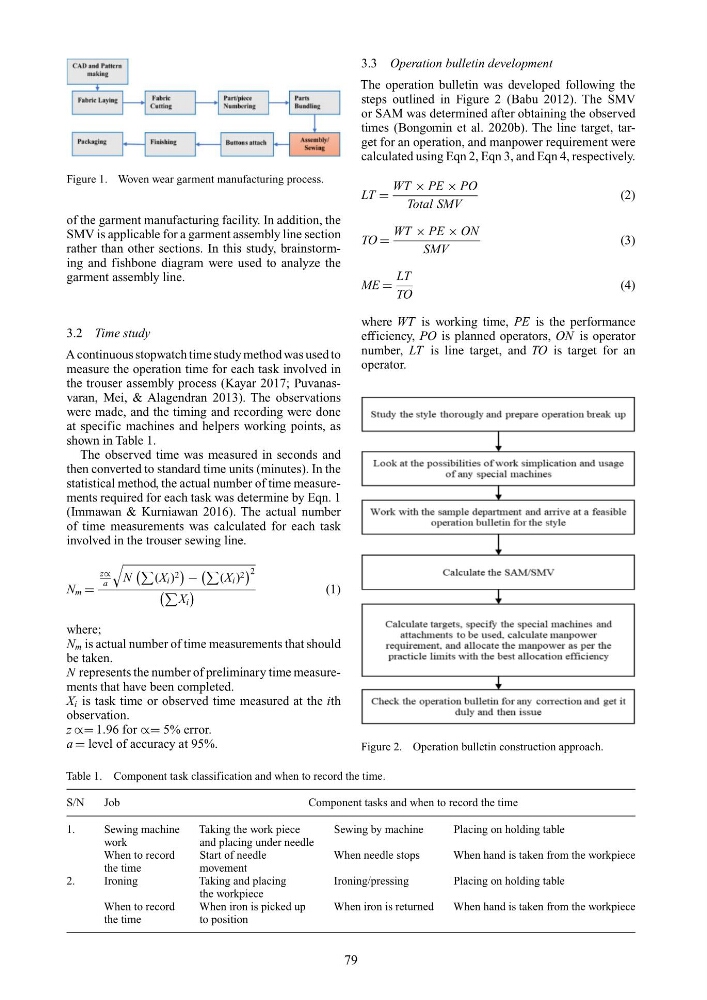
Figure 1. Woven wear garment manufacturing process.
of the garment manufacturing facility. In addition, the
SMV is applicable for a garment assembly line section
rather than other sections. In this study, brainstorming and fishbone diagram were used to analyze the
garment assembly line.
3.2 Time study
A continuous stopwatch time study method was used to
measure the operation time for each task involved in
the trouser assembly process (Kayar 2017; Puvanasvaran, Mei, & Alagendran 2013). The observations
were made, and the timing and recording were done
at specific machines and helpers working points, as
shown in Table 1.
The observed time was measured in seconds and
then converted to standard time units (minutes). In the
statistical method, the actual number of time measurements required for each task was determine by Eqn. 1
(Immawan & Kurniawan 2016). The actual number
of time measurements was calculated for each task
involved in the trouser sewing line.
N m =
z∝
a
N
(X i ) 2
−
(X i ) 2
2
X i
(1)
where;
N m is actual number of time measurements that should
be taken.
N represents the number of preliminary time measurements that have been completed.
X i is task time or observed time measured at the ith
observation.
z ∝= 1.96 for ∝= 5% error.
a = level of accuracy at 95%.
Table 1. Component task classification and when to record the time.
S/N
Job
Component tasks and when to record the time
1.
Sewing machine
Taking the work piece
Sewing by machine
Placing on holding table
work
and placing under needle
When to record
Start of needle
When needle stops
When hand is taken from the workpiece
the time
movement
2.
Ironing
Taking and placing
Ironing/pressing
Placing on holding table
the workpiece
When to record
When iron is picked up
When iron is returned
When hand is taken from the workpiece
the time
to position
3.3 Operation bulletin development
The operation bulletin was developed following the
steps outlined in Figure 2 (Babu 2012). The SMV
or SAM was determined after obtaining the observed
times (Bongomin et al. 2020b). The line target, target for an operation, and manpower requirement were
calculated using Eqn 2, Eqn 3, and Eqn 4, respectively.
LT =
WT × PE × PO
Total SMV
(2)
TO =
WT × PE × ON
SMV
(3)
ME =
LT
TO
(4)
where WT is working time, PE is the performance
efficiency, PO is planned operators, ON is operator
number, LT is line target, and TO is target for an
operator.
Figure 2. Operation bulletin construction approach.
79
of the garment manufacturing facility. In addition, the
SMV is applicable for a garment assembly line section
rather than other sections. In this study, brainstorming and fishbone diagram were used to analyze the
garment assembly line.
3.2 Time study
A continuous stopwatch time study method was used to
measure the operation time for each task involved in
the trouser assembly process (Kayar 2017; Puvanasvaran, Mei, & Alagendran 2013). The observations
were made, and the timing and recording were done
at specific machines and helpers working points, as
shown in Table 1.
The observed time was measured in seconds and
then converted to standard time units (minutes). In the
statistical method, the actual number of time measurements required for each task was determine by Eqn. 1
(Immawan & Kurniawan 2016). The actual number
of time measurements was calculated for each task
involved in the trouser sewing line.
N m =
z∝
a
N
(X i ) 2
−
(X i ) 2
2
X i
(1)
where;
N m is actual number of time measurements that should
be taken.
N represents the number of preliminary time measurements that have been completed.
X i is task time or observed time measured at the ith
observation.
z ∝= 1.96 for ∝= 5% error.
a = level of accuracy at 95%.
Table 1. Component task classification and when to record the time.
S/N
Job
Component tasks and when to record the time
1.
Sewing machine
Taking the work piece
Sewing by machine
Placing on holding table
work
and placing under needle
When to record
Start of needle
When needle stops
When hand is taken from the workpiece
the time
movement
2.
Ironing
Taking and placing
Ironing/pressing
Placing on holding table
the workpiece
When to record
When iron is picked up
When iron is returned
When hand is taken from the workpiece
the time
to position
3.3 Operation bulletin development
The operation bulletin was developed following the
steps outlined in Figure 2 (Babu 2012). The SMV
or SAM was determined after obtaining the observed
times (Bongomin et al. 2020b). The line target, target for an operation, and manpower requirement were
calculated using Eqn 2, Eqn 3, and Eqn 4, respectively.
LT =
WT × PE × PO
Total SMV
(2)
TO =
WT × PE × ON
SMV
(3)
ME =
LT
TO
(4)
where WT is working time, PE is the performance
efficiency, PO is planned operators, ON is operator
number, LT is line target, and TO is target for an
operator.
Figure 2. Operation bulletin construction approach.
79