

26
Subtle Agroecologies
conserve to maintain
communication channels
with spiritual world
Spiritual life
Material life
Social life
Life
world
Material life
Spiritual life
Material life
Social life
Social life
Life
world
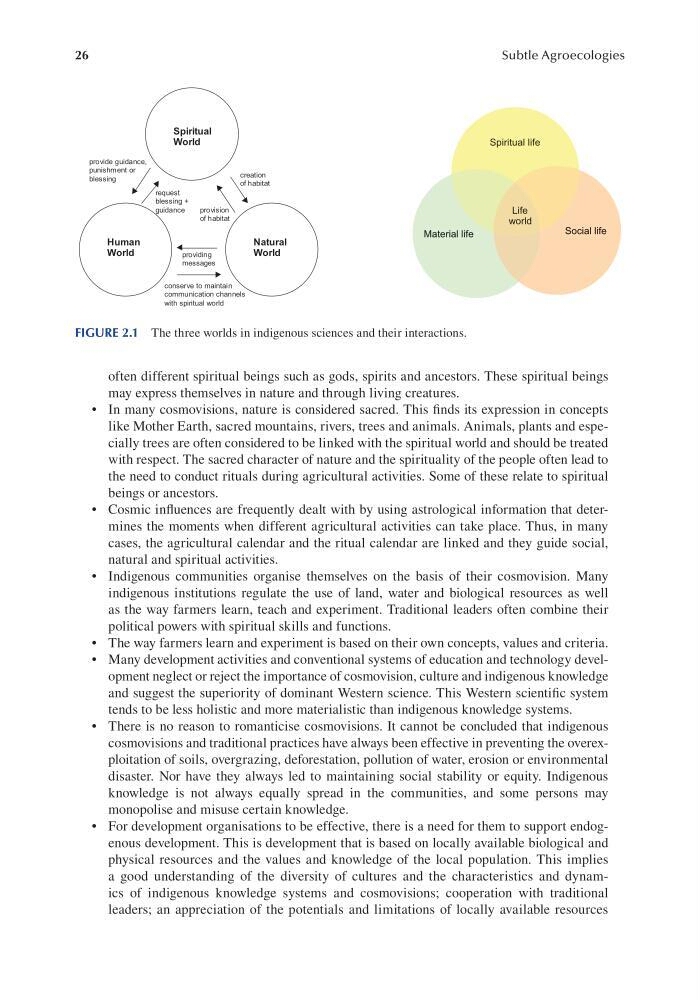
FIGURE 2.1 The three worlds in indigenous sciences and their interactions.
often different spiritual beings such as gods, spirits and ancestors. These spiritual beings
may express themselves in nature and through living creatures.
• In many cosmovisions, nature is considered sacred. This fnds its expression in concepts
like Mother Earth, sacred mountains, rivers, trees and animals. Animals, plants and especially trees are often considered to be linked with the spiritual world and should be treated
with respect. The sacred character of nature and the spirituality of the people often lead to
the need to conduct rituals during agricultural activities. Some of these relate to spiritual
beings or ancestors.
• Cosmic infuences are frequently dealt with by using astrological information that determines the moments when different agricultural activities can take place. Thus, in many
cases, the agricultural calendar and the ritual calendar are linked and they guide social,
natural and spiritual activities.
• Indigenous communities organise themselves on the basis of their cosmovision. Many
indigenous institutions regulate the use of land, water and biological resources as well
as the way farmers learn, teach and experiment. Traditional leaders often combine their
political powers with spiritual skills and functions.
• The way farmers learn and experiment is based on their own concepts, values and criteria.
• Many development activities and conventional systems of education and technology development neglect or reject the importance of cosmovision, culture and indigenous knowledge
and suggest the superiority of dominant Western science. This Western scientifc system
tends to be less holistic and more materialistic than indigenous knowledge systems.
• There is no reason to romanticise cosmovisions. It cannot be concluded that indigenous
cosmovisions and traditional practices have always been effective in preventing the overexploitation of soils, overgrazing, deforestation, pollution of water, erosion or environmental
disaster. Nor have they always led to maintaining social stability or equity. Indigenous
knowledge is not always equally spread in the communities, and some persons may
monopolise and misuse certain knowledge.
• For development organisations to be effective, there is a need for them to support endogenous development. This is development that is based on locally available biological and
physical resources and the values and knowledge of the local population. This implies
a good understanding of the diversity of cultures and the characteristics and dynamics of indigenous knowledge systems and cosmovisions; cooperation with traditional
leaders; an appreciation of the potentials and limitations of locally available resources
provide guidance,
punishment or
Human
World
creation
blessing
of habitat
request
blessing +
guidance
of habitat
providing
messages
Natural
World
Spiritual
World
provision
Subtle Agroecologies
conserve to maintain
communication channels
with spiritual world
Spiritual life
Material life
Social life
Life
world
Material life
Spiritual life
Material life
Social life
Social life
Life
world
FIGURE 2.1 The three worlds in indigenous sciences and their interactions.
often different spiritual beings such as gods, spirits and ancestors. These spiritual beings
may express themselves in nature and through living creatures.
• In many cosmovisions, nature is considered sacred. This fnds its expression in concepts
like Mother Earth, sacred mountains, rivers, trees and animals. Animals, plants and especially trees are often considered to be linked with the spiritual world and should be treated
with respect. The sacred character of nature and the spirituality of the people often lead to
the need to conduct rituals during agricultural activities. Some of these relate to spiritual
beings or ancestors.
• Cosmic infuences are frequently dealt with by using astrological information that determines the moments when different agricultural activities can take place. Thus, in many
cases, the agricultural calendar and the ritual calendar are linked and they guide social,
natural and spiritual activities.
• Indigenous communities organise themselves on the basis of their cosmovision. Many
indigenous institutions regulate the use of land, water and biological resources as well
as the way farmers learn, teach and experiment. Traditional leaders often combine their
political powers with spiritual skills and functions.
• The way farmers learn and experiment is based on their own concepts, values and criteria.
• Many development activities and conventional systems of education and technology development neglect or reject the importance of cosmovision, culture and indigenous knowledge
and suggest the superiority of dominant Western science. This Western scientifc system
tends to be less holistic and more materialistic than indigenous knowledge systems.
• There is no reason to romanticise cosmovisions. It cannot be concluded that indigenous
cosmovisions and traditional practices have always been effective in preventing the overexploitation of soils, overgrazing, deforestation, pollution of water, erosion or environmental
disaster. Nor have they always led to maintaining social stability or equity. Indigenous
knowledge is not always equally spread in the communities, and some persons may
monopolise and misuse certain knowledge.
• For development organisations to be effective, there is a need for them to support endogenous development. This is development that is based on locally available biological and
physical resources and the values and knowledge of the local population. This implies
a good understanding of the diversity of cultures and the characteristics and dynamics of indigenous knowledge systems and cosmovisions; cooperation with traditional
leaders; an appreciation of the potentials and limitations of locally available resources
provide guidance,
punishment or
Human
World
creation
blessing
of habitat
request
blessing +
guidance
of habitat
providing
messages
Natural
World
Spiritual
World
provision