

3 Microbial Endophytes: Sustainable Approach …
39
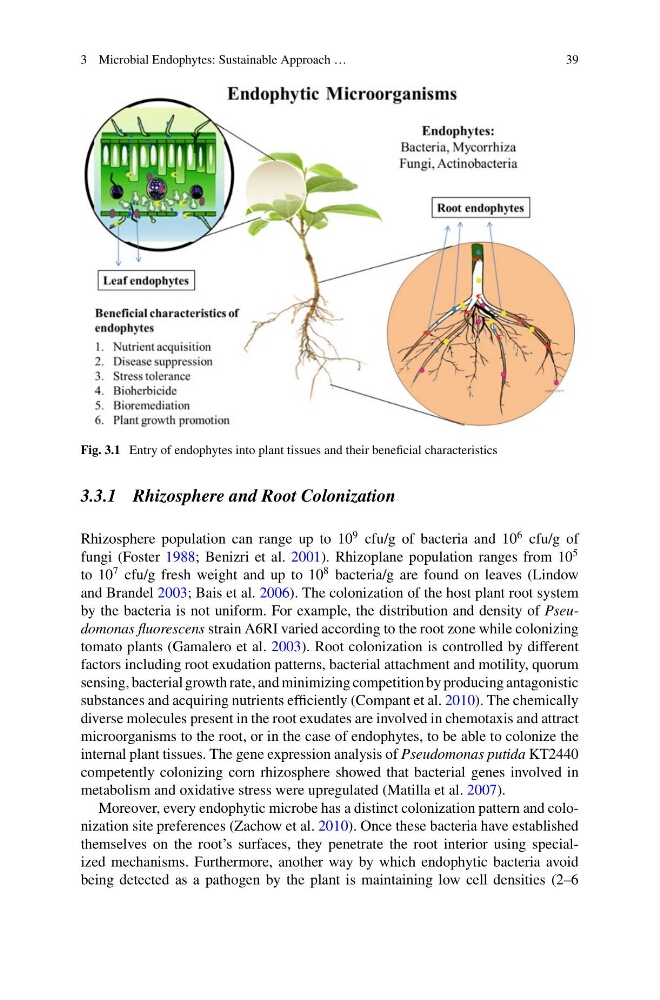
Fig. 3.1 Entry of endophytes into plant tissues and their beneficial characteristics
3.3.1 Rhizosphere and Root Colonization
Rhizosphere population can range up to 10
9 cfu/g of bacteria and 10
6 cfu/g of
fungi (Foster 1988; Benizri et al. 2001). Rhizoplane population ranges from 10
5
to 10
7 cfu/g fresh weight and up to 10
8 bacteria/g are found on leaves (Lindow
and Brandel 2003; Bais et al. 2006). The colonization of the host plant root system
by the bacteria is not uniform. For example, the distribution and density of Pseudomonas fluorescens strain A6RI varied according to the root zone while colonizing
tomato plants (Gamalero et al. 2003). Root colonization is controlled by different
factors including root exudation patterns, bacterial attachment and motility, quorum
sensing, bacterial growth rate, and minimizing competition by producing antagonistic
substances and acquiring nutrients efficiently (Compant et al. 2010). The chemically
diverse molecules present in the root exudates are involved in chemotaxis and attract
microorganisms to the root, or in the case of endophytes, to be able to colonize the
internal plant tissues. The gene expression analysis of Pseudomonas putida KT2440
competently colonizing corn rhizosphere showed that bacterial genes involved in
metabolism and oxidative stress were upregulated (Matilla et al. 2007).
Moreover, every endophytic microbe has a distinct colonization pattern and colonization site preferences (Zachow et al. 2010). Once these bacteria have established
themselves on the root’s surfaces, they penetrate the root interior using specialized mechanisms. Furthermore, another way by which endophytic bacteria avoid
being detected as a pathogen by the plant is maintaining low cell densities (2–6
39
Fig. 3.1 Entry of endophytes into plant tissues and their beneficial characteristics
3.3.1 Rhizosphere and Root Colonization
Rhizosphere population can range up to 10
9 cfu/g of bacteria and 10
6 cfu/g of
fungi (Foster 1988; Benizri et al. 2001). Rhizoplane population ranges from 10
5
to 10
7 cfu/g fresh weight and up to 10
8 bacteria/g are found on leaves (Lindow
and Brandel 2003; Bais et al. 2006). The colonization of the host plant root system
by the bacteria is not uniform. For example, the distribution and density of Pseudomonas fluorescens strain A6RI varied according to the root zone while colonizing
tomato plants (Gamalero et al. 2003). Root colonization is controlled by different
factors including root exudation patterns, bacterial attachment and motility, quorum
sensing, bacterial growth rate, and minimizing competition by producing antagonistic
substances and acquiring nutrients efficiently (Compant et al. 2010). The chemically
diverse molecules present in the root exudates are involved in chemotaxis and attract
microorganisms to the root, or in the case of endophytes, to be able to colonize the
internal plant tissues. The gene expression analysis of Pseudomonas putida KT2440
competently colonizing corn rhizosphere showed that bacterial genes involved in
metabolism and oxidative stress were upregulated (Matilla et al. 2007).
Moreover, every endophytic microbe has a distinct colonization pattern and colonization site preferences (Zachow et al. 2010). Once these bacteria have established
themselves on the root’s surfaces, they penetrate the root interior using specialized mechanisms. Furthermore, another way by which endophytic bacteria avoid
being detected as a pathogen by the plant is maintaining low cell densities (2–6