

272
B. N. Aloo et al.
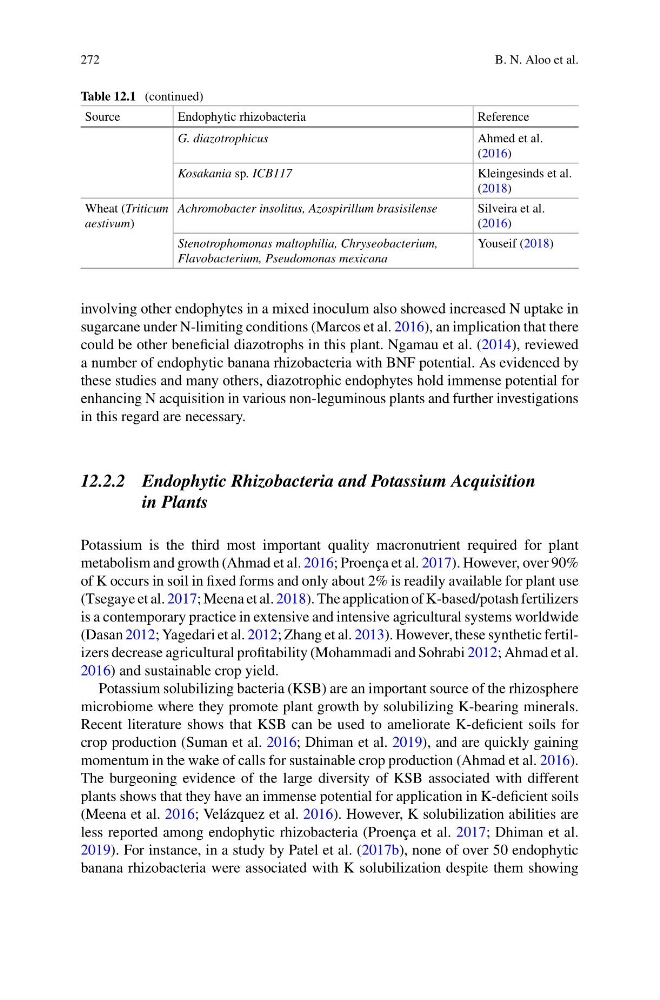
Table 12.1 (continued)
Source
Endophytic rhizobacteria
Reference
G. diazotrophicus
Ahmed et al.
(2016)
Kosakania sp. ICB117
Kleingesinds et al.
(2018)
Wheat (Triticum
aestivum)
Achromobacter insolitus, Azospirillum brasisilense
Silveira et al.
(2016)
Stenotrophomonas maltophilia, Chryseobacterium,
Flavobacterium, Pseudomonas mexicana
Youseif (2018)
involving other endophytes in a mixed inoculum also showed increased N uptake in
sugarcane under N-limiting conditions (Marcos et al. 2016), an implication that there
could be other beneficial diazotrophs in this plant. Ngamau et al. (2014), reviewed
a number of endophytic banana rhizobacteria with BNF potential. As evidenced by
these studies and many others, diazotrophic endophytes hold immense potential for
enhancing N acquisition in various non-leguminous plants and further investigations
in this regard are necessary.
12.2.2 Endophytic Rhizobacteria and Potassium Acquisition
in Plants
Potassium is the third most important quality macronutrient required for plant
metabolism and growth (Ahmad et al. 2016; Proença et al. 2017). However, over 90%
of K occurs in soil in fixed forms and only about 2% is readily available for plant use
(Tsegaye et al. 2017; Meena et al. 2018). The application of K-based/potash fertilizers
is a contemporary practice in extensive and intensive agricultural systems worldwide
(Dasan 2012; Yagedari et al. 2012; Zhang et al. 2013). However, these synthetic fertilizers decrease agricultural profitability (Mohammadi and Sohrabi 2012; Ahmad et al.
2016) and sustainable crop yield.
Potassium solubilizing bacteria (KSB) are an important source of the rhizosphere
microbiome where they promote plant growth by solubilizing K-bearing minerals.
Recent literature shows that KSB can be used to ameliorate K-deficient soils for
crop production (Suman et al. 2016; Dhiman et al. 2019), and are quickly gaining
momentum in the wake of calls for sustainable crop production (Ahmad et al. 2016).
The burgeoning evidence of the large diversity of KSB associated with different
plants shows that they have an immense potential for application in K-deficient soils
(Meena et al. 2016; Velázquez et al. 2016). However, K solubilization abilities are
less reported among endophytic rhizobacteria (Proença et al. 2017; Dhiman et al.
2019). For instance, in a study by Patel et al. (2017b), none of over 50 endophytic
banana rhizobacteria were associated with K solubilization despite them showing
B. N. Aloo et al.
Table 12.1 (continued)
Source
Endophytic rhizobacteria
Reference
G. diazotrophicus
Ahmed et al.
(2016)
Kosakania sp. ICB117
Kleingesinds et al.
(2018)
Wheat (Triticum
aestivum)
Achromobacter insolitus, Azospirillum brasisilense
Silveira et al.
(2016)
Stenotrophomonas maltophilia, Chryseobacterium,
Flavobacterium, Pseudomonas mexicana
Youseif (2018)
involving other endophytes in a mixed inoculum also showed increased N uptake in
sugarcane under N-limiting conditions (Marcos et al. 2016), an implication that there
could be other beneficial diazotrophs in this plant. Ngamau et al. (2014), reviewed
a number of endophytic banana rhizobacteria with BNF potential. As evidenced by
these studies and many others, diazotrophic endophytes hold immense potential for
enhancing N acquisition in various non-leguminous plants and further investigations
in this regard are necessary.
12.2.2 Endophytic Rhizobacteria and Potassium Acquisition
in Plants
Potassium is the third most important quality macronutrient required for plant
metabolism and growth (Ahmad et al. 2016; Proença et al. 2017). However, over 90%
of K occurs in soil in fixed forms and only about 2% is readily available for plant use
(Tsegaye et al. 2017; Meena et al. 2018). The application of K-based/potash fertilizers
is a contemporary practice in extensive and intensive agricultural systems worldwide
(Dasan 2012; Yagedari et al. 2012; Zhang et al. 2013). However, these synthetic fertilizers decrease agricultural profitability (Mohammadi and Sohrabi 2012; Ahmad et al.
2016) and sustainable crop yield.
Potassium solubilizing bacteria (KSB) are an important source of the rhizosphere
microbiome where they promote plant growth by solubilizing K-bearing minerals.
Recent literature shows that KSB can be used to ameliorate K-deficient soils for
crop production (Suman et al. 2016; Dhiman et al. 2019), and are quickly gaining
momentum in the wake of calls for sustainable crop production (Ahmad et al. 2016).
The burgeoning evidence of the large diversity of KSB associated with different
plants shows that they have an immense potential for application in K-deficient soils
(Meena et al. 2016; Velázquez et al. 2016). However, K solubilization abilities are
less reported among endophytic rhizobacteria (Proença et al. 2017; Dhiman et al.
2019). For instance, in a study by Patel et al. (2017b), none of over 50 endophytic
banana rhizobacteria were associated with K solubilization despite them showing