

242
K. Lasudee et al.
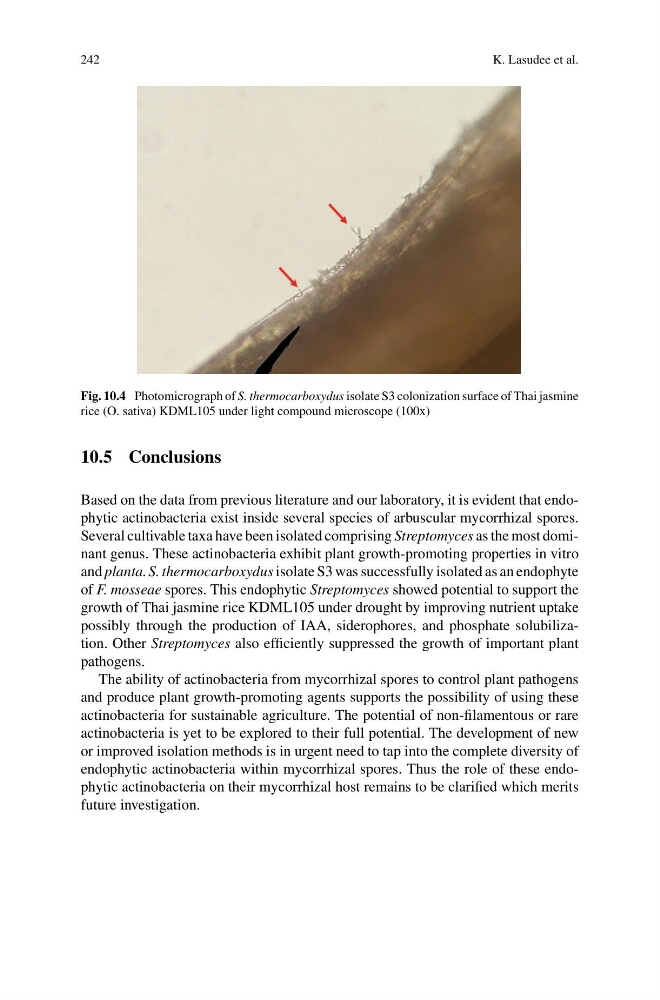
Fig. 10.4 Photomicrograph of S. thermocarboxydus isolate S3 colonization surface of Thai jasmine
rice (O. sativa) KDML105 under light compound microscope (100x)
10.5 Conclusions
Based on the data from previous literature and our laboratory, it is evident that endophytic actinobacteria exist inside several species of arbuscular mycorrhizal spores.
Several cultivable taxa have been isolated comprising Streptomyces as the most dominant genus. These actinobacteria exhibit plant growth-promoting properties in vitro
and planta. S. thermocarboxydus isolate S3 was successfully isolated as an endophyte
of F. mosseae spores. This endophytic Streptomyces showed potential to support the
growth of Thai jasmine rice KDML105 under drought by improving nutrient uptake
possibly through the production of IAA, siderophores, and phosphate solubilization. Other Streptomyces also efficiently suppressed the growth of important plant
pathogens.
The ability of actinobacteria from mycorrhizal spores to control plant pathogens
and produce plant growth-promoting agents supports the possibility of using these
actinobacteria for sustainable agriculture. The potential of non-filamentous or rare
actinobacteria is yet to be explored to their full potential. The development of new
or improved isolation methods is in urgent need to tap into the complete diversity of
endophytic actinobacteria within mycorrhizal spores. Thus the role of these endophytic actinobacteria on their mycorrhizal host remains to be clarified which merits
future investigation.
K. Lasudee et al.
Fig. 10.4 Photomicrograph of S. thermocarboxydus isolate S3 colonization surface of Thai jasmine
rice (O. sativa) KDML105 under light compound microscope (100x)
10.5 Conclusions
Based on the data from previous literature and our laboratory, it is evident that endophytic actinobacteria exist inside several species of arbuscular mycorrhizal spores.
Several cultivable taxa have been isolated comprising Streptomyces as the most dominant genus. These actinobacteria exhibit plant growth-promoting properties in vitro
and planta. S. thermocarboxydus isolate S3 was successfully isolated as an endophyte
of F. mosseae spores. This endophytic Streptomyces showed potential to support the
growth of Thai jasmine rice KDML105 under drought by improving nutrient uptake
possibly through the production of IAA, siderophores, and phosphate solubilization. Other Streptomyces also efficiently suppressed the growth of important plant
pathogens.
The ability of actinobacteria from mycorrhizal spores to control plant pathogens
and produce plant growth-promoting agents supports the possibility of using these
actinobacteria for sustainable agriculture. The potential of non-filamentous or rare
actinobacteria is yet to be explored to their full potential. The development of new
or improved isolation methods is in urgent need to tap into the complete diversity of
endophytic actinobacteria within mycorrhizal spores. Thus the role of these endophytic actinobacteria on their mycorrhizal host remains to be clarified which merits
future investigation.