

240
K. Lasudee et al.
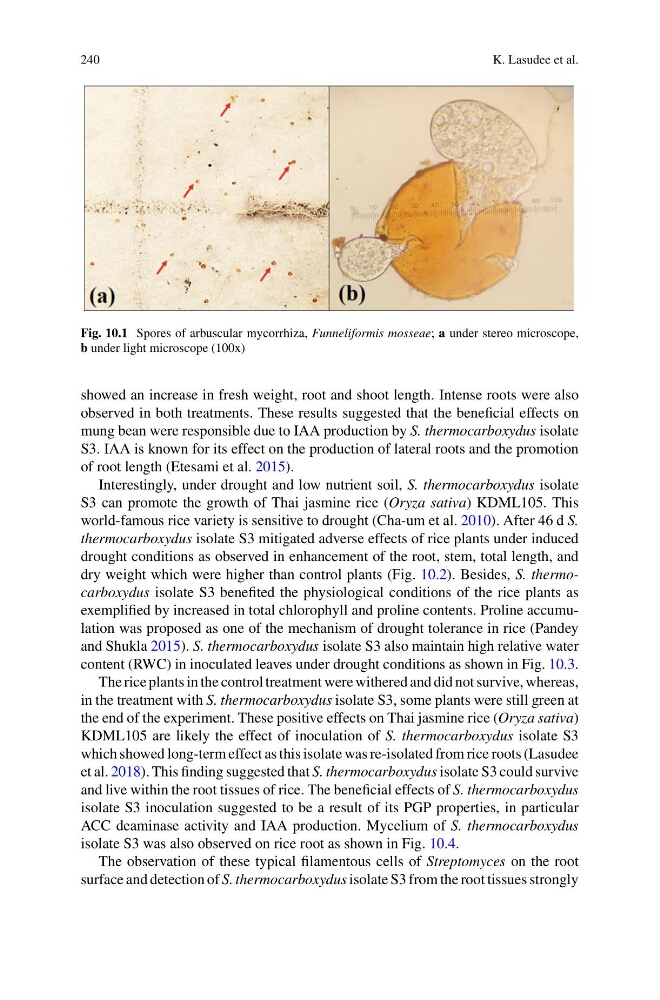
Fig. 10.1 Spores of arbuscular mycorrhiza, Funneliformis mosseae; a under stereo microscope,
b under light microscope (100x)
showed an increase in fresh weight, root and shoot length. Intense roots were also
observed in both treatments. These results suggested that the beneficial effects on
mung bean were responsible due to IAA production by S. thermocarboxydus isolate
S3. IAA is known for its effect on the production of lateral roots and the promotion
of root length (Etesami et al. 2015).
Interestingly, under drought and low nutrient soil, S. thermocarboxydus isolate
S3 can promote the growth of Thai jasmine rice (Oryza sativa) KDML105. This
world-famous rice variety is sensitive to drought (Cha-um et al. 2010). After 46 d S.
thermocarboxydus isolate S3 mitigated adverse effects of rice plants under induced
drought conditions as observed in enhancement of the root, stem, total length, and
dry weight which were higher than control plants (Fig. 10.2). Besides, S. thermocarboxydus isolate S3 benefited the physiological conditions of the rice plants as
exemplified by increased in total chlorophyll and proline contents. Proline accumulation was proposed as one of the mechanism of drought tolerance in rice (Pandey
and Shukla 2015). S. thermocarboxydus isolate S3 also maintain high relative water
content (RWC) in inoculated leaves under drought conditions as shown in Fig. 10.3.
The rice plants in the control treatment were withered and did not survive, whereas,
in the treatment with S. thermocarboxydus isolate S3, some plants were still green at
the end of the experiment. These positive effects on Thai jasmine rice (Oryza sativa)
KDML105 are likely the effect of inoculation of S. thermocarboxydus isolate S3
which showed long-term effect as this isolate was re-isolated from rice roots (Lasudee
et al. 2018). This finding suggested that S. thermocarboxydus isolate S3 could survive
and live within the root tissues of rice. The beneficial effects of S. thermocarboxydus
isolate S3 inoculation suggested to be a result of its PGP properties, in particular
ACC deaminase activity and IAA production. Mycelium of S. thermocarboxydus
isolate S3 was also observed on rice root as shown in Fig. 10.4.
The observation of these typical filamentous cells of Streptomyces on the root
surface and detection of S. thermocarboxydus isolate S3 from the root tissues strongly
K. Lasudee et al.
Fig. 10.1 Spores of arbuscular mycorrhiza, Funneliformis mosseae; a under stereo microscope,
b under light microscope (100x)
showed an increase in fresh weight, root and shoot length. Intense roots were also
observed in both treatments. These results suggested that the beneficial effects on
mung bean were responsible due to IAA production by S. thermocarboxydus isolate
S3. IAA is known for its effect on the production of lateral roots and the promotion
of root length (Etesami et al. 2015).
Interestingly, under drought and low nutrient soil, S. thermocarboxydus isolate
S3 can promote the growth of Thai jasmine rice (Oryza sativa) KDML105. This
world-famous rice variety is sensitive to drought (Cha-um et al. 2010). After 46 d S.
thermocarboxydus isolate S3 mitigated adverse effects of rice plants under induced
drought conditions as observed in enhancement of the root, stem, total length, and
dry weight which were higher than control plants (Fig. 10.2). Besides, S. thermocarboxydus isolate S3 benefited the physiological conditions of the rice plants as
exemplified by increased in total chlorophyll and proline contents. Proline accumulation was proposed as one of the mechanism of drought tolerance in rice (Pandey
and Shukla 2015). S. thermocarboxydus isolate S3 also maintain high relative water
content (RWC) in inoculated leaves under drought conditions as shown in Fig. 10.3.
The rice plants in the control treatment were withered and did not survive, whereas,
in the treatment with S. thermocarboxydus isolate S3, some plants were still green at
the end of the experiment. These positive effects on Thai jasmine rice (Oryza sativa)
KDML105 are likely the effect of inoculation of S. thermocarboxydus isolate S3
which showed long-term effect as this isolate was re-isolated from rice roots (Lasudee
et al. 2018). This finding suggested that S. thermocarboxydus isolate S3 could survive
and live within the root tissues of rice. The beneficial effects of S. thermocarboxydus
isolate S3 inoculation suggested to be a result of its PGP properties, in particular
ACC deaminase activity and IAA production. Mycelium of S. thermocarboxydus
isolate S3 was also observed on rice root as shown in Fig. 10.4.
The observation of these typical filamentous cells of Streptomyces on the root
surface and detection of S. thermocarboxydus isolate S3 from the root tissues strongly