

138
A. Ghasemnezhad et al.
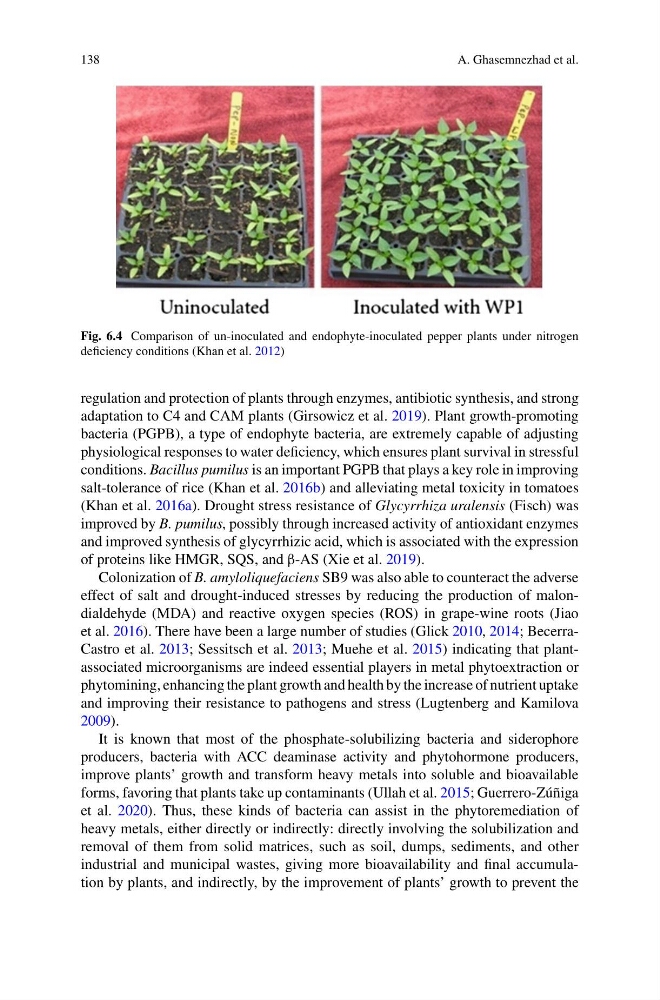
Fig. 6.4 Comparison of un-inoculated and endophyte-inoculated pepper plants under nitrogen
deficiency conditions (Khan et al. 2012)
regulation and protection of plants through enzymes, antibiotic synthesis, and strong
adaptation to C4 and CAM plants (Girsowicz et al. 2019). Plant growth-promoting
bacteria (PGPB), a type of endophyte bacteria, are extremely capable of adjusting
physiological responses to water deficiency, which ensures plant survival in stressful
conditions. Bacillus pumilus is an important PGPB that plays a key role in improving
salt-tolerance of rice (Khan et al. 2016b) and alleviating metal toxicity in tomatoes
(Khan et al. 2016a). Drought stress resistance of Glycyrrhiza uralensis (Fisch) was
improved by B. pumilus, possibly through increased activity of antioxidant enzymes
and improved synthesis of glycyrrhizic acid, which is associated with the expression
of proteins like HMGR, SQS, and β-AS (Xie et al. 2019).
Colonization of B. amyloliquefaciens SB9 was also able to counteract the adverse
effect of salt and drought-induced stresses by reducing the production of malondialdehyde (MDA) and reactive oxygen species (ROS) in grape-wine roots (Jiao
et al. 2016). There have been a large number of studies (Glick 2010, 2014; BecerraCastro et al. 2013; Sessitsch et al. 2013; Muehe et al. 2015) indicating that plantassociated microorganisms are indeed essential players in metal phytoextraction or
phytomining, enhancing the plant growth and health by the increase of nutrient uptake
and improving their resistance to pathogens and stress (Lugtenberg and Kamilova
2009).
It is known that most of the phosphate-solubilizing bacteria and siderophore
producers, bacteria with ACC deaminase activity and phytohormone producers,
improve plants’ growth and transform heavy metals into soluble and bioavailable
forms, favoring that plants take up contaminants (Ullah et al. 2015; Guerrero-Zúñiga
et al. 2020). Thus, these kinds of bacteria can assist in the phytoremediation of
heavy metals, either directly or indirectly: directly involving the solubilization and
removal of them from solid matrices, such as soil, dumps, sediments, and other
industrial and municipal wastes, giving more bioavailability and final accumulation by plants, and indirectly, by the improvement of plants’ growth to prevent the
A. Ghasemnezhad et al.
Fig. 6.4 Comparison of un-inoculated and endophyte-inoculated pepper plants under nitrogen
deficiency conditions (Khan et al. 2012)
regulation and protection of plants through enzymes, antibiotic synthesis, and strong
adaptation to C4 and CAM plants (Girsowicz et al. 2019). Plant growth-promoting
bacteria (PGPB), a type of endophyte bacteria, are extremely capable of adjusting
physiological responses to water deficiency, which ensures plant survival in stressful
conditions. Bacillus pumilus is an important PGPB that plays a key role in improving
salt-tolerance of rice (Khan et al. 2016b) and alleviating metal toxicity in tomatoes
(Khan et al. 2016a). Drought stress resistance of Glycyrrhiza uralensis (Fisch) was
improved by B. pumilus, possibly through increased activity of antioxidant enzymes
and improved synthesis of glycyrrhizic acid, which is associated with the expression
of proteins like HMGR, SQS, and β-AS (Xie et al. 2019).
Colonization of B. amyloliquefaciens SB9 was also able to counteract the adverse
effect of salt and drought-induced stresses by reducing the production of malondialdehyde (MDA) and reactive oxygen species (ROS) in grape-wine roots (Jiao
et al. 2016). There have been a large number of studies (Glick 2010, 2014; BecerraCastro et al. 2013; Sessitsch et al. 2013; Muehe et al. 2015) indicating that plantassociated microorganisms are indeed essential players in metal phytoextraction or
phytomining, enhancing the plant growth and health by the increase of nutrient uptake
and improving their resistance to pathogens and stress (Lugtenberg and Kamilova
2009).
It is known that most of the phosphate-solubilizing bacteria and siderophore
producers, bacteria with ACC deaminase activity and phytohormone producers,
improve plants’ growth and transform heavy metals into soluble and bioavailable
forms, favoring that plants take up contaminants (Ullah et al. 2015; Guerrero-Zúñiga
et al. 2020). Thus, these kinds of bacteria can assist in the phytoremediation of
heavy metals, either directly or indirectly: directly involving the solubilization and
removal of them from solid matrices, such as soil, dumps, sediments, and other
industrial and municipal wastes, giving more bioavailability and final accumulation by plants, and indirectly, by the improvement of plants’ growth to prevent the