

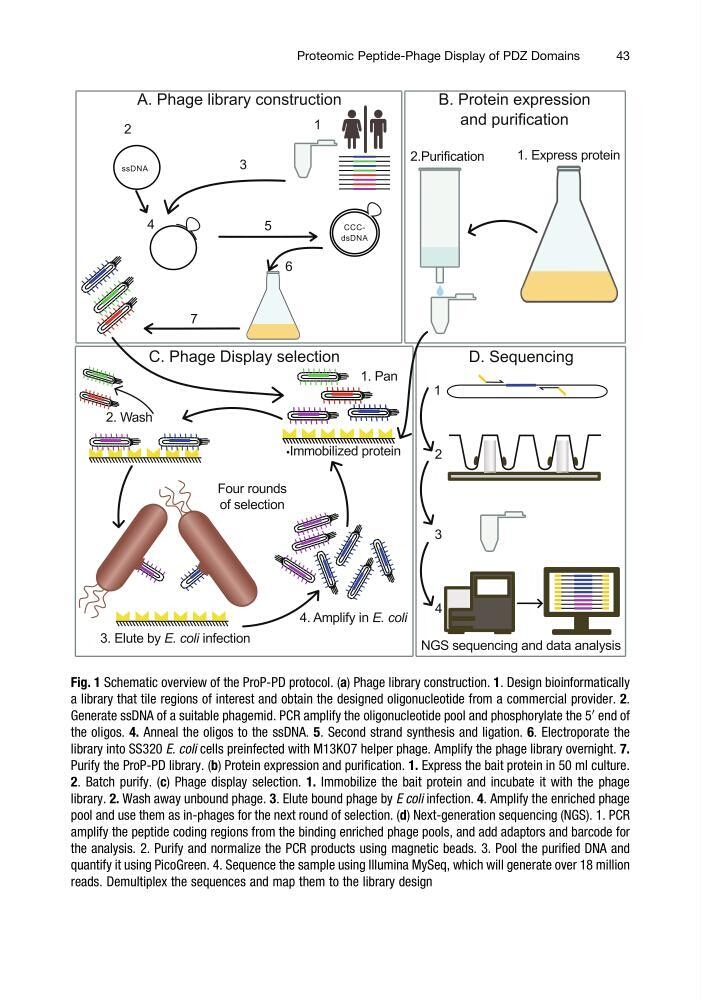
Fig. 1 Schematic overview of the ProP-PD protocol. (a) Phage library construction. 1. Design bioinformatically
a library that tile regions of interest and obtain the designed oligonucleotide from a commercial provider. 2.
Generate ssDNA of a suitable phagemid. PCR amplify the oligonucleotide pool and phosphorylate the 5
0
end of
the oligos. 4. Anneal the oligos to the ssDNA. 5. Second strand synthesis and ligation. 6. Electroporate the
library into SS320 E. coli cells preinfected with M13KO7 helper phage. Amplify the phage library overnight. 7.
Purify the ProP-PD library. (b) Protein expression and purification. 1. Express the bait protein in 50 ml culture.
2. Batch purify. (c) Phage display selection. 1. Immobilize the bait protein and incubate it with the phage
library. 2. Wash away unbound phage. 3. Elute bound phage by E coli infection. 4. Amplify the enriched phage
pool and use them as in-phages for the next round of selection. (d) Next-generation sequencing (NGS). 1. PCR
amplify the peptide coding regions from the binding enriched phage pools, and add adaptors and barcode for
the analysis. 2. Purify and normalize the PCR products using magnetic beads. 3. Pool the purified DNA and
quantify it using PicoGreen. 4. Sequence the sample using Illumina MySeq, which will generate over 18 million
reads. Demultiplex the sequences and map them to the library design
Proteomic Peptide-Phage Display of PDZ Domains
43
a library that tile regions of interest and obtain the designed oligonucleotide from a commercial provider. 2.
Generate ssDNA of a suitable phagemid. PCR amplify the oligonucleotide pool and phosphorylate the 5
0
end of
the oligos. 4. Anneal the oligos to the ssDNA. 5. Second strand synthesis and ligation. 6. Electroporate the
library into SS320 E. coli cells preinfected with M13KO7 helper phage. Amplify the phage library overnight. 7.
Purify the ProP-PD library. (b) Protein expression and purification. 1. Express the bait protein in 50 ml culture.
2. Batch purify. (c) Phage display selection. 1. Immobilize the bait protein and incubate it with the phage
library. 2. Wash away unbound phage. 3. Elute bound phage by E coli infection. 4. Amplify the enriched phage
pool and use them as in-phages for the next round of selection. (d) Next-generation sequencing (NGS). 1. PCR
amplify the peptide coding regions from the binding enriched phage pools, and add adaptors and barcode for
the analysis. 2. Purify and normalize the PCR products using magnetic beads. 3. Pool the purified DNA and
quantify it using PicoGreen. 4. Sequence the sample using Illumina MySeq, which will generate over 18 million
reads. Demultiplex the sequences and map them to the library design
Proteomic Peptide-Phage Display of PDZ Domains
43