

(C. Castan ˜o-Rodriguez, P. Zimmermann, JP Borg, L. Enjuanes
2020, unpublished results).
4 Concluding Remarks
Viruses have adapted throughout evolution to interact with their
hosts. The introduction of PBMs that interact with cellular PDZ
proteins is one of these modifications. Decades of scientific studies
have revealed that there are many cellular processes affected by
these PBMs. It has also been observed that different viral PBM
sequences interact with a different set of cellular PDZ proteins even
if, in some cases, they share some specific PDZ targets (Table 1). To
date, the mechanisms used by viral oncoproteins including a PBM
influencing cell malignancy have been the most studied as reviewed
[16]. However, it is worth noting that both oncovirus and nononcovirus PBMs target identical cellular PDZ proteins that are
involved in the same cellular processes, but the effect of the interaction is quite different. For example, the interaction of oncovirusPBMs with Dlg1 or Scribble proteins trigger signaling pathways
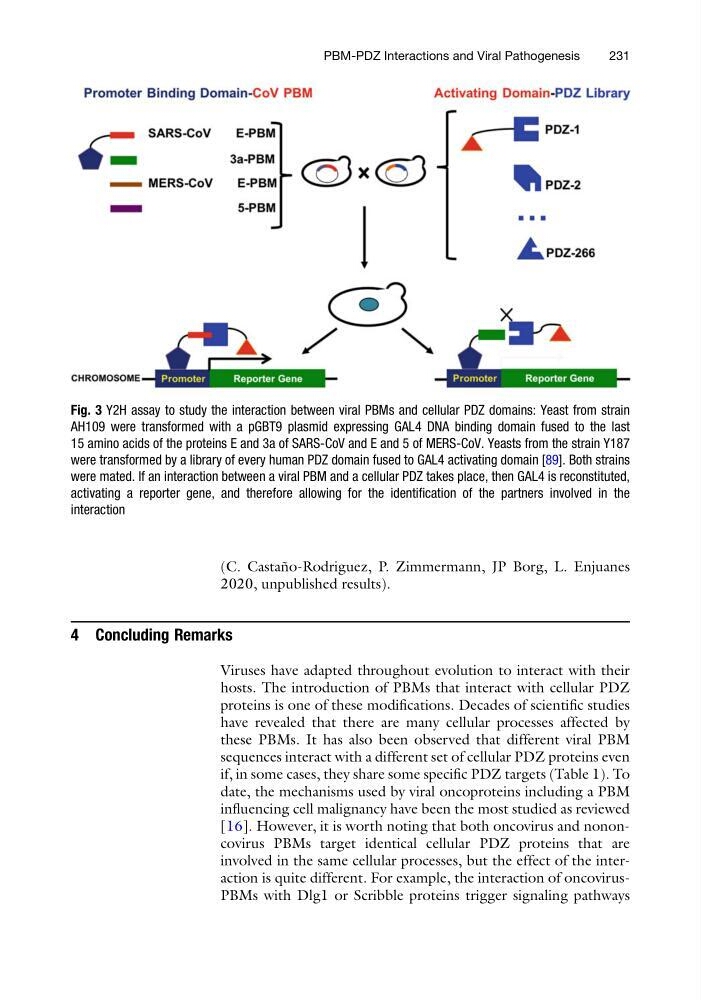
Fig. 3 Y2H assay to study the interaction between viral PBMs and cellular PDZ domains: Yeast from strain
AH109 were transformed with a pGBT9 plasmid expressing GAL4 DNA binding domain fused to the last
15 amino acids of the proteins E and 3a of SARS-CoV and E and 5 of MERS-CoV. Yeasts from the strain Y187
were transformed by a library of every human PDZ domain fused to GAL4 activating domain [89]. Both strains
were mated. If an interaction between a viral PBM and a cellular PDZ takes place, then GAL4 is reconstituted,
activating a reporter gene, and therefore allowing for the identification of the partners involved in the
interaction
PBM-PDZ Interactions and Viral Pathogenesis
231
2020, unpublished results).
4 Concluding Remarks
Viruses have adapted throughout evolution to interact with their
hosts. The introduction of PBMs that interact with cellular PDZ
proteins is one of these modifications. Decades of scientific studies
have revealed that there are many cellular processes affected by
these PBMs. It has also been observed that different viral PBM
sequences interact with a different set of cellular PDZ proteins even
if, in some cases, they share some specific PDZ targets (Table 1). To
date, the mechanisms used by viral oncoproteins including a PBM
influencing cell malignancy have been the most studied as reviewed
[16]. However, it is worth noting that both oncovirus and nononcovirus PBMs target identical cellular PDZ proteins that are
involved in the same cellular processes, but the effect of the interaction is quite different. For example, the interaction of oncovirusPBMs with Dlg1 or Scribble proteins trigger signaling pathways
Fig. 3 Y2H assay to study the interaction between viral PBMs and cellular PDZ domains: Yeast from strain
AH109 were transformed with a pGBT9 plasmid expressing GAL4 DNA binding domain fused to the last
15 amino acids of the proteins E and 3a of SARS-CoV and E and 5 of MERS-CoV. Yeasts from the strain Y187
were transformed by a library of every human PDZ domain fused to GAL4 activating domain [89]. Both strains
were mated. If an interaction between a viral PBM and a cellular PDZ takes place, then GAL4 is reconstituted,
activating a reporter gene, and therefore allowing for the identification of the partners involved in the
interaction
PBM-PDZ Interactions and Viral Pathogenesis
231