

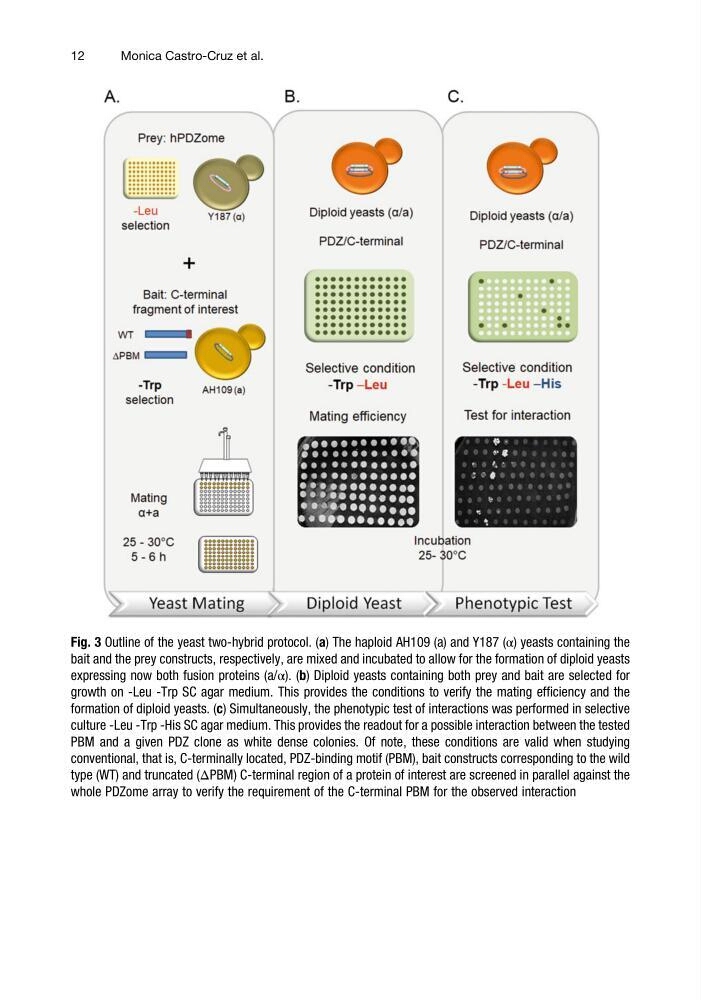
Fig. 3 Outline of the yeast two-hybrid protocol. (a) The haploid AH109 (a) and Y187 (α) yeasts containing the
bait and the prey constructs, respectively, are mixed and incubated to allow for the formation of diploid yeasts
expressing now both fusion proteins (a/α). (b) Diploid yeasts containing both prey and bait are selected for
growth on -Leu -Trp SC agar medium. This provides the conditions to verify the mating efficiency and the
formation of diploid yeasts. (c) Simultaneously, the phenotypic test of interactions was performed in selective
culture -Leu -Trp -His SC agar medium. This provides the readout for a possible interaction between the tested
PBM and a given PDZ clone as white dense colonies. Of note, these conditions are valid when studying
conventional, that is, C-terminally located, PDZ-binding motif (PBM), bait constructs corresponding to the wild
type (WT) and truncated (ΔPBM) C-terminal region of a protein of interest are screened in parallel against the
whole PDZome array to verify the requirement of the C-terminal PBM for the observed interaction
12
Monica Castro-Cruz et al.
bait and the prey constructs, respectively, are mixed and incubated to allow for the formation of diploid yeasts
expressing now both fusion proteins (a/α). (b) Diploid yeasts containing both prey and bait are selected for
growth on -Leu -Trp SC agar medium. This provides the conditions to verify the mating efficiency and the
formation of diploid yeasts. (c) Simultaneously, the phenotypic test of interactions was performed in selective
culture -Leu -Trp -His SC agar medium. This provides the readout for a possible interaction between the tested
PBM and a given PDZ clone as white dense colonies. Of note, these conditions are valid when studying
conventional, that is, C-terminally located, PDZ-binding motif (PBM), bait constructs corresponding to the wild
type (WT) and truncated (ΔPBM) C-terminal region of a protein of interest are screened in parallel against the
whole PDZome array to verify the requirement of the C-terminal PBM for the observed interaction
12
Monica Castro-Cruz et al.