

specific linear motifs necessary for PDZ domain recognition that
provide key hydrogen bonds for the interaction. This set of characteristics is not easily mimicked by small molecules and this eventually led to shift to peptide based inhibitors [21]
Peptide-based inhibitors are more suited to target this interaction due to their size and flexibility [22, 23], and are currently on
the rise from preclinical studies toward Phase III clinical trials. The
first attempt targeting the NMDA/PSD-95/nNOS complex with a
peptide-based inhibitor, was the 20-mer peptide NA-1 in which the
C-terminal 9 amino acids from the NMDA receptor subunit
GluN2B was fused to an 11 amino acid HIV-1-derived peptide
moiety (Tat), which facilitates penetration of cell membranes and
the blood–brain barrier [20]. NA-1 has proven to have an extensive
neuroprotective effect in rats and nonhuman primate ischemic
stroke models with a 1–3 h time window and the Phase III clinical
trials results were published recently (see Fig. 1) [10].
Nonetheless, NA-1 has a relatively low affinity toward its target
protein, which was later overcome by developing a dimeric inhibitor AVLX-144 designed by Bach, Strømgaard, and collaborators,
which block PSD-95 PDZ1 and 2 simultaneously. This design leads
to a 1000-fold increase in binding affinity to PSD-95 relative to
NA-1 [24]. Here we detail the process of peptide-based drug
development based on the development of AVLX-144, from standard solid-phase peptide synthesis to advanced in vitro and in vivo
screening assays to elucidate the pharmacological behavior of
drugs.
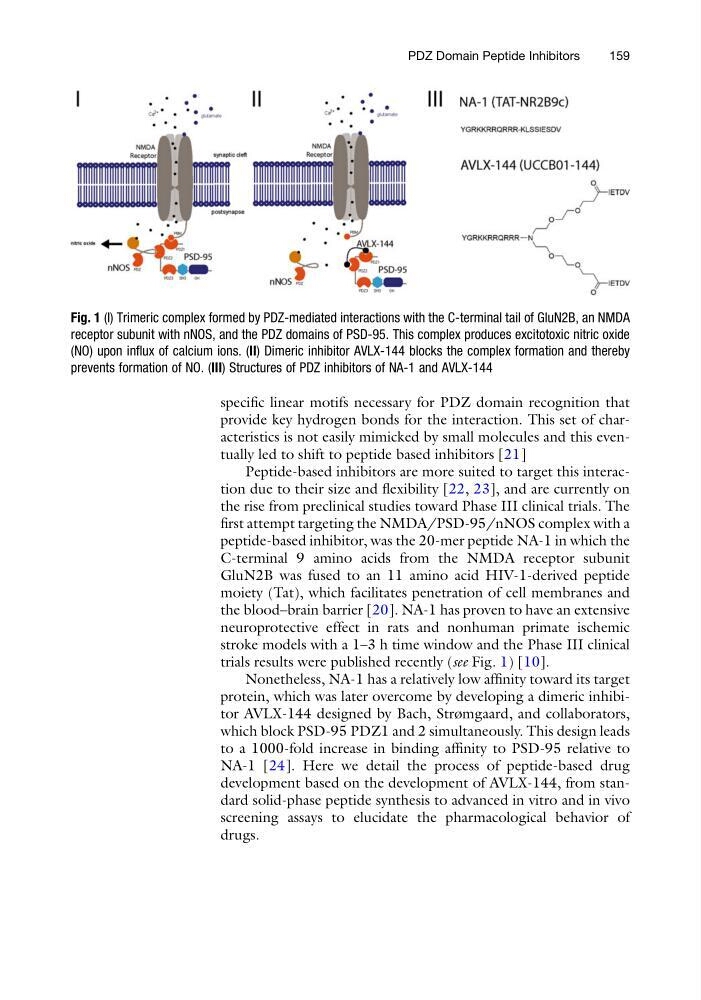
Fig. 1 (I) Trimeric complex formed by PDZ-mediated interactions with the C-terminal tail of GluN2B, an NMDA
receptor subunit with nNOS, and the PDZ domains of PSD-95. This complex produces excitotoxic nitric oxide
(NO) upon influx of calcium ions. (II) Dimeric inhibitor AVLX-144 blocks the complex formation and thereby
prevents formation of NO. (III) Structures of PDZ inhibitors of NA-1 and AVLX-144
PDZ Domain Peptide Inhibitors
159
provide key hydrogen bonds for the interaction. This set of characteristics is not easily mimicked by small molecules and this eventually led to shift to peptide based inhibitors [21]
Peptide-based inhibitors are more suited to target this interaction due to their size and flexibility [22, 23], and are currently on
the rise from preclinical studies toward Phase III clinical trials. The
first attempt targeting the NMDA/PSD-95/nNOS complex with a
peptide-based inhibitor, was the 20-mer peptide NA-1 in which the
C-terminal 9 amino acids from the NMDA receptor subunit
GluN2B was fused to an 11 amino acid HIV-1-derived peptide
moiety (Tat), which facilitates penetration of cell membranes and
the blood–brain barrier [20]. NA-1 has proven to have an extensive
neuroprotective effect in rats and nonhuman primate ischemic
stroke models with a 1–3 h time window and the Phase III clinical
trials results were published recently (see Fig. 1) [10].
Nonetheless, NA-1 has a relatively low affinity toward its target
protein, which was later overcome by developing a dimeric inhibitor AVLX-144 designed by Bach, Strømgaard, and collaborators,
which block PSD-95 PDZ1 and 2 simultaneously. This design leads
to a 1000-fold increase in binding affinity to PSD-95 relative to
NA-1 [24]. Here we detail the process of peptide-based drug
development based on the development of AVLX-144, from standard solid-phase peptide synthesis to advanced in vitro and in vivo
screening assays to elucidate the pharmacological behavior of
drugs.
Fig. 1 (I) Trimeric complex formed by PDZ-mediated interactions with the C-terminal tail of GluN2B, an NMDA
receptor subunit with nNOS, and the PDZ domains of PSD-95. This complex produces excitotoxic nitric oxide
(NO) upon influx of calcium ions. (II) Dimeric inhibitor AVLX-144 blocks the complex formation and thereby
prevents formation of NO. (III) Structures of PDZ inhibitors of NA-1 and AVLX-144
PDZ Domain Peptide Inhibitors
159