

whereas Gal4-AD is fused to potential interactors called “prey”
(Y) (Fig. 1). The bait and prey constructs are separately expressed
in haploid yeast strains of opposite mating type (MATa and MATα).
The auxotrophic markers HIS3 and URA3 together with the lacZ
gene are the three most frequently used reporter/survival genes,
the latter enabling a colorimetric readout of the tested PPI [3, 4].
Even though the Y2H approach is a powerful screening
approach, it should be kept in mind that it is prone to false-positive
and false-negative results [5]. False positives may result from spurious activation of the reporter gene in the absence of an interacting
partner. False negatives, on the other hand, may stem from the
requirement of posttranslational modifications, potential steric
constrains imposed by the cloning or from the failure of the interacting partners to reach the nuclear compartment. It is always
recommended to add negative and positive controls in addition to
the proteins of interest. It is also crucial to cross-validate the results
of a Y2H screen by alternative approaches (coimmunoprecipitation,
mass spectrometry, and surface plasmon resonance, among others).
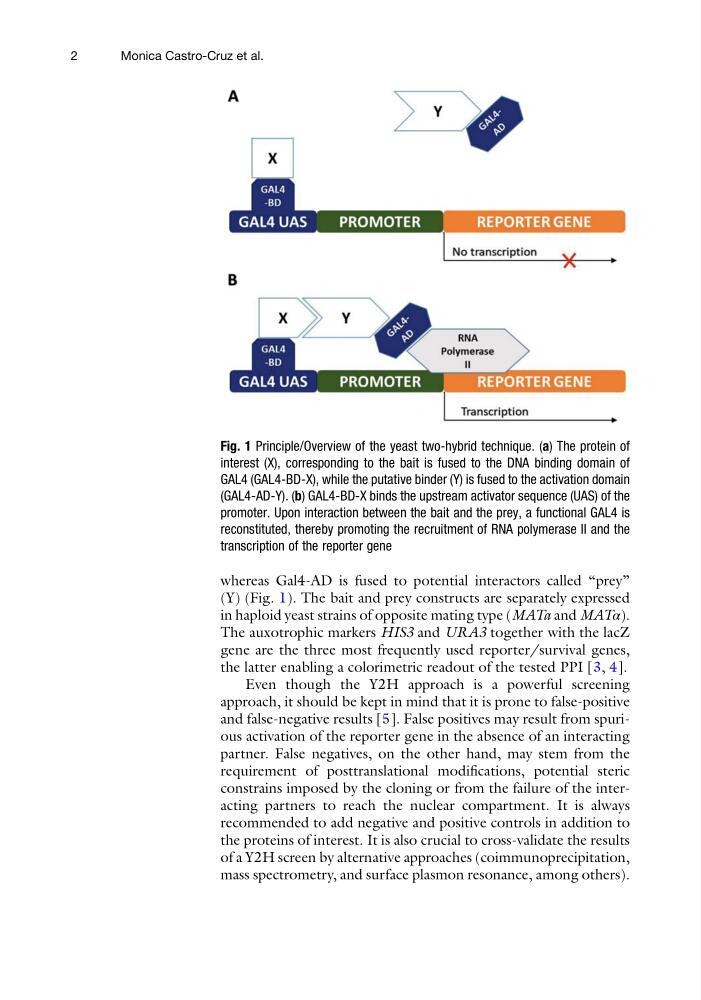
Fig. 1 Principle/Overview of the yeast two-hybrid technique. (a) The protein of
interest (X), corresponding to the bait is fused to the DNA binding domain of
GAL4 (GAL4-BD-X), while the putative binder (Y) is fused to the activation domain
(GAL4-AD-Y). (b) GAL4-BD-X binds the upstream activator sequence (UAS) of the
promoter. Upon interaction between the bait and the prey, a functional GAL4 is
reconstituted, thereby promoting the recruitment of RNA polymerase II and the
transcription of the reporter gene
2
Monica Castro-Cruz et al.
(Y) (Fig. 1). The bait and prey constructs are separately expressed
in haploid yeast strains of opposite mating type (MATa and MATα).
The auxotrophic markers HIS3 and URA3 together with the lacZ
gene are the three most frequently used reporter/survival genes,
the latter enabling a colorimetric readout of the tested PPI [3, 4].
Even though the Y2H approach is a powerful screening
approach, it should be kept in mind that it is prone to false-positive
and false-negative results [5]. False positives may result from spurious activation of the reporter gene in the absence of an interacting
partner. False negatives, on the other hand, may stem from the
requirement of posttranslational modifications, potential steric
constrains imposed by the cloning or from the failure of the interacting partners to reach the nuclear compartment. It is always
recommended to add negative and positive controls in addition to
the proteins of interest. It is also crucial to cross-validate the results
of a Y2H screen by alternative approaches (coimmunoprecipitation,
mass spectrometry, and surface plasmon resonance, among others).
Fig. 1 Principle/Overview of the yeast two-hybrid technique. (a) The protein of
interest (X), corresponding to the bait is fused to the DNA binding domain of
GAL4 (GAL4-BD-X), while the putative binder (Y) is fused to the activation domain
(GAL4-AD-Y). (b) GAL4-BD-X binds the upstream activator sequence (UAS) of the
promoter. Upon interaction between the bait and the prey, a functional GAL4 is
reconstituted, thereby promoting the recruitment of RNA polymerase II and the
transcription of the reporter gene
2
Monica Castro-Cruz et al.