

DNA overhangs with the SapI-based Golden Gate handle
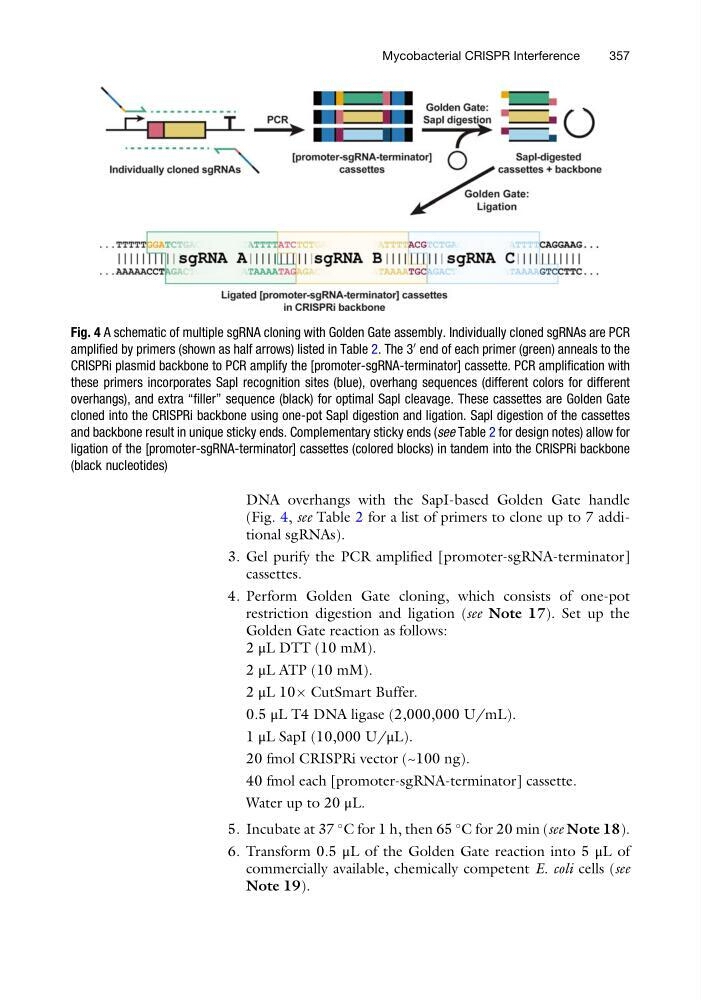
(Fig. 4, see Table 2 for a list of primers to clone up to 7 additional sgRNAs).
3. Gel purify the PCR amplified [promoter-sgRNA-terminator]
cassettes.
4. Perform Golden Gate cloning, which consists of one-pot
restriction digestion and ligation (see Note 17). Set up the
Golden Gate reaction as follows:
2 μL DTT (10 mM).
2 μL ATP (10 mM).
2 μL 10Â CutSmart Buffer.
0.5 μL T4 DNA ligase (2,000,000 U/mL).
1 μL SapI (10,000 U/μL).
20 fmol CRISPRi vector (~100 ng).
40 fmol each [promoter-sgRNA-terminator] cassette.
Water up to 20 μL.
5. Incubate at 37
C for 1 h, then 65
C for 20 min (see Note 18).
6. Transform 0.5 μL of the Golden Gate reaction into 5 μL of
commercially available, chemically competent E. coli cells (see
Note 19).
Fig. 4 A schematic of multiple sgRNA cloning with Golden Gate assembly. Individually cloned sgRNAs are PCR
amplified by primers (shown as half arrows) listed in Table 2. The 3
0
end of each primer (green) anneals to the
CRISPRi plasmid backbone to PCR amplify the [promoter-sgRNA-terminator] cassette. PCR amplification with
these primers incorporates SapI recognition sites (blue), overhang sequences (different colors for different
overhangs), and extra “filler” sequence (black) for optimal SapI cleavage. These cassettes are Golden Gate
cloned into the CRISPRi backbone using one-pot SapI digestion and ligation. SapI digestion of the cassettes
and backbone result in unique sticky ends. Complementary sticky ends (see Table 2 for design notes) allow for
ligation of the [promoter-sgRNA-terminator] cassettes (colored blocks) in tandem into the CRISPRi backbone
(black nucleotides)
Mycobacterial CRISPR Interference
357
(Fig. 4, see Table 2 for a list of primers to clone up to 7 additional sgRNAs).
3. Gel purify the PCR amplified [promoter-sgRNA-terminator]
cassettes.
4. Perform Golden Gate cloning, which consists of one-pot
restriction digestion and ligation (see Note 17). Set up the
Golden Gate reaction as follows:
2 μL DTT (10 mM).
2 μL ATP (10 mM).
2 μL 10Â CutSmart Buffer.
0.5 μL T4 DNA ligase (2,000,000 U/mL).
1 μL SapI (10,000 U/μL).
20 fmol CRISPRi vector (~100 ng).
40 fmol each [promoter-sgRNA-terminator] cassette.
Water up to 20 μL.
5. Incubate at 37
C for 1 h, then 65
C for 20 min (see Note 18).
6. Transform 0.5 μL of the Golden Gate reaction into 5 μL of
commercially available, chemically competent E. coli cells (see
Note 19).
Fig. 4 A schematic of multiple sgRNA cloning with Golden Gate assembly. Individually cloned sgRNAs are PCR
amplified by primers (shown as half arrows) listed in Table 2. The 3
0
end of each primer (green) anneals to the
CRISPRi plasmid backbone to PCR amplify the [promoter-sgRNA-terminator] cassette. PCR amplification with
these primers incorporates SapI recognition sites (blue), overhang sequences (different colors for different
overhangs), and extra “filler” sequence (black) for optimal SapI cleavage. These cassettes are Golden Gate
cloned into the CRISPRi backbone using one-pot SapI digestion and ligation. SapI digestion of the cassettes
and backbone result in unique sticky ends. Complementary sticky ends (see Table 2 for design notes) allow for
ligation of the [promoter-sgRNA-terminator] cassettes (colored blocks) in tandem into the CRISPRi backbone
(black nucleotides)
Mycobacterial CRISPR Interference
357