

the mycobacterial chromosome at the L5 attB site. See notes at
the end of each section for modifications when performing
CRISPRi in M. smegmatis.
4. QIAquick Gel Extraction Kit (Qiagen).
5. TAE buffer.
6. Molecular biology grade agarose.
7. DNA intercalating dye for visualization (such as SYBR Safe,
Thermo Fisher Scientific).
2.4 Ligation of the
Annealed sgRNA
Oligos into the CRISPRi
Backbone
1. T4 DNA Ligase (2,000,000 U/mL; NEB).
2. 10Â T4 DNA Ligase Buffer.
3. Chemically competent E. coli for cloning.
4. LB agar.
5. Kanamycin.
6. QIAprep Spin Miniprep Kit (Qiagen) or equivalent.
7. Oligonucleotide used to Sanger sequence plasmids containing
the cloned sgRNA:
5
0 -TTCCTGTGAAGAGCCATTGATAATG-3
0 .
2.5 Preparation of
Electrocompetent
Mycobacteria
1. M. tuberculosis.
2. T-25 tissue culture flasks.
3. 7H9-OADC-Tween80: Dissolve 4.7 g Difco Middlebrook
7H9 Broth powder (BD) in 893.5 mL deionized water and
autoclave. Cool to 50
C and then aseptically add 4 mL of filter
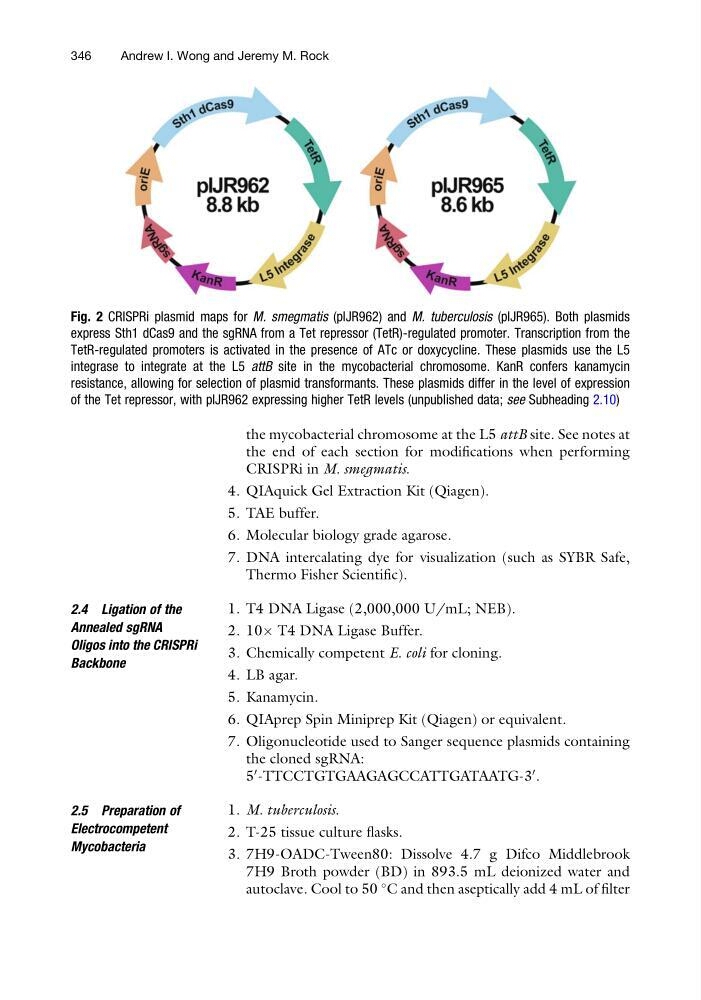
Fig. 2 CRISPRi plasmid maps for M. smegmatis (plJR962) and M. tuberculosis (plJR965). Both plasmids
express Sth1 dCas9 and the sgRNA from a Tet repressor (TetR)-regulated promoter. Transcription from the
TetR-regulated promoters is activated in the presence of ATc or doxycycline. These plasmids use the L5
integrase to integrate at the L5 attB site in the mycobacterial chromosome. KanR confers kanamycin
resistance, allowing for selection of plasmid transformants. These plasmids differ in the level of expression
of the Tet repressor, with plJR962 expressing higher TetR levels (unpublished data; see Subheading 2.10)
346
Andrew I. Wong and Jeremy M. Rock
the end of each section for modifications when performing
CRISPRi in M. smegmatis.
4. QIAquick Gel Extraction Kit (Qiagen).
5. TAE buffer.
6. Molecular biology grade agarose.
7. DNA intercalating dye for visualization (such as SYBR Safe,
Thermo Fisher Scientific).
2.4 Ligation of the
Annealed sgRNA
Oligos into the CRISPRi
Backbone
1. T4 DNA Ligase (2,000,000 U/mL; NEB).
2. 10Â T4 DNA Ligase Buffer.
3. Chemically competent E. coli for cloning.
4. LB agar.
5. Kanamycin.
6. QIAprep Spin Miniprep Kit (Qiagen) or equivalent.
7. Oligonucleotide used to Sanger sequence plasmids containing
the cloned sgRNA:
5
0 -TTCCTGTGAAGAGCCATTGATAATG-3
0 .
2.5 Preparation of
Electrocompetent
Mycobacteria
1. M. tuberculosis.
2. T-25 tissue culture flasks.
3. 7H9-OADC-Tween80: Dissolve 4.7 g Difco Middlebrook
7H9 Broth powder (BD) in 893.5 mL deionized water and
autoclave. Cool to 50
C and then aseptically add 4 mL of filter
Fig. 2 CRISPRi plasmid maps for M. smegmatis (plJR962) and M. tuberculosis (plJR965). Both plasmids
express Sth1 dCas9 and the sgRNA from a Tet repressor (TetR)-regulated promoter. Transcription from the
TetR-regulated promoters is activated in the presence of ATc or doxycycline. These plasmids use the L5
integrase to integrate at the L5 attB site in the mycobacterial chromosome. KanR confers kanamycin
resistance, allowing for selection of plasmid transformants. These plasmids differ in the level of expression
of the Tet repressor, with plJR962 expressing higher TetR levels (unpublished data; see Subheading 2.10)
346
Andrew I. Wong and Jeremy M. Rock