

1.2 Compound
Exposure
In optimizing PROSPECT, we tested several parameters relating to
exposure of the strain pool to test compounds: waiting time after
removal of the proteolysis repressor anhydrotetracycline (ATC),
initial inoculum, and duration of exposure to test compounds (see
Note 2).
1.3 Sequencing
Library Construction
In order to yield genetic material of sufficient quality for NGS, it
was necessary to develop a mycobacterial lysis method compatible
with high throughput that was robust enough to disrupt the mycobacterial cell wall but gentle enough to not substantially degrade
chromosomal DNA (see Note 3).
The sequencing libraries are constructed using PCR with an
array of primers with 3
0 -complementarity to the strain barcode
flanks, and 5
0 -overhangs incorporating all necessary Illumina
sequencing apparatus (chip hybridization and sequencing primer
binding sites) as well as barcodes to identify either the plate and
quadrant (left or forward primer) or the well within a plate quadrant (right or reverse primer). Thus, there is one left primer for each
plate quadrant in a particular screen, and 96 right primers. We use a
high-fidelity polymerase to prevent barcode mutation, which could
affect downstream data analysis. After PCR, the products are combined. Enzymes, cell debris, and unreacted primers are removed
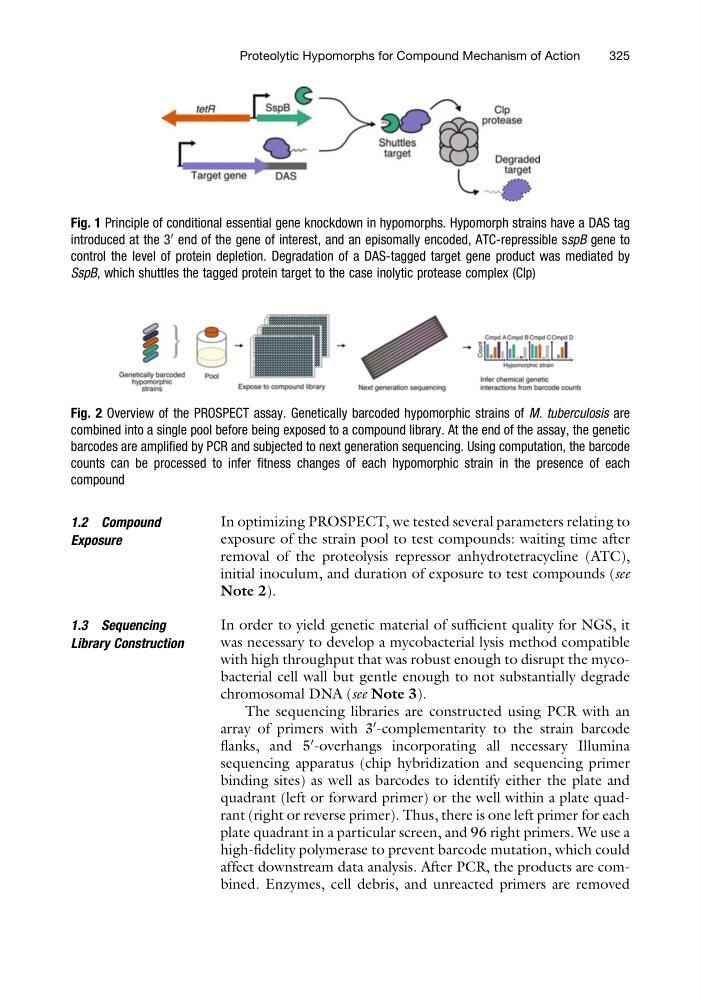
Fig. 1 Principle of conditional essential gene knockdown in hypomorphs. Hypomorph strains have a DAS tag
introduced at the 3
0
end of the gene of interest, and an episomally encoded, ATC-repressible sspB gene to
control the level of protein depletion. Degradation of a DAS-tagged target gene product was mediated by
SspB, which shuttles the tagged protein target to the case inolytic protease complex (Clp)
Fig. 2 Overview of the PROSPECT assay. Genetically barcoded hypomorphic strains of M. tuberculosis are
combined into a single pool before being exposed to a compound library. At the end of the assay, the genetic
barcodes are amplified by PCR and subjected to next generation sequencing. Using computation, the barcode
counts can be processed to infer fitness changes of each hypomorphic strain in the presence of each
compound
Proteolytic Hypomorphs for Compound Mechanism of Action
325
Exposure
In optimizing PROSPECT, we tested several parameters relating to
exposure of the strain pool to test compounds: waiting time after
removal of the proteolysis repressor anhydrotetracycline (ATC),
initial inoculum, and duration of exposure to test compounds (see
Note 2).
1.3 Sequencing
Library Construction
In order to yield genetic material of sufficient quality for NGS, it
was necessary to develop a mycobacterial lysis method compatible
with high throughput that was robust enough to disrupt the mycobacterial cell wall but gentle enough to not substantially degrade
chromosomal DNA (see Note 3).
The sequencing libraries are constructed using PCR with an
array of primers with 3
0 -complementarity to the strain barcode
flanks, and 5
0 -overhangs incorporating all necessary Illumina
sequencing apparatus (chip hybridization and sequencing primer
binding sites) as well as barcodes to identify either the plate and
quadrant (left or forward primer) or the well within a plate quadrant (right or reverse primer). Thus, there is one left primer for each
plate quadrant in a particular screen, and 96 right primers. We use a
high-fidelity polymerase to prevent barcode mutation, which could
affect downstream data analysis. After PCR, the products are combined. Enzymes, cell debris, and unreacted primers are removed
Fig. 1 Principle of conditional essential gene knockdown in hypomorphs. Hypomorph strains have a DAS tag
introduced at the 3
0
end of the gene of interest, and an episomally encoded, ATC-repressible sspB gene to
control the level of protein depletion. Degradation of a DAS-tagged target gene product was mediated by
SspB, which shuttles the tagged protein target to the case inolytic protease complex (Clp)
Fig. 2 Overview of the PROSPECT assay. Genetically barcoded hypomorphic strains of M. tuberculosis are
combined into a single pool before being exposed to a compound library. At the end of the assay, the genetic
barcodes are amplified by PCR and subjected to next generation sequencing. Using computation, the barcode
counts can be processed to infer fitness changes of each hypomorphic strain in the presence of each
compound
Proteolytic Hypomorphs for Compound Mechanism of Action
325