

its use depends on the location of a nearby PAM site close to the
SNP target site. Additionally, such a scheme has not yet been
reported for use in M. tuberculosis.
There are three considerations to take into account in order to
improve the frequencies of oligo-mediated mycobacterial recombineering and for finding such events. The first of these was recognized by van Kessel and Hatfull [17] when they found that only a
fraction of mycobacterial cells pick up DNA during an electroporation. One can enrich for cells that have picked up the
SNP-containing oligo by coelectroporation with an antibioticselectable plasmid or oligo. PCR screening for the SNP of interest
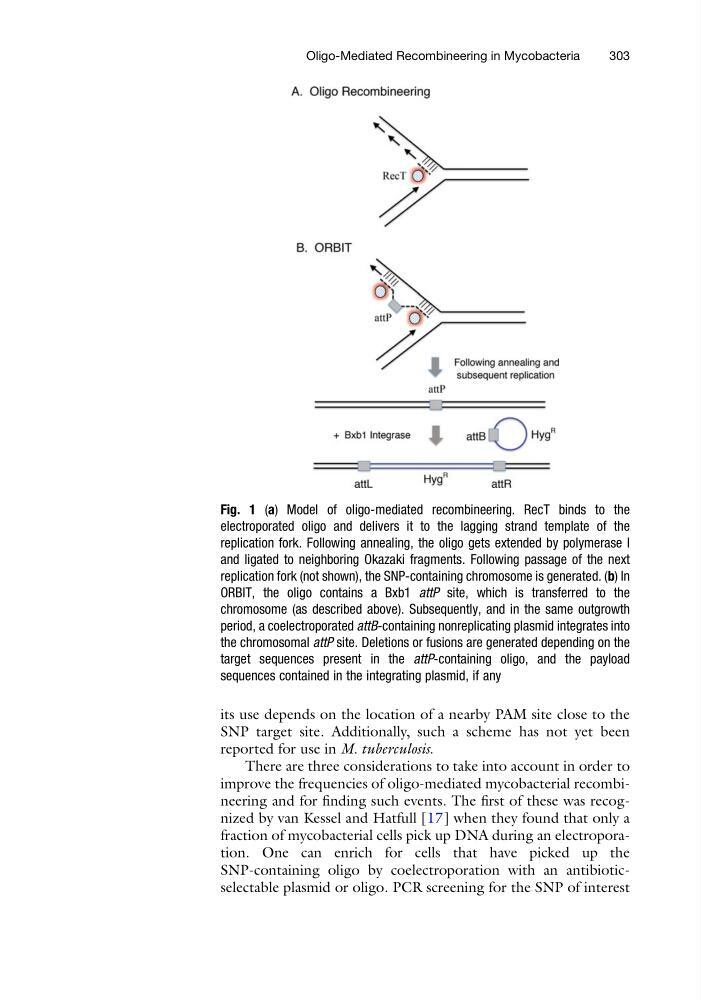
Fig. 1 (a) Model of oligo-mediated recombineering. RecT binds to the
electroporated oligo and delivers it to the lagging strand template of the
replication fork. Following annealing, the oligo gets extended by polymerase I
and ligated to neighboring Okazaki fragments. Following passage of the next
replication fork (not shown), the SNP-containing chromosome is generated. (b) In
ORBIT, the oligo contains a Bxb1 attP site, which is transferred to the
chromosome (as described above). Subsequently, and in the same outgrowth
period, a coelectroporated attB-containing nonreplicating plasmid integrates into
the chromosomal attP site. Deletions or fusions are generated depending on the
target sequences present in the attP-containing oligo, and the payload
sequences contained in the integrating plasmid, if any
Oligo-Mediated Recombineering in Mycobacteria
303
SNP target site. Additionally, such a scheme has not yet been
reported for use in M. tuberculosis.
There are three considerations to take into account in order to
improve the frequencies of oligo-mediated mycobacterial recombineering and for finding such events. The first of these was recognized by van Kessel and Hatfull [17] when they found that only a
fraction of mycobacterial cells pick up DNA during an electroporation. One can enrich for cells that have picked up the
SNP-containing oligo by coelectroporation with an antibioticselectable plasmid or oligo. PCR screening for the SNP of interest
Fig. 1 (a) Model of oligo-mediated recombineering. RecT binds to the
electroporated oligo and delivers it to the lagging strand template of the
replication fork. Following annealing, the oligo gets extended by polymerase I
and ligated to neighboring Okazaki fragments. Following passage of the next
replication fork (not shown), the SNP-containing chromosome is generated. (b) In
ORBIT, the oligo contains a Bxb1 attP site, which is transferred to the
chromosome (as described above). Subsequently, and in the same outgrowth
period, a coelectroporated attB-containing nonreplicating plasmid integrates into
the chromosomal attP site. Deletions or fusions are generated depending on the
target sequences present in the attP-containing oligo, and the payload
sequences contained in the integrating plasmid, if any
Oligo-Mediated Recombineering in Mycobacteria
303