

contaminated, as broth has a higher contamination rate than agar
[8]. Additives like Tween to liquid media can reduce cell clumping
but can also alter cell permeability and therefore susceptibility
patterns.
1.4 Slowly Growing
Mycobacteria (SGM)
SGM include the members of Mycobacterium tuberculosis complex,
a group which has recently been reclassified as a single species,
Mycobacterium tuberculosis, with all other group species being
designated as infrasubspecific variants [9]. SGM also include
M. leprae, the etiological cause of leprosy (Hansen’s disease).
Thus, SGM are of high concern as human pathogens. M. leprae
and “M. lepromatosis” (although not officially accepted as a new
species) [10] are the only known species of mycobacteria that
cannot be cultivated in vitro. Nine-banded armadillos and mice
are suitable hosts. Growth of these organisms can take several
months and is detailed in Subheading 3.9.
Frequently isolated SGM in clinical samples are: Mycobacterium
avium, Mycobacterium intracellulare subsp. intracellulare, Mycobacterium kansasii, Mycobacterium gordonae, Mycobacterium marinum, Mycobacterium simiae, Mycobacterium xenopi, and
Mycobacterium intracellulare subsp. chimaera. Many NTM can be
found in the environment, and therefore, it is important to establish the isolate’s clinical significance which is based on clinical,
radiologic, and microbiologic criteria [11]. NTM can cause lung
disease in patients with risk factors such as chronic obstructive
pulmonary disease (COPD), bronchiectasis, CF, dissemination in
AIDS patients with low CD4 cell count, and cervical lymphadenitis
in small children.
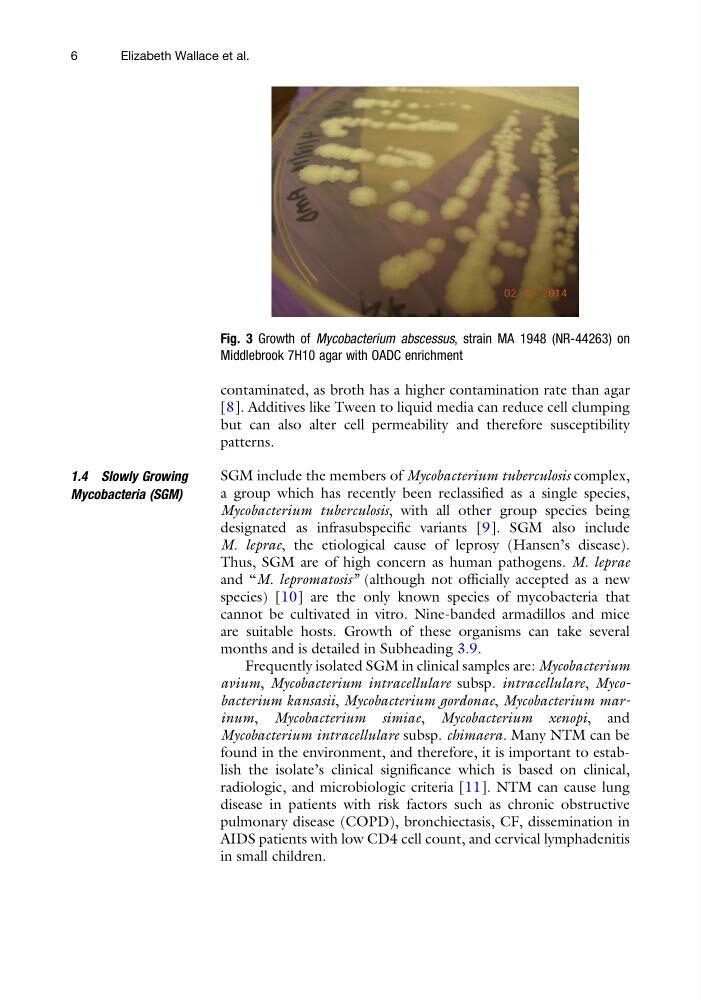
Fig. 3 Growth of Mycobacterium abscessus, strain MA 1948 (NR-44263) on
Middlebrook 7H10 agar with OADC enrichment
6
Elizabeth Wallace et al.
[8]. Additives like Tween to liquid media can reduce cell clumping
but can also alter cell permeability and therefore susceptibility
patterns.
1.4 Slowly Growing
Mycobacteria (SGM)
SGM include the members of Mycobacterium tuberculosis complex,
a group which has recently been reclassified as a single species,
Mycobacterium tuberculosis, with all other group species being
designated as infrasubspecific variants [9]. SGM also include
M. leprae, the etiological cause of leprosy (Hansen’s disease).
Thus, SGM are of high concern as human pathogens. M. leprae
and “M. lepromatosis” (although not officially accepted as a new
species) [10] are the only known species of mycobacteria that
cannot be cultivated in vitro. Nine-banded armadillos and mice
are suitable hosts. Growth of these organisms can take several
months and is detailed in Subheading 3.9.
Frequently isolated SGM in clinical samples are: Mycobacterium
avium, Mycobacterium intracellulare subsp. intracellulare, Mycobacterium kansasii, Mycobacterium gordonae, Mycobacterium marinum, Mycobacterium simiae, Mycobacterium xenopi, and
Mycobacterium intracellulare subsp. chimaera. Many NTM can be
found in the environment, and therefore, it is important to establish the isolate’s clinical significance which is based on clinical,
radiologic, and microbiologic criteria [11]. NTM can cause lung
disease in patients with risk factors such as chronic obstructive
pulmonary disease (COPD), bronchiectasis, CF, dissemination in
AIDS patients with low CD4 cell count, and cervical lymphadenitis
in small children.
Fig. 3 Growth of Mycobacterium abscessus, strain MA 1948 (NR-44263) on
Middlebrook 7H10 agar with OADC enrichment
6
Elizabeth Wallace et al.