

9. Place tubing from the output port on the base of the stirred
ultrafiltration cell in a suitable sized container to collect the
waste.
10. Turn on mechanism to stir the cell.
11. Check that all pressure release valves are closed. Turn on the
nitrogen gas, which will allow the stirred ultrafiltration cell to
fill with CFP (see Note 38).
12. Ensure that the stirrer is turning smoothly, and that there are
no leaks around the lid, base, or tubing connections. Also
check to see that the CFP eluate is slowly flowing from the
outlet port at the base of the stirred ultrafiltration cell (see Note
39).
13. When CFP is reduced to the desired volume (at least 20-fold
concentrated), turn off both the nitrogen gas and stirring
mechanism, and vent the system at both the stainless-steel
dispensing pressure vessel and the stirred ultrafiltration cell.
14. Add 10 mM ammonium bicarbonate to reservoir to begin
buffer exchange (see Note 40).
15. Close all pressure release valves; turn stirring mechanism and
nitrogen gas on.
16. When the CFP in the stirred ultrafiltration cell is reduced to
desired volume, turn off the nitrogen gas, turn off the stirring
mechanism, and vent the system at both the stainless-steel
dispensing pressure vessel and the stirred ultrafiltration cell.
17. Disconnect all tubing and remove the lid from the stirred
ultrafiltration cell.
To regulated
pressure source
GAS
GAS
SUPP
CELL
RES
IN
800
700
600
500
400
300
200
100
RES
OUT
LIQ
AMICON
STIRRED
CELL RESERVOIR
(cat. no. 6028)
AMICON
STIRRED CELL
SELECTOR VALVE
(cat. no. 6003)
AMICON
STIRRED CELL
MAGNETIC STIRRER
FILTRATE COLLECTION
CONTAINER
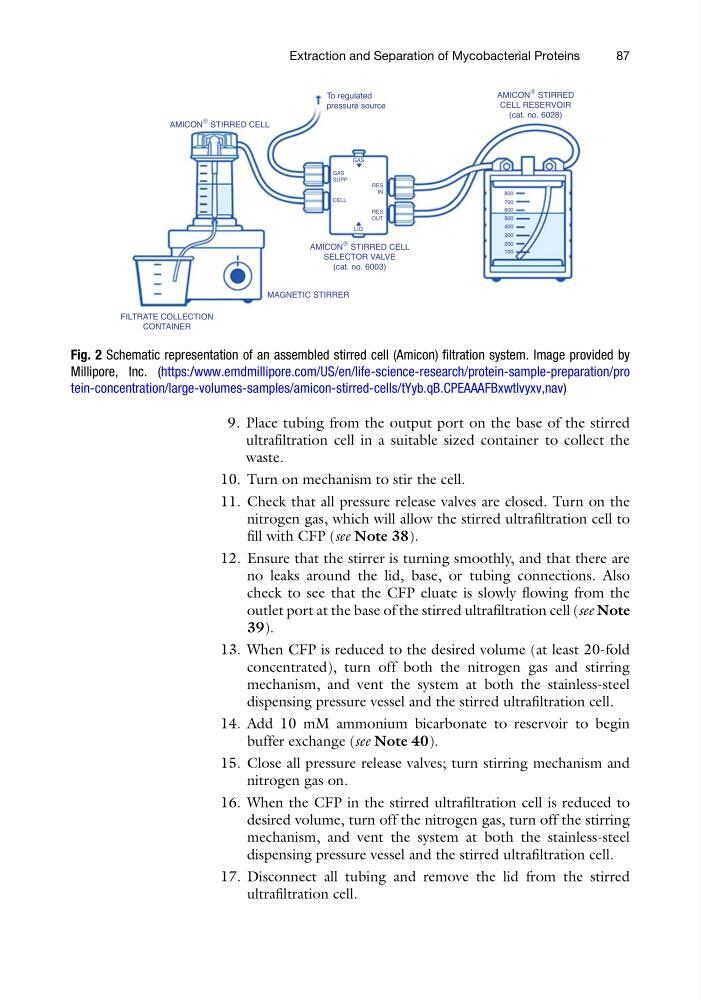
Fig. 2 Schematic representation of an assembled stirred cell (Amicon) filtration system. Image provided by
Millipore, Inc. (https:/ /www.emdmillipore.com/US/en/life-science-research/protein-sample-preparation/pro
tein-concentration/large-volumes-samples/amicon-stirred-cells/tYyb.qB.CPEAAAFBxwtlvyxv,nav)
Extraction and Separation of Mycobacterial Proteins
87
ultrafiltration cell in a suitable sized container to collect the
waste.
10. Turn on mechanism to stir the cell.
11. Check that all pressure release valves are closed. Turn on the
nitrogen gas, which will allow the stirred ultrafiltration cell to
fill with CFP (see Note 38).
12. Ensure that the stirrer is turning smoothly, and that there are
no leaks around the lid, base, or tubing connections. Also
check to see that the CFP eluate is slowly flowing from the
outlet port at the base of the stirred ultrafiltration cell (see Note
39).
13. When CFP is reduced to the desired volume (at least 20-fold
concentrated), turn off both the nitrogen gas and stirring
mechanism, and vent the system at both the stainless-steel
dispensing pressure vessel and the stirred ultrafiltration cell.
14. Add 10 mM ammonium bicarbonate to reservoir to begin
buffer exchange (see Note 40).
15. Close all pressure release valves; turn stirring mechanism and
nitrogen gas on.
16. When the CFP in the stirred ultrafiltration cell is reduced to
desired volume, turn off the nitrogen gas, turn off the stirring
mechanism, and vent the system at both the stainless-steel
dispensing pressure vessel and the stirred ultrafiltration cell.
17. Disconnect all tubing and remove the lid from the stirred
ultrafiltration cell.
To regulated
pressure source
GAS
GAS
SUPP
CELL
RES
IN
800
700
600
500
400
300
200
100
RES
OUT
LIQ
AMICON
STIRRED
CELL RESERVOIR
(cat. no. 6028)
AMICON
STIRRED CELL
SELECTOR VALVE
(cat. no. 6003)
AMICON
STIRRED CELL
MAGNETIC STIRRER
FILTRATE COLLECTION
CONTAINER
Fig. 2 Schematic representation of an assembled stirred cell (Amicon) filtration system. Image provided by
Millipore, Inc. (https:/ /www.emdmillipore.com/US/en/life-science-research/protein-sample-preparation/pro
tein-concentration/large-volumes-samples/amicon-stirred-cells/tYyb.qB.CPEAAAFBxwtlvyxv,nav)
Extraction and Separation of Mycobacterial Proteins
87