

202
Phytotechnology with Biomass Production
11.1 Introduction
Miscanthus harvests provide large quantities of biomass. This chapter
includes a review of alternative uses for Miscanthus that is produced at
phytoremediation sites and regular agricultural lands. Since the locations and sizes of contaminated sites have diversity, it is good to have
many potential uses for the biomass that is produced and harvested
(Nsanganwimana et al., 2014). The interest in products that are biodegradable is growing because of pollution associated with plastic products that
do not biodegrade.
The major constituents in Miscanthus are cellulose, hemicellulose, and lignin. These substances are very common in grasses, bushes, and trees. Wheat
straw, corn stover, switchgrass, giant reed, reed canary grass, bamboo, and
many other plants are good sources of cellulose, hemicellulose, and lignin.
Because of all of the different sources, there is competition in the marketplace. There are also huge markets for biomass all over the world. The pulp
and paper industry is an example. Biomass is used for energy, and it is better to burn renewable carbon than coal. The average breakdown of these
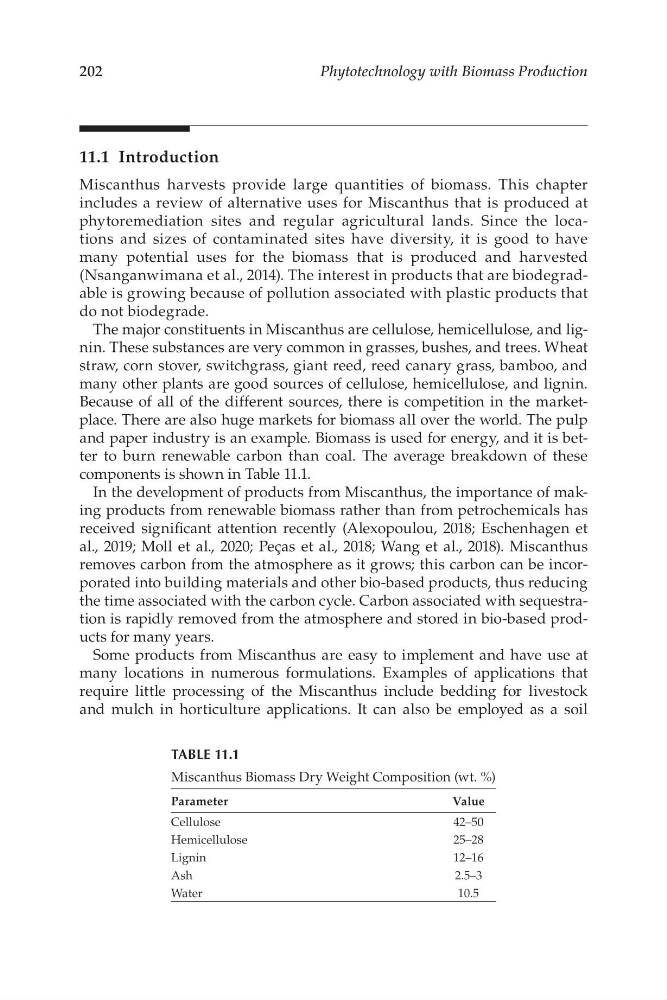
components is shown in Table 11.1.
In the development of products from Miscanthus, the importance of making products from renewable biomass rather than from petrochemicals has
received significant attention recently (Alexopoulou, 2018; Eschenhagen et
al., 2019; Moll et al., 2020; Peças et al., 2018; Wang et al., 2018). Miscanthus
removes carbon from the atmosphere as it grows; this carbon can be incorporated into building materials and other bio-based products, thus reducing
the time associated with the carbon cycle. Carbon associated with sequestration is rapidly removed from the atmosphere and stored in bio-based products for many years.
Some products from Miscanthus are easy to implement and have use at
many locations in numerous formulations. Examples of applications that
require little processing of the Miscanthus include bedding for livestock
and mulch in horticulture applications. It can also be employed as a soil
TABLE 11.1
Miscanthus Biomass Dry Weight Composition (wt. %)
Parameter
Value
Cellulose
42–50
Hemicellulose
25–28
Lignin
12–16
Ash
2.5–3
Water
10.5
Phytotechnology with Biomass Production
11.1 Introduction
Miscanthus harvests provide large quantities of biomass. This chapter
includes a review of alternative uses for Miscanthus that is produced at
phytoremediation sites and regular agricultural lands. Since the locations and sizes of contaminated sites have diversity, it is good to have
many potential uses for the biomass that is produced and harvested
(Nsanganwimana et al., 2014). The interest in products that are biodegradable is growing because of pollution associated with plastic products that
do not biodegrade.
The major constituents in Miscanthus are cellulose, hemicellulose, and lignin. These substances are very common in grasses, bushes, and trees. Wheat
straw, corn stover, switchgrass, giant reed, reed canary grass, bamboo, and
many other plants are good sources of cellulose, hemicellulose, and lignin.
Because of all of the different sources, there is competition in the marketplace. There are also huge markets for biomass all over the world. The pulp
and paper industry is an example. Biomass is used for energy, and it is better to burn renewable carbon than coal. The average breakdown of these
components is shown in Table 11.1.
In the development of products from Miscanthus, the importance of making products from renewable biomass rather than from petrochemicals has
received significant attention recently (Alexopoulou, 2018; Eschenhagen et
al., 2019; Moll et al., 2020; Peças et al., 2018; Wang et al., 2018). Miscanthus
removes carbon from the atmosphere as it grows; this carbon can be incorporated into building materials and other bio-based products, thus reducing
the time associated with the carbon cycle. Carbon associated with sequestration is rapidly removed from the atmosphere and stored in bio-based products for many years.
Some products from Miscanthus are easy to implement and have use at
many locations in numerous formulations. Examples of applications that
require little processing of the Miscanthus include bedding for livestock
and mulch in horticulture applications. It can also be employed as a soil
TABLE 11.1
Miscanthus Biomass Dry Weight Composition (wt. %)
Parameter
Value
Cellulose
42–50
Hemicellulose
25–28
Lignin
12–16
Ash
2.5–3
Water
10.5