

146
Phytotechnology with Biomass Production
Natural R. maidis infestation of M. × giganteus was found in Indiana, Illinois,
Nebraska, Kentucky, and Iowa (USA) in 2008 survey. Species was observed
on the young M. × giganteus whorls in first-year plantings (Bradshaw et al.,
2010). The infestation of young tillers resulted in yellowing of upper leaves
and occurred later compared to S. flava.
Other aphids that specialize on Poaceae family that may infest Miscanthus
in countries with temperate climates and vector of pathogens are bird-cherry
oat aphid Rhopalosiphum padi L., wheat aphid Schizaphis graminum Rondani,
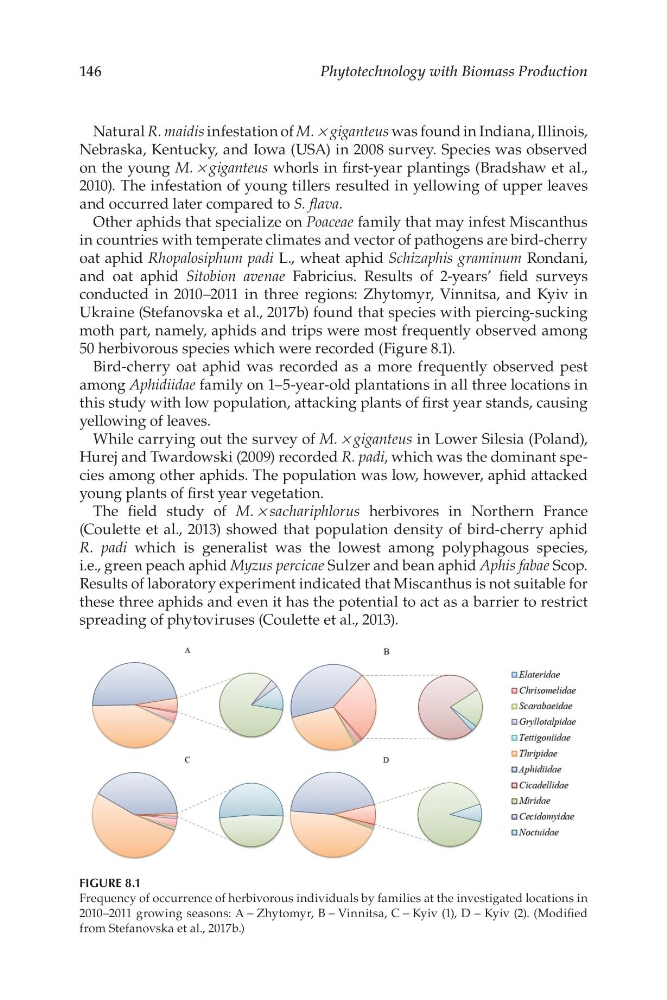
and oat aphid Sitobion avenae Fabricius. Results of 2-years’ field surveys
conducted in 2010–2011 in three regions: Zhytomyr, Vinnitsa, and Kyiv in
Ukraine (Stefanovska et al., 2017b) found that species with piercing-sucking
moth part, namely, aphids and trips were most frequently observed among
50 herbivorous species which were recorded (Figure 8.1).
Bird-cherry oat aphid was recorded as a more frequently observed pest
among Aphidiidae family on 1–5-year-old plantations in all three locations in
this study with low population, attacking plants of first year stands, causing
yellowing of leaves.
While carrying out the survey of M. × giganteus in Lower Silesia (Poland),
Hurej and Twardowski (2009) recorded R. padi, which was the dominant species among other aphids. The population was low, however, aphid attacked
young plants of first year vegetation.
The field study of M. × saсhariphlorus herbivores in Northern France
(Coulette et al., 2013) showed that population density of bird-cherry aphid
R. padi which is generalist was the lowest among polyphagous species,
i.e., green peach aphid Myzus percicae Sulzer and bean aphid Aphis fabae Scop.
Results of laboratory experiment indicated that Miscanthus is not suitable for
these three aphids and even it has the potential to act as a barrier to restrict
spreading of phytoviruses (Coulette et al., 2013).
FIGURE 8.1
Frequency of occurrence of herbivorous individuals by families at the investigated locations in
2010–2011 growing seasons: А − Zhytomyr, B − Vinnitsa, C − Kyiv (1), D – Kyiv (2). (Modified
from Stefanovska et al., 2017b.)