

331
Using Xenopus to Understand Pluripotency
a histone variant highly enriched in MII stage oocytes that
cooperates with histone chaperone HIRA, is also involved in
acquisition of pluripotency in humans (Gonzalez-Muñoz et
al., 2014). The macroH2A histone variant is replaced from
somatic nuclei following NT (Chang et al., 2010; Pasque
et al, 2011). This variant has been widely characterized as
a repressive factor that hinders chromatin remodeling and
binding of transcription factors by recruiting HDACs and
interfering with the binding of the SWI/SNF remodeling
complex (Angelov et al., 2003). Furthermore, the somatic
TATA-binding protein (TBP) involved in the formation of
the pre initiation complex of transcription is replaced by
its oocyte counterpart (Jullien et al., 2014). The chromatin
remodeler Brg1 (Smarca4) helps to activate the expression of
pluripotency factor Oct4 during NT of human somatic nuclei
to Xenopus egg extracts (Hansis et al, 2004). Similarly, in
induction of pluripotency in mouse embryonic f broblasts
(MEFs), the chromatin remodeler Baf155 causes an increase
in Oct4 expression (Singhal et al, 2010).
Nuclear actin, which is commonly associated with several different remodeling complexes, undergoes polymerization upon SCNT. It has been shown that this polymerization
is also essential for the reactivation of Oct4, with the help
of the actin signaling protein Toca-1 (Fnbp1l) and its downstream target Wave1 (Wasf1), both of which are enriched
in the oocyte GV (Miyamoto et al., 2011; Miyamoto et al.,
2013). The ability of Wave1 to interact with Ser2P Pol II
helps to increase the effciency of transcriptional reprogramming in Xenopus oocytes (Miyamoto et al., 2013). In this
manner, the oocyte rapidly employs several mechanisms to
promote reprogramming of the donor nucleus, irrespective
of the cell type of origin.
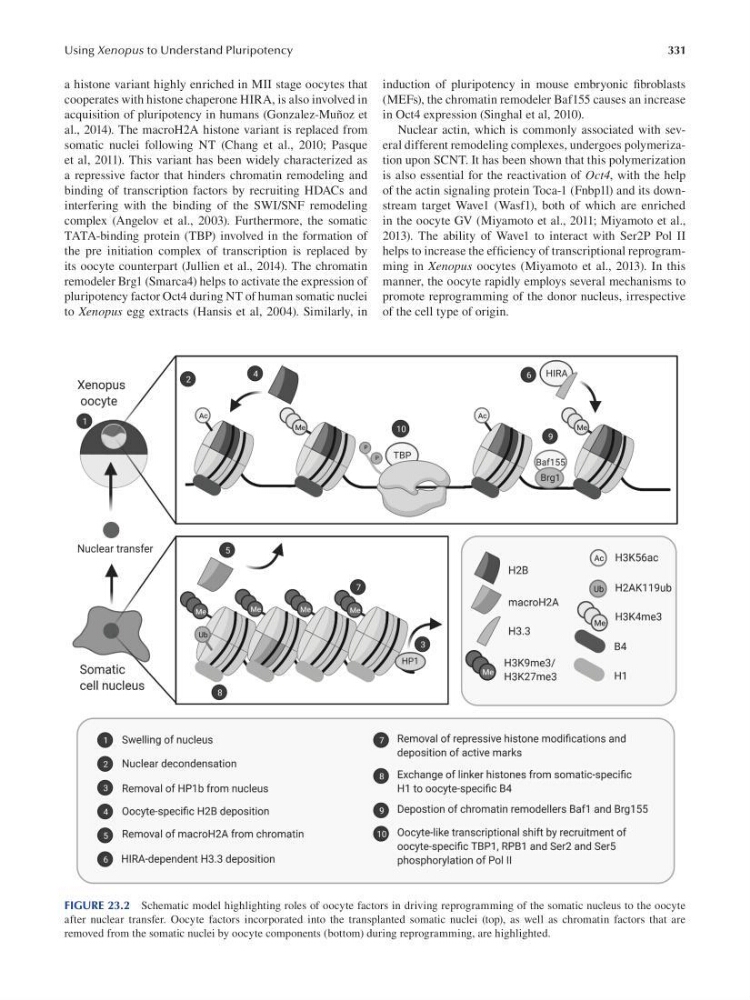
FIGURE 23.2 Schematic model highlighting roles of oocyte factors in driving reprogramming of the somatic nucleus to the oocyte
after nuclear transfer. Oocyte factors incorporated into the transplanted somatic nuclei (top), as well as chromatin factors that are
removed from the somatic nuclei by oocyte components (bottom) during reprogramming, are highlighted.
Using Xenopus to Understand Pluripotency
a histone variant highly enriched in MII stage oocytes that
cooperates with histone chaperone HIRA, is also involved in
acquisition of pluripotency in humans (Gonzalez-Muñoz et
al., 2014). The macroH2A histone variant is replaced from
somatic nuclei following NT (Chang et al., 2010; Pasque
et al, 2011). This variant has been widely characterized as
a repressive factor that hinders chromatin remodeling and
binding of transcription factors by recruiting HDACs and
interfering with the binding of the SWI/SNF remodeling
complex (Angelov et al., 2003). Furthermore, the somatic
TATA-binding protein (TBP) involved in the formation of
the pre initiation complex of transcription is replaced by
its oocyte counterpart (Jullien et al., 2014). The chromatin
remodeler Brg1 (Smarca4) helps to activate the expression of
pluripotency factor Oct4 during NT of human somatic nuclei
to Xenopus egg extracts (Hansis et al, 2004). Similarly, in
induction of pluripotency in mouse embryonic f broblasts
(MEFs), the chromatin remodeler Baf155 causes an increase
in Oct4 expression (Singhal et al, 2010).
Nuclear actin, which is commonly associated with several different remodeling complexes, undergoes polymerization upon SCNT. It has been shown that this polymerization
is also essential for the reactivation of Oct4, with the help
of the actin signaling protein Toca-1 (Fnbp1l) and its downstream target Wave1 (Wasf1), both of which are enriched
in the oocyte GV (Miyamoto et al., 2011; Miyamoto et al.,
2013). The ability of Wave1 to interact with Ser2P Pol II
helps to increase the effciency of transcriptional reprogramming in Xenopus oocytes (Miyamoto et al., 2013). In this
manner, the oocyte rapidly employs several mechanisms to
promote reprogramming of the donor nucleus, irrespective
of the cell type of origin.
FIGURE 23.2 Schematic model highlighting roles of oocyte factors in driving reprogramming of the somatic nucleus to the oocyte
after nuclear transfer. Oocyte factors incorporated into the transplanted somatic nuclei (top), as well as chromatin factors that are
removed from the somatic nuclei by oocyte components (bottom) during reprogramming, are highlighted.