

283
Functional Neurobiology in Xenopus
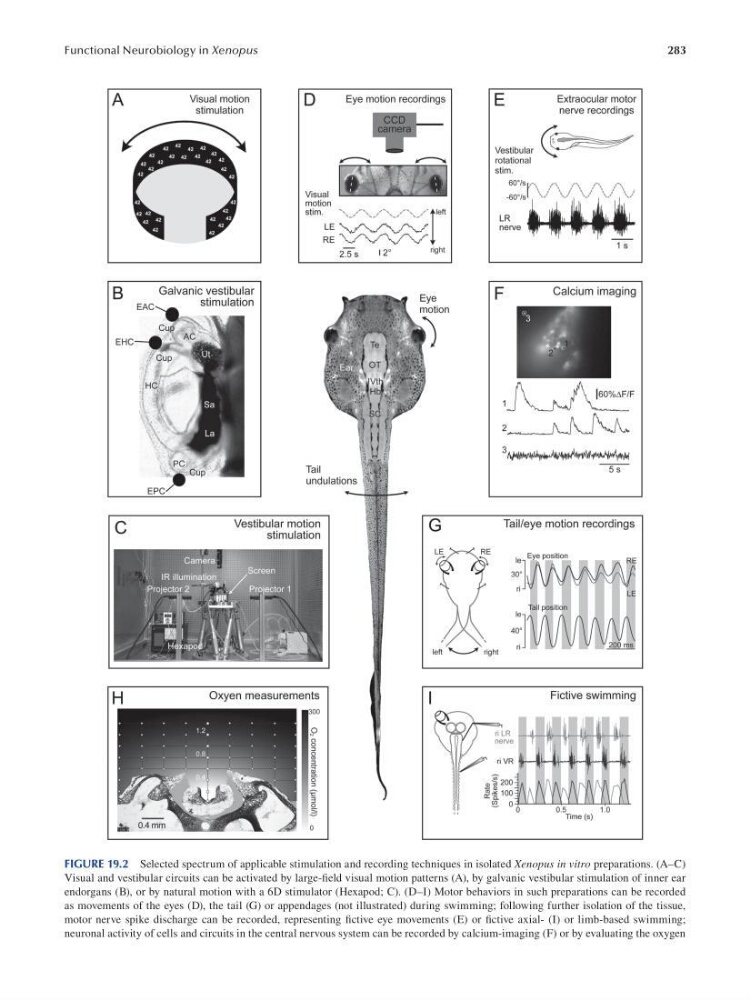
FIGURE 19.2 Selected spectrum of applicable stimulation and recording techniques in isolated Xenopus in vitro preparations. (A–C)
Visual and vestibular circuits can be activated by large-f eld visual motion patterns (A), by galvanic vestibular stimulation of inner ear
endorgans (B), or by natural motion with a 6D stimulator (Hexapod; C). (D–I) Motor behaviors in such preparations can be recorded
as movements of the eyes (D), the tail (G) or appendages (not illustrated) during swimming; following further isolation of the tissue,
motor nerve spike discharge can be recorded, representing fctive eye movements (E) or fctive axial- (I) or limb-based swimming;
neuronal activity of cells and circuits in the central nervous system can be recorded by calcium-imaging (F) or by evaluating the oxygen
Functional Neurobiology in Xenopus
FIGURE 19.2 Selected spectrum of applicable stimulation and recording techniques in isolated Xenopus in vitro preparations. (A–C)
Visual and vestibular circuits can be activated by large-f eld visual motion patterns (A), by galvanic vestibular stimulation of inner ear
endorgans (B), or by natural motion with a 6D stimulator (Hexapod; C). (D–I) Motor behaviors in such preparations can be recorded
as movements of the eyes (D), the tail (G) or appendages (not illustrated) during swimming; following further isolation of the tissue,
motor nerve spike discharge can be recorded, representing fctive eye movements (E) or fctive axial- (I) or limb-based swimming;
neuronal activity of cells and circuits in the central nervous system can be recorded by calcium-imaging (F) or by evaluating the oxygen