

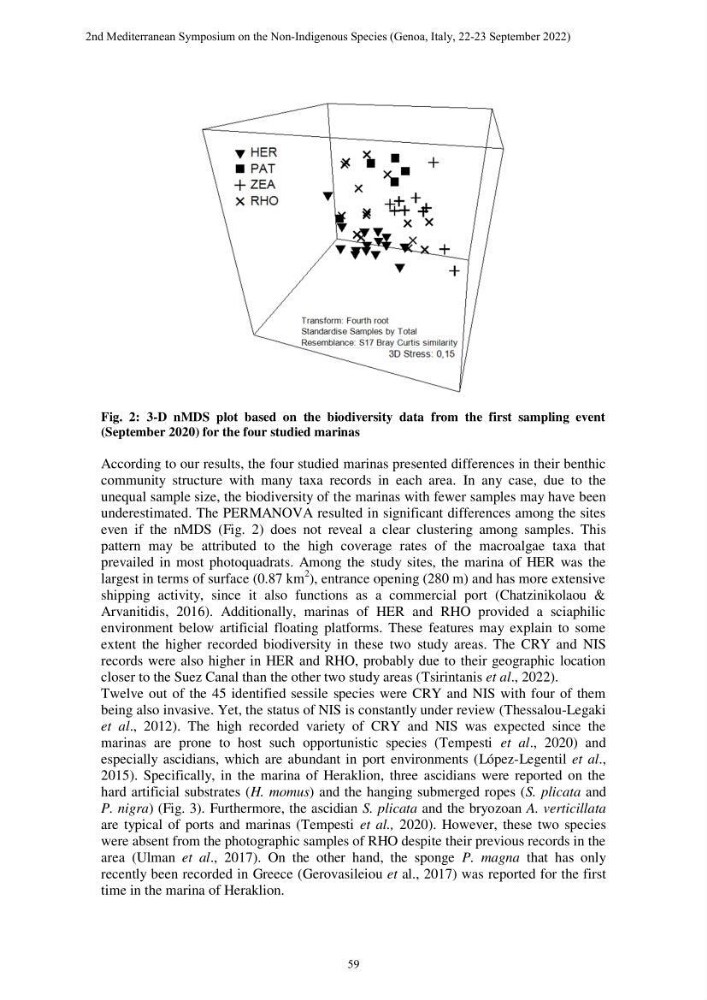
Fig. 2: 3-D nMDS plot based on the biodiversity data from the first sampling event
(September 2020) for the four studied marinas
According to our results, the four studied marinas presented differences in their benthic
community structure with many taxa records in each area. In any case, due to the
unequal sample size, the biodiversity of the marinas with fewer samples may have been
underestimated. The PERMANOVA resulted in significant differences among the sites
even if the nMDS (Fig. 2) does not reveal a clear clustering among samples. This
pattern may be attributed to the high coverage rates of the macroalgae taxa that
prevailed in most photoquadrats. Among the study sites, the marina of HER was the
largest in terms of surface (0.87 km
2 ), entrance opening (280 m) and has more extensive
shipping activity, since it also functions as a commercial port (Chatzinikolaou &
Arvanitidis, 2016). Additionally, marinas of HER and RHO provided a sciaphilic
environment below artificial floating platforms. These features may explain to some
extent the higher recorded biodiversity in these two study areas. The CRY and NIS
records were also higher in HER and RHO, probably due to their geographic location
closer to the Suez Canal than the other two study areas (Tsirintanis et al., 2022).
Twelve out of the 45 identified sessile species were CRY and NIS with four of them
being also invasive. Yet, the status of NIS is constantly under review (Thessalou-Legaki
et al., 2012). The high recorded variety of CRY and NIS was expected since the
marinas are prone to host such opportunistic species (Tempesti et al., 2020) and
especially ascidians, which are abundant in port environments (López-Legentil et al.,
2015). Specifically, in the marina of Heraklion, three ascidians were reported on the
hard artificial substrates (H. momus) and the hanging submerged ropes (S. plicata and
P. nigra) (Fig. 3). Furthermore, the ascidian S. plicata and the bryozoan A. verticillata
are typical of ports and marinas (Tempesti et al., 2020). However, these two species
were absent from the photographic samples of RHO despite their previous records in the
area (Ulman et al., 2017). On the other hand, the sponge P. magna that has only
recently been recorded in Greece (Gerovasileiou et al., 2017) was reported for the first
time in the marina of Heraklion.
2nd Mediterranean Symposium on the Non-Indigenous Species (Genoa, Italy, 22-23 September 2022)
59
(September 2020) for the four studied marinas
According to our results, the four studied marinas presented differences in their benthic
community structure with many taxa records in each area. In any case, due to the
unequal sample size, the biodiversity of the marinas with fewer samples may have been
underestimated. The PERMANOVA resulted in significant differences among the sites
even if the nMDS (Fig. 2) does not reveal a clear clustering among samples. This
pattern may be attributed to the high coverage rates of the macroalgae taxa that
prevailed in most photoquadrats. Among the study sites, the marina of HER was the
largest in terms of surface (0.87 km
2 ), entrance opening (280 m) and has more extensive
shipping activity, since it also functions as a commercial port (Chatzinikolaou &
Arvanitidis, 2016). Additionally, marinas of HER and RHO provided a sciaphilic
environment below artificial floating platforms. These features may explain to some
extent the higher recorded biodiversity in these two study areas. The CRY and NIS
records were also higher in HER and RHO, probably due to their geographic location
closer to the Suez Canal than the other two study areas (Tsirintanis et al., 2022).
Twelve out of the 45 identified sessile species were CRY and NIS with four of them
being also invasive. Yet, the status of NIS is constantly under review (Thessalou-Legaki
et al., 2012). The high recorded variety of CRY and NIS was expected since the
marinas are prone to host such opportunistic species (Tempesti et al., 2020) and
especially ascidians, which are abundant in port environments (López-Legentil et al.,
2015). Specifically, in the marina of Heraklion, three ascidians were reported on the
hard artificial substrates (H. momus) and the hanging submerged ropes (S. plicata and
P. nigra) (Fig. 3). Furthermore, the ascidian S. plicata and the bryozoan A. verticillata
are typical of ports and marinas (Tempesti et al., 2020). However, these two species
were absent from the photographic samples of RHO despite their previous records in the
area (Ulman et al., 2017). On the other hand, the sponge P. magna that has only
recently been recorded in Greece (Gerovasileiou et al., 2017) was reported for the first
time in the marina of Heraklion.
2nd Mediterranean Symposium on the Non-Indigenous Species (Genoa, Italy, 22-23 September 2022)
59