

NIS species and information on their impacts and distribution. Two posts were
published daily for each species (40 post in total): the morning post was a photograph of
the NIS and a question: “How do you call this species?”, the afternoon post answered
the question with the NIS scientific and common names, and information of interest on
NIS.
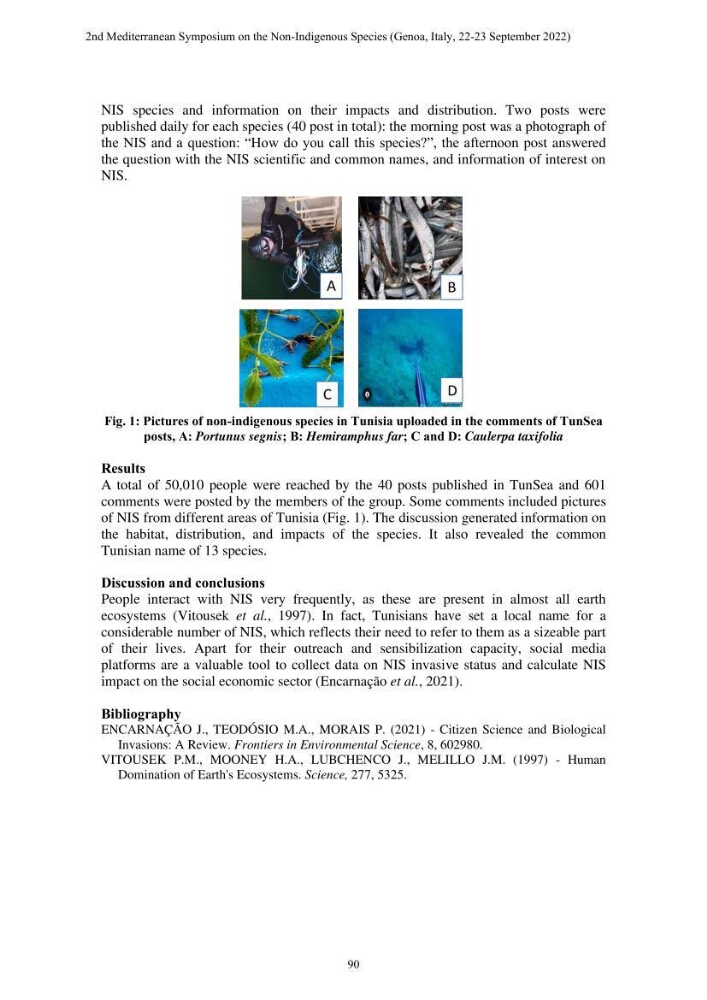
Fig. 1: Pictures of non-indigenous species in Tunisia uploaded in the comments of TunSea
posts, A: Portunus segnis; B: Hemiramphus far; C and D: Caulerpa taxifolia
Results
A total of 50,010 people were reached by the 40 posts published in TunSea and 601
comments were posted by the members of the group. Some comments included pictures
of NIS from different areas of Tunisia (Fig. 1). The discussion generated information on
the habitat, distribution, and impacts of the species. It also revealed the common
Tunisian name of 13 species.
Discussion and conclusions
People interact with NIS very frequently, as these are present in almost all earth
ecosystems (Vitousek et al., 1997). In fact, Tunisians have set a local name for a
considerable number of NIS, which reflects their need to refer to them as a sizeable part
of their lives. Apart for their outreach and sensibilization capacity, social media
platforms are a valuable tool to collect data on NIS invasive status and calculate NIS
impact on the social economic sector (Encarnação et al., 2021).
Bibliography
ENCARNAÇÃO J., TEODÓSIO M.A., MORAIS P. (2021) - Citizen Science and Biological
Invasions: A Review. Frontiers in Environmental Science, 8, 602980.
VITOUSEK P.M., MOONEY H.A., LUBCHENCO J., MELILLO J.M. (1997) - Human
Domination of Earth's Ecosystems. Science, 277, 5325.
2nd Mediterranean Symposium on the Non-Indigenous Species (Genoa, Italy, 22-23 September 2022)
90
published daily for each species (40 post in total): the morning post was a photograph of
the NIS and a question: “How do you call this species?”, the afternoon post answered
the question with the NIS scientific and common names, and information of interest on
NIS.
Fig. 1: Pictures of non-indigenous species in Tunisia uploaded in the comments of TunSea
posts, A: Portunus segnis; B: Hemiramphus far; C and D: Caulerpa taxifolia
Results
A total of 50,010 people were reached by the 40 posts published in TunSea and 601
comments were posted by the members of the group. Some comments included pictures
of NIS from different areas of Tunisia (Fig. 1). The discussion generated information on
the habitat, distribution, and impacts of the species. It also revealed the common
Tunisian name of 13 species.
Discussion and conclusions
People interact with NIS very frequently, as these are present in almost all earth
ecosystems (Vitousek et al., 1997). In fact, Tunisians have set a local name for a
considerable number of NIS, which reflects their need to refer to them as a sizeable part
of their lives. Apart for their outreach and sensibilization capacity, social media
platforms are a valuable tool to collect data on NIS invasive status and calculate NIS
impact on the social economic sector (Encarnação et al., 2021).
Bibliography
ENCARNAÇÃO J., TEODÓSIO M.A., MORAIS P. (2021) - Citizen Science and Biological
Invasions: A Review. Frontiers in Environmental Science, 8, 602980.
VITOUSEK P.M., MOONEY H.A., LUBCHENCO J., MELILLO J.M. (1997) - Human
Domination of Earth's Ecosystems. Science, 277, 5325.
2nd Mediterranean Symposium on the Non-Indigenous Species (Genoa, Italy, 22-23 September 2022)
90