

85
f ‘
1
_
,
,
'
…
"
is
fittedin a metal hOod,
designed terminalS which
may-collect condensation from the water surface
‘
producing a danger0us electrical situation… In addition, the lamps
produce a lot of heat in use and this may oVerheat the surface water
and cause distortion of any nearby plastic materials, often the _hOod
itself. Their advantages are that they produce a type of light similar
in many respects
to sunlight, so that plants will.flourish, they are
relatively small and are aVailable in a convenient range of values of
«
light output and supply voltage.
'
For best results, bulbs should be mounted vertically, provided with
‘
/
air circulation to remove excess heat and the aquarium should have a
cOver glass to keep condensation away from the light fittings.
'
Industrial bulbs designed for horizontal use, known as ‘rough service’ ‘
‘
lamps can be used, and have stronger filathent supports. Reflect0rs
or hoods for use with bulbs should be made so that the fishes can be—
fed*without disturbing the hood. Also, when the aquarium is being
'
cleaned, the lamps should be switched- off and alloWed sufficient
time to cool before the hood is removed.
In most rectangulafaquaria more
than one lamp is needed to give
an even spread of light over the
but itis usually better
»
-
to use, say; two powerful lamps rather than four weaker ones, as theabSo_rption
by the water
npticeable'and
“lamps will dnly adequately illuminate the upper levels of the aquarium.
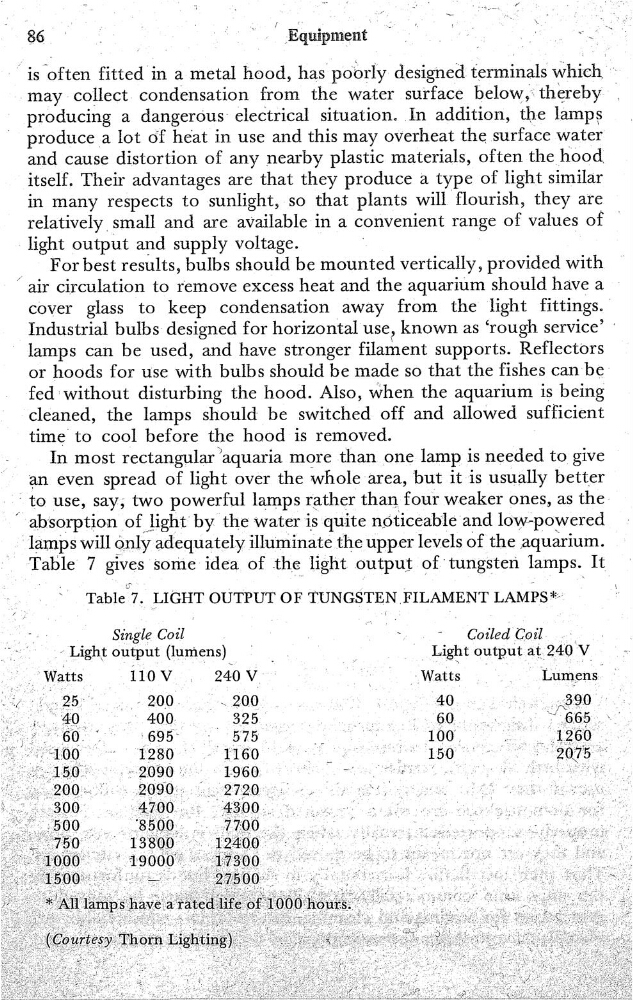
Table 7 gives ”sonde idea of the light output of'tungSteh lamps. It
‘
“
Tablé7. _LIGHT OUTPUT OF TUNGSTEN_FILAMENT
"
.
Single Coil
,
_
‘
—
CoiledCoil ' _
_
{Light output (lumens)
'
_
.
Light output at__240 V
…"Wàtts‘
110
240 v;
’
‘
'
iLumçns'
‘ _
,
20_0l
200,
,
_.
40
,
]
’
156
_
2090
1960
'
.‘E
200
2090,
2720 "
1090
19000 17300
't“
‘
_
°
f ‘
1
_
,
,
'
…
"
is
fittedin a metal hOod,
designed terminalS which
may-collect condensation from the water surface
‘
producing a danger0us electrical situation… In addition, the lamps
produce a lot of heat in use and this may oVerheat the surface water
and cause distortion of any nearby plastic materials, often the _hOod
itself. Their advantages are that they produce a type of light similar
in many respects
to sunlight, so that plants will.flourish, they are
relatively small and are aVailable in a convenient range of values of
«
light output and supply voltage.
'
For best results, bulbs should be mounted vertically, provided with
‘
/
air circulation to remove excess heat and the aquarium should have a
cOver glass to keep condensation away from the light fittings.
'
Industrial bulbs designed for horizontal use, known as ‘rough service’ ‘
‘
lamps can be used, and have stronger filathent supports. Reflect0rs
or hoods for use with bulbs should be made so that the fishes can be—
fed*without disturbing the hood. Also, when the aquarium is being
'
cleaned, the lamps should be switched- off and alloWed sufficient
time to cool before the hood is removed.
In most rectangulafaquaria more
than one lamp is needed to give
an even spread of light over the
but itis usually better
»
-
to use, say; two powerful lamps rather than four weaker ones, as theabSo_rption
by the water
npticeable'and
“lamps will dnly adequately illuminate the upper levels of the aquarium.
Table 7 gives ”sonde idea of the light output of'tungSteh lamps. It
‘
“
Tablé7. _LIGHT OUTPUT OF TUNGSTEN_FILAMENT
"
.
Single Coil
,
_
‘
—
CoiledCoil ' _
_
{Light output (lumens)
'
_
.
Light output at__240 V
…"Wàtts‘
110
240 v;
’
‘
'
iLumçns'
‘ _
,
20_0l
200,
,
_.
40
,
]
’
156
_
2090
1960
'
.‘E
200
2090,
2720 "
1090
19000 17300
't“
‘
_
°