

194
CHAPTER 5. COASTAL STRUCTURE MODELS
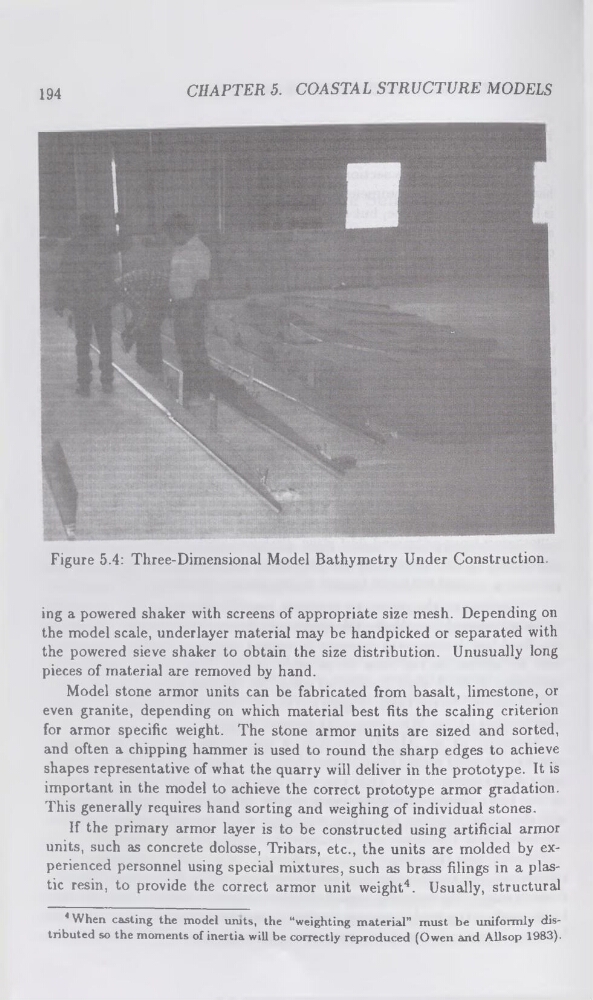
Figure 5.4: Three-Dimensional Model Bathymetry Under Construction.
ing a powered shaker with screens of appropriate size mesh. Depending on
the model scale, underlayer material may be handpicked or separated with
the powered sieve shaker to obtain the size distribution. Unusually long
pieces of material are removed by hand.
Model stone armor units can be fabricated from basalt, limestone, or
even granite, depending on which material best fits the scaling criterion
for armor specific weight. The stone armor units are sized and sorted,
and often a chipping hammer is used to round the sharp edges to achieve
shapes representative of what the quarry will deliver in the prototype. It is
important in the model to achieve the correct prototype armor gradation.
This generally requires hand sorting and weighing of individual stones.
If the primary armor layer is to be constructed using artificial armor
units, such as concrete dolosse, Tribars, etc., the units are molded by experienced personnel using special mixtures, such as brass filings in a plastic resin, to provide the correct armor unit weight4. Usually, structural
4 When casting the model units, the “weighting material” must be uniformly distributed so the moments of inertia will be correctly reproduced (Owen and Allsop 1983).
CHAPTER 5. COASTAL STRUCTURE MODELS
Figure 5.4: Three-Dimensional Model Bathymetry Under Construction.
ing a powered shaker with screens of appropriate size mesh. Depending on
the model scale, underlayer material may be handpicked or separated with
the powered sieve shaker to obtain the size distribution. Unusually long
pieces of material are removed by hand.
Model stone armor units can be fabricated from basalt, limestone, or
even granite, depending on which material best fits the scaling criterion
for armor specific weight. The stone armor units are sized and sorted,
and often a chipping hammer is used to round the sharp edges to achieve
shapes representative of what the quarry will deliver in the prototype. It is
important in the model to achieve the correct prototype armor gradation.
This generally requires hand sorting and weighing of individual stones.
If the primary armor layer is to be constructed using artificial armor
units, such as concrete dolosse, Tribars, etc., the units are molded by experienced personnel using special mixtures, such as brass filings in a plastic resin, to provide the correct armor unit weight4. Usually, structural
4 When casting the model units, the “weighting material” must be uniformly distributed so the moments of inertia will be correctly reproduced (Owen and Allsop 1983).