

5.1. INTRODUCTION TO STRUCTURE MODELS
173
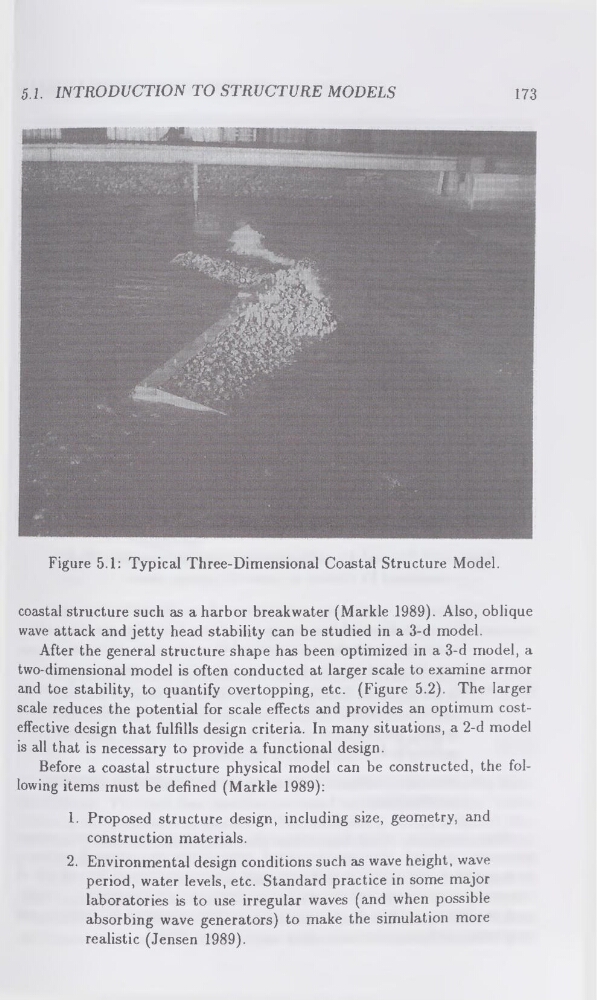
Figure 5.1: Typical Three-Dimensional Coastal Structure Model.
coastal structure such as a harbor breakwater (Markle 1989). Also, oblique
wave attack and jetty head stability can be studied in a 3-d model.
After the general structure shape has been optimized in a 3-d model, a
two-dimensional model is often conducted at larger scale to examine armor
and toe stability, to quantify overtopping, etc. (Figure 5.2). The larger
scale reduces the potential for scale effects and provides an optimum costeffective design that fulfills design criteria. In many situations, a 2-d model
is all that is necessary to provide a functional design.
Before a coastal structure physical model can be constructed, the following items must be defined (Markle 1989):
1. Proposed structure design, including size, geometry, and
construction materials.
2. Environmental design conditions such as wave height, wave
period, water levels, etc. Standard practice in some major
laboratories is to use irregular waves (and when possible
absorbing wave generators) to make the simulation more
realistic (Jensen 1989).
173
Figure 5.1: Typical Three-Dimensional Coastal Structure Model.
coastal structure such as a harbor breakwater (Markle 1989). Also, oblique
wave attack and jetty head stability can be studied in a 3-d model.
After the general structure shape has been optimized in a 3-d model, a
two-dimensional model is often conducted at larger scale to examine armor
and toe stability, to quantify overtopping, etc. (Figure 5.2). The larger
scale reduces the potential for scale effects and provides an optimum costeffective design that fulfills design criteria. In many situations, a 2-d model
is all that is necessary to provide a functional design.
Before a coastal structure physical model can be constructed, the following items must be defined (Markle 1989):
1. Proposed structure design, including size, geometry, and
construction materials.
2. Environmental design conditions such as wave height, wave
period, water levels, etc. Standard practice in some major
laboratories is to use irregular waves (and when possible
absorbing wave generators) to make the simulation more
realistic (Jensen 1989).