

68
Coastal Engineering: Theory and Practice
primarily by a storm’s winds pushing water onshore, which results in huge
quantifies of water thrust along the coast. Storm tide is the total observed
seawater level during a storm, which is a combination of storm surge
and normal high tide. The low-lying Coastal areas are extensively flooded
which is often referred to as storm water inundation. Severest impacts are
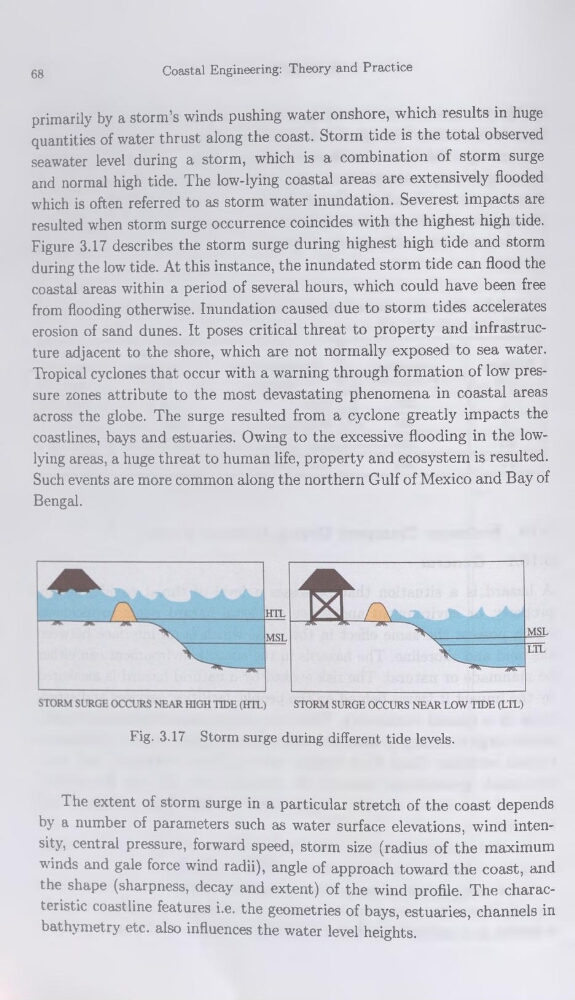
resulted when storm surge occurrence coincides with the highest high tide.
Figure 3.17 describes the storm surge during highest high tide and storm
during the low tide. At this instance, the inundated storm tide can fiood the
Coastal areas within a period of several hours, which could hâve been free
from flooding otherwise. Inundation caused due to storm tides accelerates
érosion of sand dunes. It poses critical threat to property and infrastructure adjacent to the shore, which are not normally exposed to sea water.
Tropical cyclones that occur with a warning through formation of low pressure zones attribute to the most devastating phenomena in coastal areas
across the globe. The surge resulted from a cyclone greatly impacts the
coastlines, bays and estuaries. Owing to the excessive flooding in the lowlying areas, a huge threat to human life, property and ecosystem is resulted.
Such events are more common along the northern Gulf of Mexico and Bay of
Bengal.
Fig. 3.17 Storm surge during different tide levels.
The extent of storm surge in a particular stretch of the coast dépends
by a number of parameters such as water surface élévations, wind intensity, central pressure, forward speed, storm size (radius of the maximum
winds and gale force wind radii), angle of approach toward the coast, and
the shape (sharpness, decay and extent) of the wind profile. The characteristic coastline features i.e. the geometries of bays, estuaries, channels in
bathymetry etc. also influences the water level heights.
Coastal Engineering: Theory and Practice
primarily by a storm’s winds pushing water onshore, which results in huge
quantifies of water thrust along the coast. Storm tide is the total observed
seawater level during a storm, which is a combination of storm surge
and normal high tide. The low-lying Coastal areas are extensively flooded
which is often referred to as storm water inundation. Severest impacts are
resulted when storm surge occurrence coincides with the highest high tide.
Figure 3.17 describes the storm surge during highest high tide and storm
during the low tide. At this instance, the inundated storm tide can fiood the
Coastal areas within a period of several hours, which could hâve been free
from flooding otherwise. Inundation caused due to storm tides accelerates
érosion of sand dunes. It poses critical threat to property and infrastructure adjacent to the shore, which are not normally exposed to sea water.
Tropical cyclones that occur with a warning through formation of low pressure zones attribute to the most devastating phenomena in coastal areas
across the globe. The surge resulted from a cyclone greatly impacts the
coastlines, bays and estuaries. Owing to the excessive flooding in the lowlying areas, a huge threat to human life, property and ecosystem is resulted.
Such events are more common along the northern Gulf of Mexico and Bay of
Bengal.
Fig. 3.17 Storm surge during different tide levels.
The extent of storm surge in a particular stretch of the coast dépends
by a number of parameters such as water surface élévations, wind intensity, central pressure, forward speed, storm size (radius of the maximum
winds and gale force wind radii), angle of approach toward the coast, and
the shape (sharpness, decay and extent) of the wind profile. The characteristic coastline features i.e. the geometries of bays, estuaries, channels in
bathymetry etc. also influences the water level heights.