

108
Coastal Engineering: Theory and Practice
permeability and grain size distribution of sédiments. A number of closely
spaced groins, termed as “groin field” will tame the movement of sédiments along the coast which is likely to be trapped in between the gaps
(Fig. 4.7(b)) which over the years will resuit in winning the lost beach
which is its added advantage over a seawall. The oldest groin field was constructed in Vissingen, The Netherlands in 1503. It can be observed that as
an effect of groin construction déposition or shoreline advancement takes
places on the updrift side and érosion or shoreline recession takes place on
the down drift side. The length of the individual groin should be beyond
the surf zone width of the given beach, the spacing between two groins in
a groin field should be 1.5 to 3 times the length of the groin. Although,
the alignment of the groins is usually perpendicular to shore, it can also
be inclined at a spécifie angle for functional purposes. Timber, Steel, stone,
concrète, geosynthetic materials or a combination of them are adopted for
construction which is site dépendant. The groins usually penetrate the free
surface; however at locations dominated by bed load sédiments, submerged
may be adopted. The lengths and spacing need to be carefully finalized
through numerical or physical modeling, it is extremely important that the
groin spacing helps in the préservation of beach levels and act as active
trappers of the sédiments in motion along the shore. If the spacing is more,
the rétention of the sédiments is poor as illustrated in Fig. 4.7(c), whereas,
transitional groin field as a means of reducing impact of groins on downdrift coastlines (Fig. 4.7(d)). The phenomena of shifting of the érosion to
the adjoining shoreline is minimized or avoided. If the spacing between the
groins is too small loss of trapped sédiments towards offshore due to rip
currents is likely to take place.
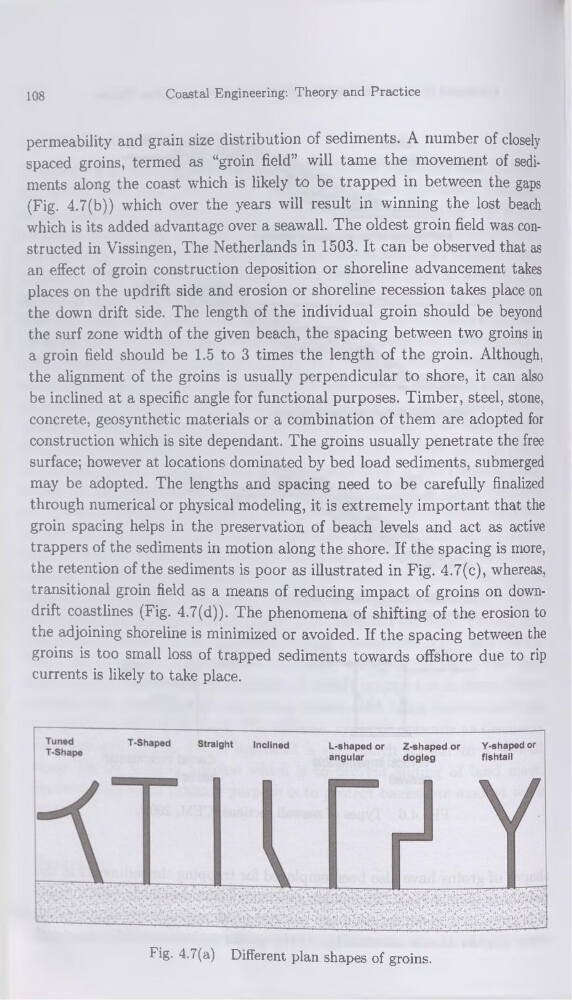
Fig. 4.7(a) Different plan shapes of groins.
Coastal Engineering: Theory and Practice
permeability and grain size distribution of sédiments. A number of closely
spaced groins, termed as “groin field” will tame the movement of sédiments along the coast which is likely to be trapped in between the gaps
(Fig. 4.7(b)) which over the years will resuit in winning the lost beach
which is its added advantage over a seawall. The oldest groin field was constructed in Vissingen, The Netherlands in 1503. It can be observed that as
an effect of groin construction déposition or shoreline advancement takes
places on the updrift side and érosion or shoreline recession takes place on
the down drift side. The length of the individual groin should be beyond
the surf zone width of the given beach, the spacing between two groins in
a groin field should be 1.5 to 3 times the length of the groin. Although,
the alignment of the groins is usually perpendicular to shore, it can also
be inclined at a spécifie angle for functional purposes. Timber, Steel, stone,
concrète, geosynthetic materials or a combination of them are adopted for
construction which is site dépendant. The groins usually penetrate the free
surface; however at locations dominated by bed load sédiments, submerged
may be adopted. The lengths and spacing need to be carefully finalized
through numerical or physical modeling, it is extremely important that the
groin spacing helps in the préservation of beach levels and act as active
trappers of the sédiments in motion along the shore. If the spacing is more,
the rétention of the sédiments is poor as illustrated in Fig. 4.7(c), whereas,
transitional groin field as a means of reducing impact of groins on downdrift coastlines (Fig. 4.7(d)). The phenomena of shifting of the érosion to
the adjoining shoreline is minimized or avoided. If the spacing between the
groins is too small loss of trapped sédiments towards offshore due to rip
currents is likely to take place.
Fig. 4.7(a) Different plan shapes of groins.