

Meteorological Conditions During Snowfall at Terra Nova Bay (Antarctica)
281
ate easterly or southerly winds, while the latter brings moderate to strong westerlies with little or no cloudiness. The development of logistic and research activities at the Antarctic bases requires reliable meteorological information, so real
time data as well as weather forecasts up to several days in advance are décisive
for outside working and living conditions.
The analyses presented in this work can be key inputs to évaluations of snowfall épisodes even if they do not provide an indication of précipitation amount. To
hâve an indication of reliability of the proposed methodology, daily meteorological information delivered by the Weather Office at Terra Nova Bay Station has
been considered. This is available for summer only, as the Station is not manned
during winter, and it includes also visual observations of weather and notes relative to précipitation and cloudiness.
The meteorological observations for the following summer periods were considered:
- 26 December 1988 - 16 February 1989
- 10 November 1989 - 15 February 1990
- 13 November 1990 - 16 February 1991
- 16 December 1991 - 24 January 1992
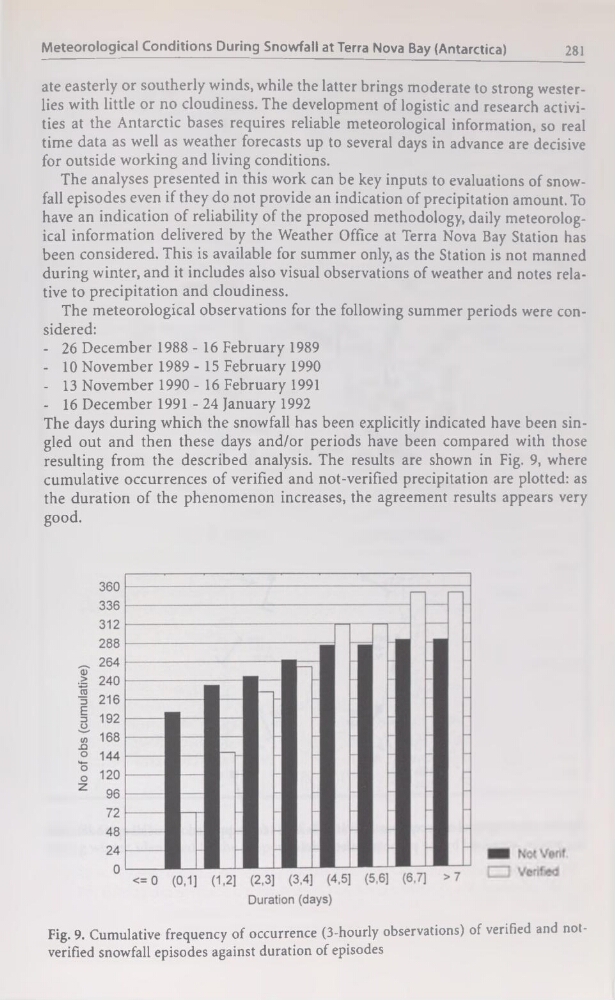
The days during which the snowfall has been explicitly indicated hâve been singled out and then these days and/or periods hâve been compared with those
resulting from the described analysis. The results are shown in Fig. 9, where
cumulative occurrences of verified and not-verified précipitation are plotted: as
the duration of the phenomenon increases, the agreement results appears very
good.
Fig. 9. Cumulative frequency of occurrence (3-hourly observations) of verified and notverified snowfall épisodes against duration of épisodes
281
ate easterly or southerly winds, while the latter brings moderate to strong westerlies with little or no cloudiness. The development of logistic and research activities at the Antarctic bases requires reliable meteorological information, so real
time data as well as weather forecasts up to several days in advance are décisive
for outside working and living conditions.
The analyses presented in this work can be key inputs to évaluations of snowfall épisodes even if they do not provide an indication of précipitation amount. To
hâve an indication of reliability of the proposed methodology, daily meteorological information delivered by the Weather Office at Terra Nova Bay Station has
been considered. This is available for summer only, as the Station is not manned
during winter, and it includes also visual observations of weather and notes relative to précipitation and cloudiness.
The meteorological observations for the following summer periods were considered:
- 26 December 1988 - 16 February 1989
- 10 November 1989 - 15 February 1990
- 13 November 1990 - 16 February 1991
- 16 December 1991 - 24 January 1992
The days during which the snowfall has been explicitly indicated hâve been singled out and then these days and/or periods hâve been compared with those
resulting from the described analysis. The results are shown in Fig. 9, where
cumulative occurrences of verified and not-verified précipitation are plotted: as
the duration of the phenomenon increases, the agreement results appears very
good.
Fig. 9. Cumulative frequency of occurrence (3-hourly observations) of verified and notverified snowfall épisodes against duration of épisodes