

On the Heat Energy Fluxes in the Non-stationary Surface Boundary Layer
251
and at 10 and 5 m on the second mast. Using the fast igrometer of the second
mast at 10 m, the turbulent latent heat flux for this site can also be evaluated.
During the whole measurement period, from January 20 to February 8,1995, the
micrometeorological conditions of the two sites (the inner and the Coastal ones)
where our masts hâve been located looked homogeneous and cohérent. Figures
2a and b show the air températures at 10 m at the locations of the Coastal and
inner masts respectively. Figures 3a and b show the horizontal wind speed at 10
m on the inner and Coastal masts respectively, while Fig. 4a and b show the corresponding directions. From these last records, the air flow at Hells Gâte turned
out to be prevailingly offshore during the whole observation period. From the
behaviour of these quantities, it has been possible to note two different meteorological conditions: the first, (January 20- February 3) characterized by moderate wind and air température of around -4°C, and the second (February 4-8)
marked by the presence of katabatic winds combined with a decrease in both air
and ice températures.
163
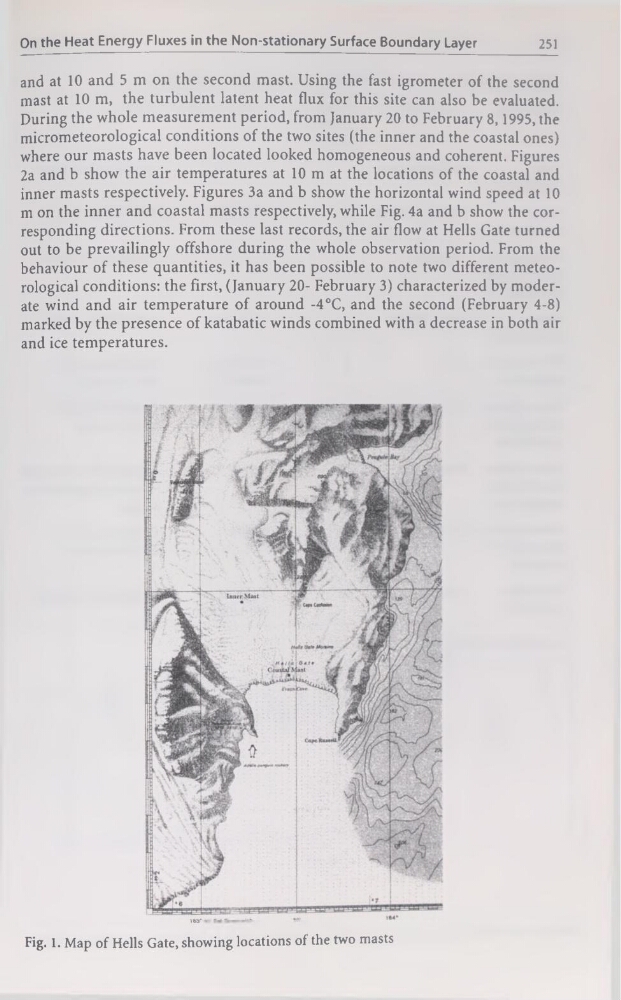
Fig. 1. Map of Hells Gâte, showing locations of the two masts
251
and at 10 and 5 m on the second mast. Using the fast igrometer of the second
mast at 10 m, the turbulent latent heat flux for this site can also be evaluated.
During the whole measurement period, from January 20 to February 8,1995, the
micrometeorological conditions of the two sites (the inner and the Coastal ones)
where our masts hâve been located looked homogeneous and cohérent. Figures
2a and b show the air températures at 10 m at the locations of the Coastal and
inner masts respectively. Figures 3a and b show the horizontal wind speed at 10
m on the inner and Coastal masts respectively, while Fig. 4a and b show the corresponding directions. From these last records, the air flow at Hells Gâte turned
out to be prevailingly offshore during the whole observation period. From the
behaviour of these quantities, it has been possible to note two different meteorological conditions: the first, (January 20- February 3) characterized by moderate wind and air température of around -4°C, and the second (February 4-8)
marked by the presence of katabatic winds combined with a decrease in both air
and ice températures.
163
Fig. 1. Map of Hells Gâte, showing locations of the two masts