

ActualSedimentation on the Antarctic Continental Shelf...
199
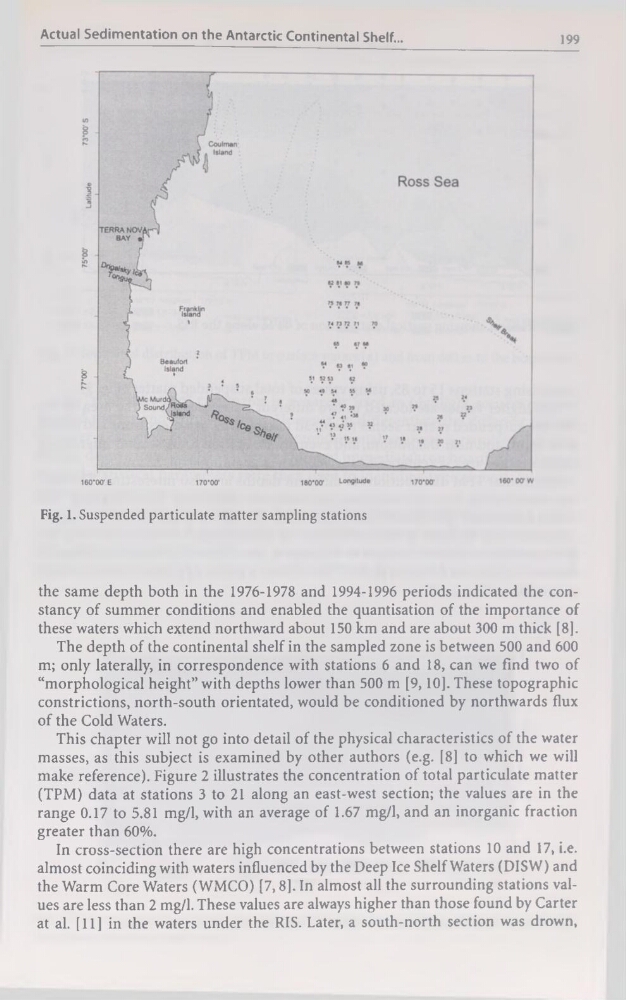
Fig. 1. Suspended particulate matter sampling stations
the same depth both in the 1976-1978 and 1994-1996 periods indicated the constancy of summer conditions and enabled the quantisation of the importance of
these waters which extend northward about 150 km and are about 300 m thick [8].
The depth of the continental shelf in the sampled zone is between 500 and 600
m; only laterally, in correspondence with stations 6 and 18, can we fmd two of
“morphological height” with depths lower than 500 m [9,10]. These topographie
constrictions, north-south orientated, would be conditioned by northwards flux
of the Cold Waters.
This chapter will not go into detail of the physical characteristics of the water
masses, as this subject is examined by other authors (e.g. [8] to which we will
make reference). Figure 2 illustrâtes the concentration of total particulate matter
(TPM) data at stations 3 to 21 along an east-west section; the values are in the
range 0.17 to 5.81 mg/1, with an average of 1.67 mg/1, and an inorganic fraction
greater than 60%.
In cross-section there are high concentrations between stations 10 and 17, i.e.
almost coinciding with waters influenced by the Deep Ice Shelf Waters (DISW) and
the Warm Core Waters (WMCO) [7,8]. In almost ail the surrounding stations values are less than 2 mg/1. These values are always higher than those found by Carter
at al. [11] in the waters under the RIS. Later, a south-north section was drown,
199
Fig. 1. Suspended particulate matter sampling stations
the same depth both in the 1976-1978 and 1994-1996 periods indicated the constancy of summer conditions and enabled the quantisation of the importance of
these waters which extend northward about 150 km and are about 300 m thick [8].
The depth of the continental shelf in the sampled zone is between 500 and 600
m; only laterally, in correspondence with stations 6 and 18, can we fmd two of
“morphological height” with depths lower than 500 m [9,10]. These topographie
constrictions, north-south orientated, would be conditioned by northwards flux
of the Cold Waters.
This chapter will not go into detail of the physical characteristics of the water
masses, as this subject is examined by other authors (e.g. [8] to which we will
make reference). Figure 2 illustrâtes the concentration of total particulate matter
(TPM) data at stations 3 to 21 along an east-west section; the values are in the
range 0.17 to 5.81 mg/1, with an average of 1.67 mg/1, and an inorganic fraction
greater than 60%.
In cross-section there are high concentrations between stations 10 and 17, i.e.
almost coinciding with waters influenced by the Deep Ice Shelf Waters (DISW) and
the Warm Core Waters (WMCO) [7,8]. In almost ail the surrounding stations values are less than 2 mg/1. These values are always higher than those found by Carter
at al. [11] in the waters under the RIS. Later, a south-north section was drown,