

A. Bergamasco et al.
124
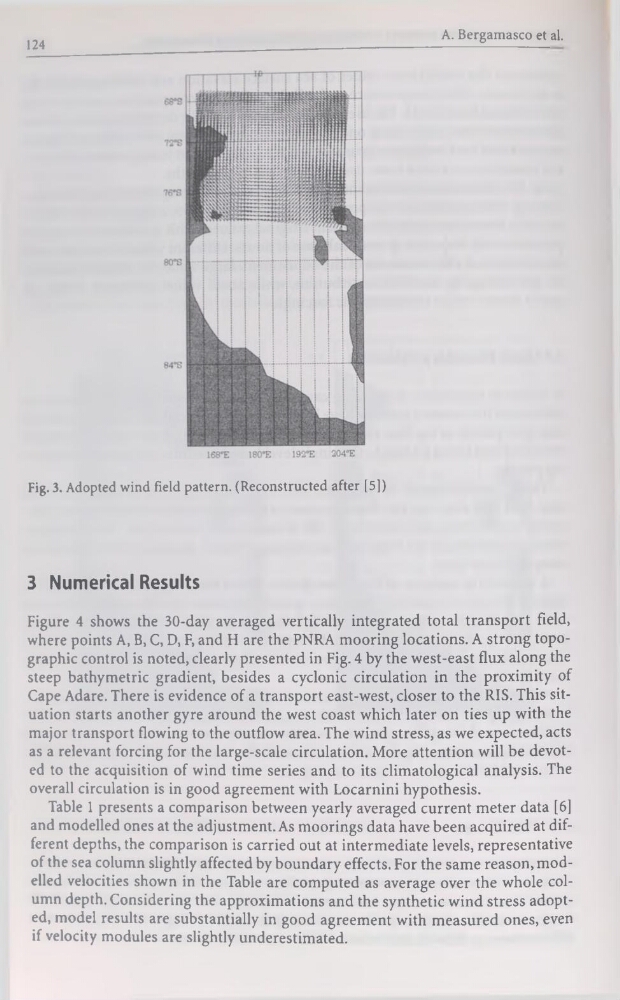
Fig. 3. Adopted wind field pattern. (Reconstructed after [5])
3 Numerical Results
Figure 4 shows the 30-day averaged vertically integrated total transport field,
where points A, B, C, D, F, and H are the PNRA mooring locations. A strong topographie control is noted, clearly presented in Fig. 4 by the west-east flux along the
steep bathymétrie gradient, besides a cyclonic circulation in the proximity of
Cape Adare. There is evidence of a transport east-west, doser to the RIS. This situation starts another gyre around the west coast which later on ties up with the
major transport flowing to the outflow area. The wind stress, as we expected, acts
as a relevant forcing for the large-scale circulation. More attention will be devoted to the acquisition of wind time sériés and to its climatological analysis. The
overall circulation is in good agreement with Locarnini hypothesis.
Table 1 présents a comparison between yearly averaged current meter data [6]
and modelled ones at the adjustment. As moorings data hâve been acquired at different depths, the comparison is carried out at intermediate levels, représentative
of the sea column slightly affected by boundary effects. For the same reason, modelled velocities shown in the Table are computed as average over the whole column depth. Considering the approximations and the synthetic wind stress adopted, model results are substantially in good agreement with measured ones, even
if velocity modules are slightly underestimated.
124
Fig. 3. Adopted wind field pattern. (Reconstructed after [5])
3 Numerical Results
Figure 4 shows the 30-day averaged vertically integrated total transport field,
where points A, B, C, D, F, and H are the PNRA mooring locations. A strong topographie control is noted, clearly presented in Fig. 4 by the west-east flux along the
steep bathymétrie gradient, besides a cyclonic circulation in the proximity of
Cape Adare. There is evidence of a transport east-west, doser to the RIS. This situation starts another gyre around the west coast which later on ties up with the
major transport flowing to the outflow area. The wind stress, as we expected, acts
as a relevant forcing for the large-scale circulation. More attention will be devoted to the acquisition of wind time sériés and to its climatological analysis. The
overall circulation is in good agreement with Locarnini hypothesis.
Table 1 présents a comparison between yearly averaged current meter data [6]
and modelled ones at the adjustment. As moorings data hâve been acquired at different depths, the comparison is carried out at intermediate levels, représentative
of the sea column slightly affected by boundary effects. For the same reason, modelled velocities shown in the Table are computed as average over the whole column depth. Considering the approximations and the synthetic wind stress adopted, model results are substantially in good agreement with measured ones, even
if velocity modules are slightly underestimated.