

30
STRUCTURE-ENVIRONMENTAL FORCE INTERACTIONS
(a) FLOATING SOLID
(b) WATER CAV1TY
(c) ISOLATED SOL1D
(d) 1SOLATED WATER BLOCK
(e) STATICALLY EQUIVALENT
SOLID BLOCK
Y„V
B-( F
(D STATICALLY EQUIVALENT
WATER BLOCK
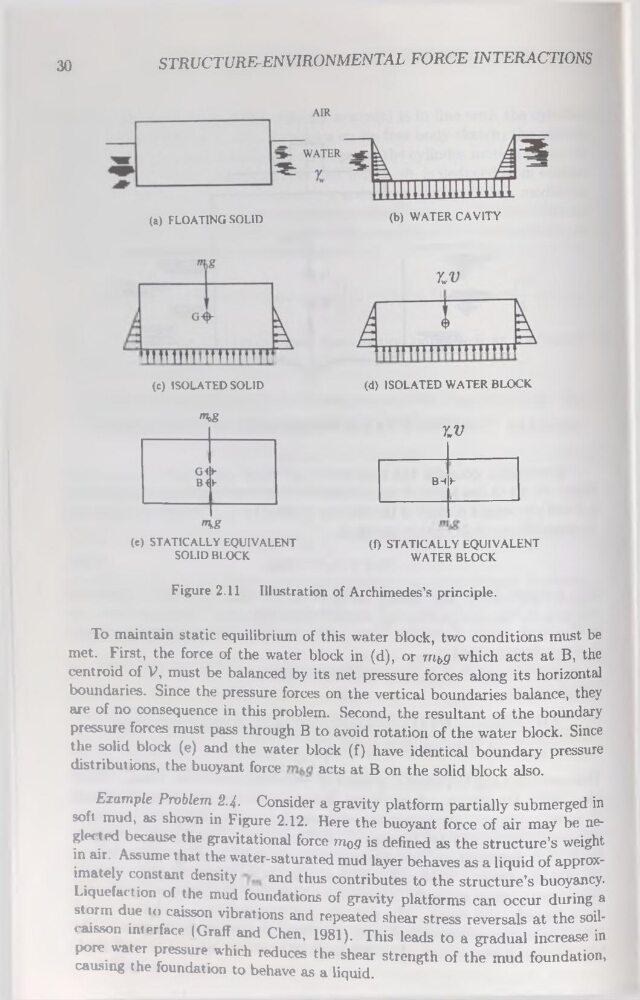
Figure 2.11 Illustration of Archimedes’s principle.
To maintain static equilibrium of this water block, two conditions must be
met. First, the force of the water block in (d), or m^g which acts at B, the
centroid of V, must be balanced by its net pressure forces along its horizontal
boundaries. Since the pressure forces on the vertical boundaries balance, they
are of no conséquence in this problem. Second, the résultant of the boundary
pressure forces must pass through B to avoid rotation of the water block. Since
the solid block (e) and the water block (f) hâve identical boundary pressure
distributions, the buoyant force
acts at B on the solid block also.
Eiample Problem 2.4- Consider a gravity platform partially submerged in
soft mud, as shown in Figure 2.12. Here the buoyant force of air may be negletted because the gravitational force rriog is defined as the structure’s weight
in air. Assume that the water-saturated mud layer behaves as a liquid of approximately constant density
and thus contributes to the structure’s buoyancy.
Liquéfaction of the mud foundations of gravity platforms can occur during a
storm due io caisson vibrations and repeated shear stress reversais at the soilcaisson interface (Graff and Chen, 1981). This leads to a graduai increase in
pore water pressure which reduces the shear strength of the mud foundation,
causing the foundation to behave as a liquid.
STRUCTURE-ENVIRONMENTAL FORCE INTERACTIONS
(a) FLOATING SOLID
(b) WATER CAV1TY
(c) ISOLATED SOL1D
(d) 1SOLATED WATER BLOCK
(e) STATICALLY EQUIVALENT
SOLID BLOCK
Y„V
B-( F
(D STATICALLY EQUIVALENT
WATER BLOCK
Figure 2.11 Illustration of Archimedes’s principle.
To maintain static equilibrium of this water block, two conditions must be
met. First, the force of the water block in (d), or m^g which acts at B, the
centroid of V, must be balanced by its net pressure forces along its horizontal
boundaries. Since the pressure forces on the vertical boundaries balance, they
are of no conséquence in this problem. Second, the résultant of the boundary
pressure forces must pass through B to avoid rotation of the water block. Since
the solid block (e) and the water block (f) hâve identical boundary pressure
distributions, the buoyant force
acts at B on the solid block also.
Eiample Problem 2.4- Consider a gravity platform partially submerged in
soft mud, as shown in Figure 2.12. Here the buoyant force of air may be negletted because the gravitational force rriog is defined as the structure’s weight
in air. Assume that the water-saturated mud layer behaves as a liquid of approximately constant density
and thus contributes to the structure’s buoyancy.
Liquéfaction of the mud foundations of gravity platforms can occur during a
storm due io caisson vibrations and repeated shear stress reversais at the soilcaisson interface (Graff and Chen, 1981). This leads to a graduai increase in
pore water pressure which reduces the shear strength of the mud foundation,
causing the foundation to behave as a liquid.