

6
STRUCTURES IN THE OFFSHORE ENVIRONMENT
With ballast consisting of sand in the bottom of the tanks and seawater in
the legs, these structures dépend on self-weight alone to maintain an upright
position when subjected to the highest waves that are expected to occur in a
100 year time period. A realistic 100 year wave that may occur in the northern
North Sea is 27.8 m. At présent, the largest concrète gravity platform is the
Troll structure, and one of moderate size is the Statfjord-A Condeep structure,
both located in the North Sea. The latter structure is 250 m high and has
three legs. Located off the coast of Norway, the Statfjord-A Condeep unit has
slots for 42 oil wells that reach to depths of 2800 m. When in operation, it
accommodâtes a crew of 200 people who live and work on this structure.
WAVE FREQUENCY, Hz
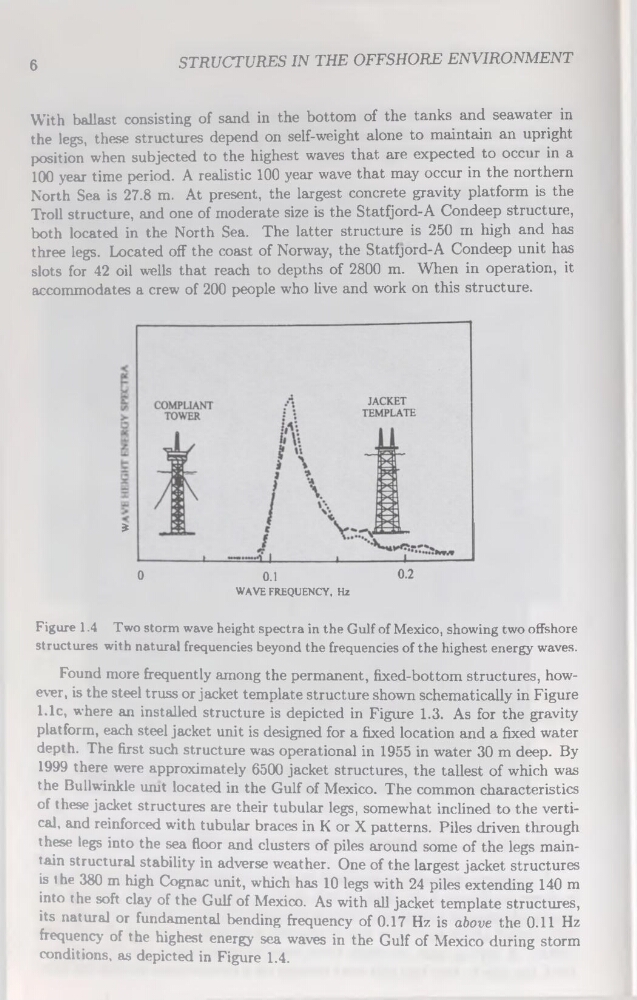
Figure 1.4 Two storm wave height spectra in the Gulf of Mexico, showing two offshore
structures with natura! frequencies beyond the frequencies of the highest energy waves.
Found more frequently among the permanent, fixed-bottom structures, however, is the Steel truss or jacket template structure shown schematically in Figure
1.1c, where an installed structure is depicted in Figure 1.3. As for the gravity
platform, each Steel jacket unit is designed for a fixed location and a fixed water
depth. The first such structure was operational in 1955 in water 30 m deep. By
1999 there were approximately 6500 jacket structures, the tallest of which was
the Bullwinkle unit located in the Gulf of Mexico. The common characteristics
of these jacket structures are their tubular legs, somewhat inclined to the vertical, and reinforced with tubular braces in K or X patterns. Piles driven through
these legs into the sea floor and clusters of piles around some of the legs maintain structural stability in adverse weather. One of the largest jacket structures
is i he 380 m high Cognac unit, which has 10 legs with 24 piles extending 140 m
into the soft clay of the Gulf of Mexico. As with ail jacket template structures,
its natural or fundamental bending frequency of 0.17 Hz is above the 0.11 Hz
frequency of the highest energy sea waves in the Gulf of Mexico during storm
conditions, as depicted in Figure 1.4.
STRUCTURES IN THE OFFSHORE ENVIRONMENT
With ballast consisting of sand in the bottom of the tanks and seawater in
the legs, these structures dépend on self-weight alone to maintain an upright
position when subjected to the highest waves that are expected to occur in a
100 year time period. A realistic 100 year wave that may occur in the northern
North Sea is 27.8 m. At présent, the largest concrète gravity platform is the
Troll structure, and one of moderate size is the Statfjord-A Condeep structure,
both located in the North Sea. The latter structure is 250 m high and has
three legs. Located off the coast of Norway, the Statfjord-A Condeep unit has
slots for 42 oil wells that reach to depths of 2800 m. When in operation, it
accommodâtes a crew of 200 people who live and work on this structure.
WAVE FREQUENCY, Hz
Figure 1.4 Two storm wave height spectra in the Gulf of Mexico, showing two offshore
structures with natura! frequencies beyond the frequencies of the highest energy waves.
Found more frequently among the permanent, fixed-bottom structures, however, is the Steel truss or jacket template structure shown schematically in Figure
1.1c, where an installed structure is depicted in Figure 1.3. As for the gravity
platform, each Steel jacket unit is designed for a fixed location and a fixed water
depth. The first such structure was operational in 1955 in water 30 m deep. By
1999 there were approximately 6500 jacket structures, the tallest of which was
the Bullwinkle unit located in the Gulf of Mexico. The common characteristics
of these jacket structures are their tubular legs, somewhat inclined to the vertical, and reinforced with tubular braces in K or X patterns. Piles driven through
these legs into the sea floor and clusters of piles around some of the legs maintain structural stability in adverse weather. One of the largest jacket structures
is i he 380 m high Cognac unit, which has 10 legs with 24 piles extending 140 m
into the soft clay of the Gulf of Mexico. As with ail jacket template structures,
its natural or fundamental bending frequency of 0.17 Hz is above the 0.11 Hz
frequency of the highest energy sea waves in the Gulf of Mexico during storm
conditions, as depicted in Figure 1.4.