

Distributions of scavenged elements in the oceans
typically reflect their sources, as they are not in the
oceans long enough to be homogenized by thermohaline circulation that mixes the oceans on a timescale of about a thousand years. Many of these
elements have a surface source, primarily from continental dust that is partially dissolved in the surface
waters. River sources are also possible, although
much of the metals entering the ocean by this route is
removed in coastal areas. Surface transects for aluminum and gallium (Figure 2A and B) show distribution expected with atmospheric dust as the
dominant source. The lower values in coastal region
result from increased removal in these highly productive waters, and restrict the transport of these
elements to the open ocean. In contrast, zirconium
and hafnium show a coastal source, possibly from
rivers (Figure 2C). A bottom source is also evident in
the vertical profiles of many refractory elements. The
mechanism providing this source is not known, but
could be from either dissolution of particles at the
sediment surface (a process often referred to as
‘remineralization’) or a flux from the waters trapped
within the sediments (an interstitial or pore water
flux). Some of these elements (gallium, iron, and
bismuth, for example) also show the effects of internal cycling within the ocean.
Aluminum
Aluminum (Al) is the most abundant metallic element in the Earth’s crust. Aluminum is a trivalent
metal with a strong tendency to hydrolyse in sea
water to form the particle reactive species, Al(OH) 3
and Al(OH) 4
À . Both of these species are important in
sea water, and there is a switch in the speciation
within the pH and temperature range of sea water,
from mostly Al(OH) 4
À (75%) in surface waters to
mostly Al(OH) 3 in deeper waters.
Dissolved aluminum has a large dynamic range in
the oceans, from less than 0.06 nmol kg
À1 in the
mid-depth waters of the North Pacific to 650 nmol
kg
À1 in the surface microlayer of the Arabian Sea.
Vertical distributions (Figure 3) typically show a
surface maximum, due to eolian dust deposition, a
mid-depth minimum, due to scavenging removal,
and deep water concentrations that depend largely
on the age of these waters. In the absence of recent
deep water formation, the concentration is typically
low in the bottom waters, with only a small increase
(up to 2 nmol kg
À1
) from sediment sources. The
residence time of dissolved aluminum in the deep
ocean, estimated using vertical advection diffusion
(VAD) scavenging removal models, varies from 30 to
200 years, depending on the flux of particles from
the overlying waters. The removal mechanism for
dissolved aluminum is primarily via scavenging: a
passive adsorption onto the surface of particles.
There is some laboratory evidence for active uptake
into biological soft tissues and/or silica frustules as
well, but passive scavenging controls the distribution
of aluminum in the oceans. The residence time in the
surface ocean, estimated from soluble dust input, is
about 3–4 years.
Surface water dissolved aluminum concentrations
range from 0.3 to 10 nmol kg
À1 in the Pacific Ocean,
0.2 to 85 nmol kg
À1 in the Atlantic and Mediterranean, and 10 to 300 nmol kg
À1 in the Arabian Sea.
The surface distribution is tightly correlated with the
magnitude of the dust fluxes in the region. The
solubility of aluminum from eolian particles is about
5–10%. Fluvial input of aluminum, while significant,
is rapidly removed in the estuaries and highly productive coastal regions (Figure 2A). Owing to the
low background concentrations of aluminum in the
oceans, and the large concentration of aluminum in
crustal materials, aluminum is an excellent tracer of
dust input to the oceans and of advective transport of
water masses.
Deep water dissolved aluminum concentrations
range from 0.5 to 2.0 nmol kg
À1 in the Pacific Ocean,
8–30 in the Atlantic, and 135–170 in the Mediterranean. The western North Atlantic and the
Mediterranean deep waters are high in dissolved
aluminum from their recent contact with the surface
(deep waters are ‘young’). The western North Atlantic dissolved aluminum concentrations are 8–40
10
_ 1
10
_ 15
10
_ 12
10
_ 9
10
_ 6
10
1
10
3
10
5
10
7
Crustal abundance (mol kg
_ 1 )
Sea water concentration (mol kg
_
1
)
Bi In
Hf
Ta
Th
Nb
Ga
Sc
Zr
Ti
Fe
Al
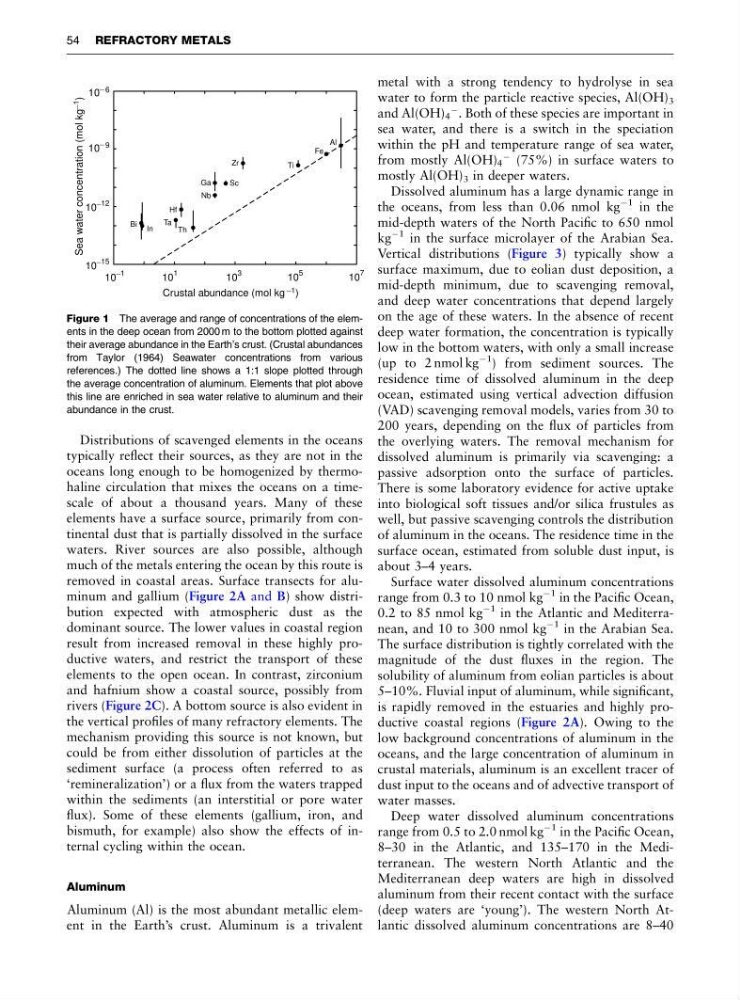
Figure 1 The average and range of concentrations of the elements in the deep ocean from 2000 m to the bottom plotted against
their average abundance in the Earth’s crust. (Crustal abundances
from Taylor (1964) Seawater concentrations from various
references.) The dotted line shows a 1:1 slope plotted through
the average concentration of aluminum. Elements that plot above
this line are enriched in sea water relative to aluminum and their
abundance in the crust.
54 REFRACTORY METALS
typically reflect their sources, as they are not in the
oceans long enough to be homogenized by thermohaline circulation that mixes the oceans on a timescale of about a thousand years. Many of these
elements have a surface source, primarily from continental dust that is partially dissolved in the surface
waters. River sources are also possible, although
much of the metals entering the ocean by this route is
removed in coastal areas. Surface transects for aluminum and gallium (Figure 2A and B) show distribution expected with atmospheric dust as the
dominant source. The lower values in coastal region
result from increased removal in these highly productive waters, and restrict the transport of these
elements to the open ocean. In contrast, zirconium
and hafnium show a coastal source, possibly from
rivers (Figure 2C). A bottom source is also evident in
the vertical profiles of many refractory elements. The
mechanism providing this source is not known, but
could be from either dissolution of particles at the
sediment surface (a process often referred to as
‘remineralization’) or a flux from the waters trapped
within the sediments (an interstitial or pore water
flux). Some of these elements (gallium, iron, and
bismuth, for example) also show the effects of internal cycling within the ocean.
Aluminum
Aluminum (Al) is the most abundant metallic element in the Earth’s crust. Aluminum is a trivalent
metal with a strong tendency to hydrolyse in sea
water to form the particle reactive species, Al(OH) 3
and Al(OH) 4
À . Both of these species are important in
sea water, and there is a switch in the speciation
within the pH and temperature range of sea water,
from mostly Al(OH) 4
À (75%) in surface waters to
mostly Al(OH) 3 in deeper waters.
Dissolved aluminum has a large dynamic range in
the oceans, from less than 0.06 nmol kg
À1 in the
mid-depth waters of the North Pacific to 650 nmol
kg
À1 in the surface microlayer of the Arabian Sea.
Vertical distributions (Figure 3) typically show a
surface maximum, due to eolian dust deposition, a
mid-depth minimum, due to scavenging removal,
and deep water concentrations that depend largely
on the age of these waters. In the absence of recent
deep water formation, the concentration is typically
low in the bottom waters, with only a small increase
(up to 2 nmol kg
À1
) from sediment sources. The
residence time of dissolved aluminum in the deep
ocean, estimated using vertical advection diffusion
(VAD) scavenging removal models, varies from 30 to
200 years, depending on the flux of particles from
the overlying waters. The removal mechanism for
dissolved aluminum is primarily via scavenging: a
passive adsorption onto the surface of particles.
There is some laboratory evidence for active uptake
into biological soft tissues and/or silica frustules as
well, but passive scavenging controls the distribution
of aluminum in the oceans. The residence time in the
surface ocean, estimated from soluble dust input, is
about 3–4 years.
Surface water dissolved aluminum concentrations
range from 0.3 to 10 nmol kg
À1 in the Pacific Ocean,
0.2 to 85 nmol kg
À1 in the Atlantic and Mediterranean, and 10 to 300 nmol kg
À1 in the Arabian Sea.
The surface distribution is tightly correlated with the
magnitude of the dust fluxes in the region. The
solubility of aluminum from eolian particles is about
5–10%. Fluvial input of aluminum, while significant,
is rapidly removed in the estuaries and highly productive coastal regions (Figure 2A). Owing to the
low background concentrations of aluminum in the
oceans, and the large concentration of aluminum in
crustal materials, aluminum is an excellent tracer of
dust input to the oceans and of advective transport of
water masses.
Deep water dissolved aluminum concentrations
range from 0.5 to 2.0 nmol kg
À1 in the Pacific Ocean,
8–30 in the Atlantic, and 135–170 in the Mediterranean. The western North Atlantic and the
Mediterranean deep waters are high in dissolved
aluminum from their recent contact with the surface
(deep waters are ‘young’). The western North Atlantic dissolved aluminum concentrations are 8–40
10
_ 1
10
_ 15
10
_ 12
10
_ 9
10
_ 6
10
1
10
3
10
5
10
7
Crustal abundance (mol kg
_ 1 )
Sea water concentration (mol kg
_
1
)
Bi In
Hf
Ta
Th
Nb
Ga
Sc
Zr
Ti
Fe
Al
Figure 1 The average and range of concentrations of the elements in the deep ocean from 2000 m to the bottom plotted against
their average abundance in the Earth’s crust. (Crustal abundances
from Taylor (1964) Seawater concentrations from various
references.) The dotted line shows a 1:1 slope plotted through
the average concentration of aluminum. Elements that plot above
this line are enriched in sea water relative to aluminum and their
abundance in the crust.
54 REFRACTORY METALS