

through cycles of accretion related to magmatic
output followed by amagmatic periods dominated by
faulting and extension.
Magma Generation
Primary MORB magmas are generated by partial
melting of the upper mantle; believed to be composed of a rock type termed peridotite which is primarily composed of the minerals olivine, pyroxenes
(enstatite and diopside), and minor spinel or garnet.
Beneath ridges, mantle moves upward, in part, due
to convection in the mantle but possibly more in
response to the removal of the lithospheric lid above
it, which is spreading laterally. Melting is affected by
the decompression of hot, buoyant peridotite that
crosses the melting point (solidus curve) for mantle
material as it rises to shallow depths (o100 km),
beneath the ridges. Melting continues as the mantle
rises as long as the temperature of the peridotite remains above the solidus temperature at a given
depth. As the seafloor spreads, basaltic melts formed
in a broad region (10s to 100s of kilometers) beneath
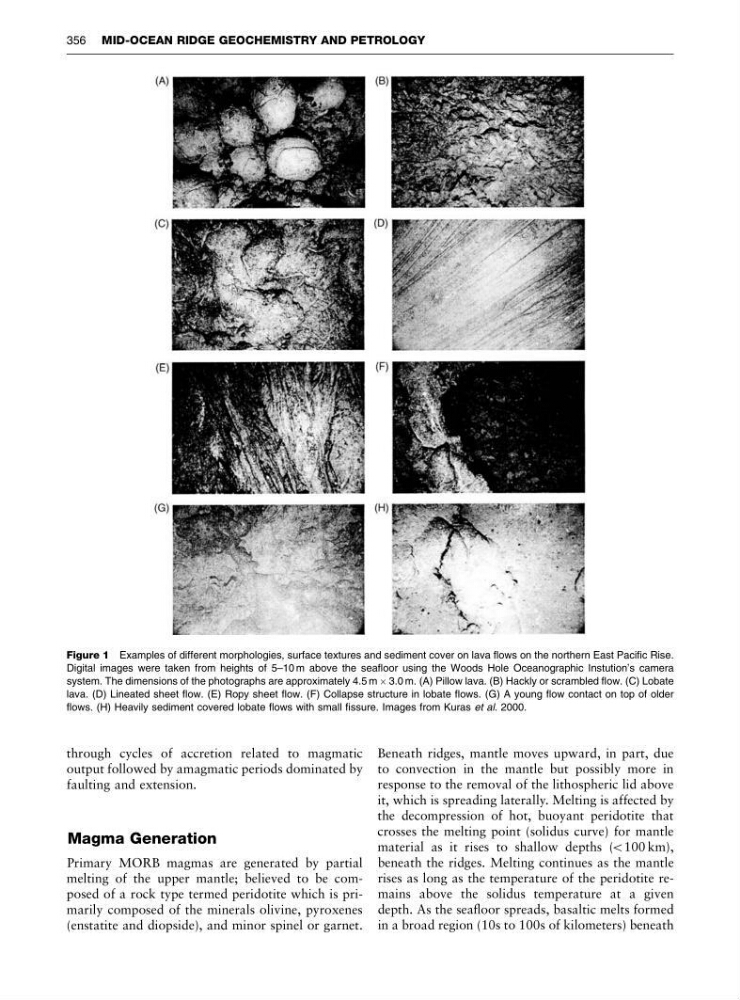
Figure 1 Examples of different morphologies, surface textures and sediment cover on lava flows on the northern East Pacific Rise.
Digital images were taken from heights of 5–10 m above the seafloor using the Woods Hole Oceanographic Instution’s camera
system. The dimensions of the photographs are approximately 4.5 m  3.0 m. (A) Pillow lava. (B) Hackly or scrambled flow. (C) Lobate
lava. (D) Lineated sheet flow. (E) Ropy sheet flow. (F) Collapse structure in lobate flows. (G) A young flow contact on top of older
flows. (H) Heavily sediment covered lobate flows with small fissure. Images from Kuras et al. 2000.
356 MID-OCEAN RIDGE GEOCHEMISTRY AND PETROLOGY
output followed by amagmatic periods dominated by
faulting and extension.
Magma Generation
Primary MORB magmas are generated by partial
melting of the upper mantle; believed to be composed of a rock type termed peridotite which is primarily composed of the minerals olivine, pyroxenes
(enstatite and diopside), and minor spinel or garnet.
Beneath ridges, mantle moves upward, in part, due
to convection in the mantle but possibly more in
response to the removal of the lithospheric lid above
it, which is spreading laterally. Melting is affected by
the decompression of hot, buoyant peridotite that
crosses the melting point (solidus curve) for mantle
material as it rises to shallow depths (o100 km),
beneath the ridges. Melting continues as the mantle
rises as long as the temperature of the peridotite remains above the solidus temperature at a given
depth. As the seafloor spreads, basaltic melts formed
in a broad region (10s to 100s of kilometers) beneath
Figure 1 Examples of different morphologies, surface textures and sediment cover on lava flows on the northern East Pacific Rise.
Digital images were taken from heights of 5–10 m above the seafloor using the Woods Hole Oceanographic Instution’s camera
system. The dimensions of the photographs are approximately 4.5 m  3.0 m. (A) Pillow lava. (B) Hackly or scrambled flow. (C) Lobate
lava. (D) Lineated sheet flow. (E) Ropy sheet flow. (F) Collapse structure in lobate flows. (G) A young flow contact on top of older
flows. (H) Heavily sediment covered lobate flows with small fissure. Images from Kuras et al. 2000.
356 MID-OCEAN RIDGE GEOCHEMISTRY AND PETROLOGY