

In general, contributions from bottom-dwelling organisms (e.g. benthonic foraminifera, ostracods,
micromollusks) are negligible in deep-sea sediments.
Carbonate Distribution and
Dissolution
The distribution of carbonate sediments in the ocean
basins is far from uniform (Figure 2). If it were
possible to drain away all of the ocean’s water, carbonate oozes would be found draped like snow over
the topographic highs of the seafloor and to be
largely absent in the deep basins. The lack of carbonate-rich sediments in the deepest parts of the
world’s oceans has been recognized since the earliest
investigations. Although surface productivity and
dilution by noncarbonate sediment sources can locally influence the concentration of carbonate in
(A)
(B)
Magn
50x
500 m
μ
Magn
6000x
5 m
μ
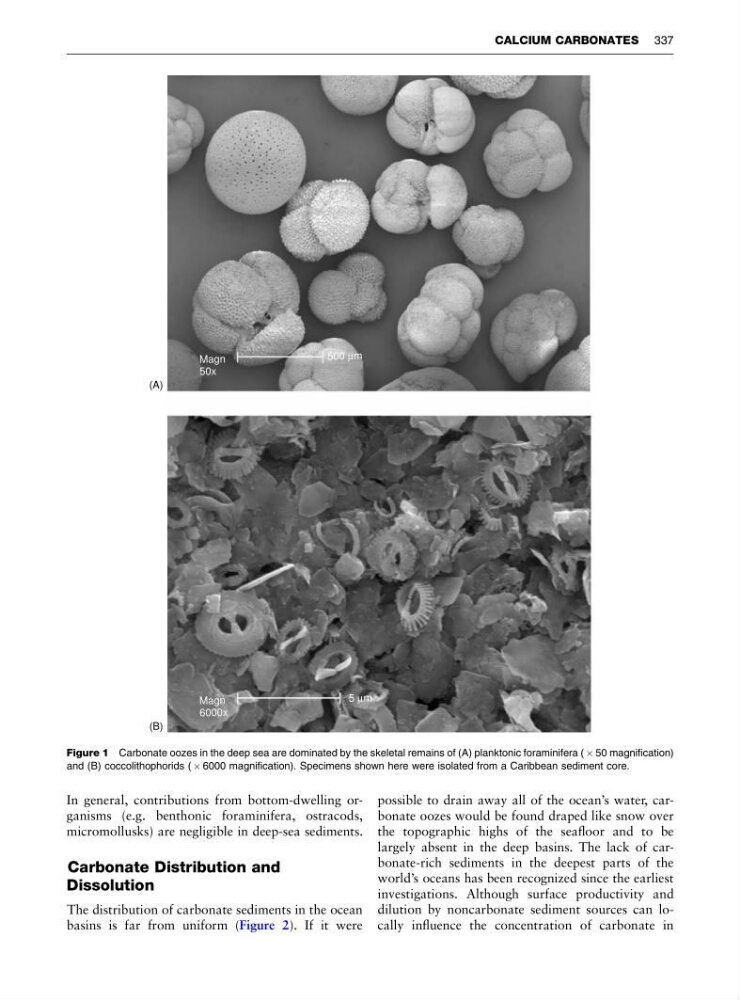
Figure 1 Carbonate oozes in the deep sea are dominated by the skeletal remains of (A) planktonic foraminifera ( Â 50 magnification)
and (B) coccolithophorids ( Â 6000 magnification). Specimens shown here were isolated from a Caribbean sediment core.
CALCIUM CARBONATES 337
micromollusks) are negligible in deep-sea sediments.
Carbonate Distribution and
Dissolution
The distribution of carbonate sediments in the ocean
basins is far from uniform (Figure 2). If it were
possible to drain away all of the ocean’s water, carbonate oozes would be found draped like snow over
the topographic highs of the seafloor and to be
largely absent in the deep basins. The lack of carbonate-rich sediments in the deepest parts of the
world’s oceans has been recognized since the earliest
investigations. Although surface productivity and
dilution by noncarbonate sediment sources can locally influence the concentration of carbonate in
(A)
(B)
Magn
50x
500 m
μ
Magn
6000x
5 m
μ
Figure 1 Carbonate oozes in the deep sea are dominated by the skeletal remains of (A) planktonic foraminifera ( Â 50 magnification)
and (B) coccolithophorids ( Â 6000 magnification). Specimens shown here were isolated from a Caribbean sediment core.
CALCIUM CARBONATES 337