

below 0.5 mg l
À 1 , and the few remaining organisms
are polychaetes of the families Ampharetidae and
Magelonidae and some sipunculans.
While permanent deep-water hypoxia that impinges on 2.3% of the ocean’s continental margin
may be inhospitable to most commercially valuable marine resources, they support the largest,
most continuous reducing ecosystems in the world
oceans. Large filamentous sulfur bacteria, Thioploca
and Beggiatoa, thrive in hypoxic conditions of
0.1 ml l
À 1 . OMZ sediments characteristically support large bacteria, both filamentous sulfur bacteria
and giant spherical sulfur bacteria with diameters of
100–300 mm. The filamentous sulfur bacteria are also
characteristic of severely oxygen depleted waters in
the northern Gulf of Mexico.
Secondary Production
An increase in nutrient availability results in an increase of fisheries yield to a maximal point; then
there are declines in various compartments of the
fishery as further increases in nutrients lead to seasonal hypoxia and permanent anoxia in semienclosed seas. Documenting loss of fisheries related
to the secondary effects of eutrophication, such as
the loss of seabed vegetation and extensive bottom
water oxygen depletion, is complicated by poor
fisheries data, inadequate economic indicators, increase in overharvesting that occurred at the time
that habitat degradation progressed, natural variability of fish populations, shifts in harvestable
populations, and climatic variability.
Eutrophication often leads to the loss of habitat
(rooted vegetation or macroalgae) or low dissolved
oxygen, both of which may lead to loss of fisheries
production. In the deepest bottoms of the Baltic
proper, animals have long been scarce or absent because of low oxygen availability. This area was
20 000 km
2 until the 1940s. Since then, about a third
of the Baltic bottom area has intermittent oxygen
depletion. Lowered oxygen concentrations and increased sedimentation have changed the benthic
fauna in the deeper parts of the Baltic, resulting in an
impoverished diet for bottom fish. Above the halocline in areas not influenced by local pollution,
benthic biomass has increased due mostly to an increase in mollusks. On the other hand, many reports
document instances where local pollution resulting
in severely depressed oxygen levels has greatly
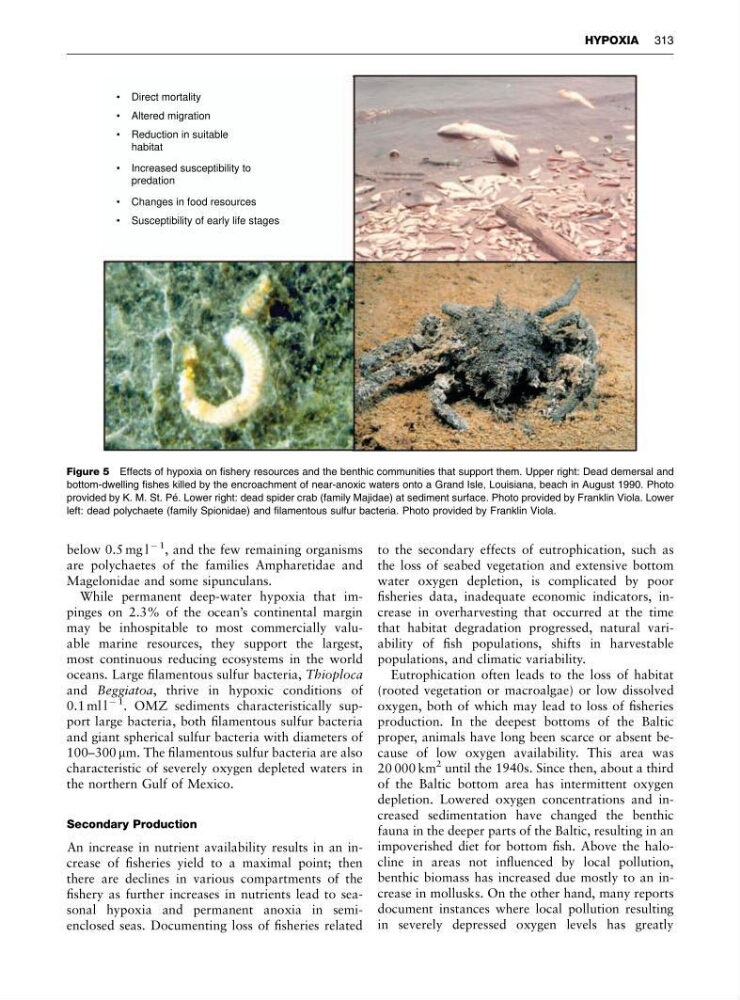
• Direct mortality
• Altered migration
• Reduction in suitable
habitat
• Increased susceptibility to
predation
• Changes in food resources
• Susceptibility of early life stages
Figure 5 Effects of hypoxia on fishery resources and the benthic communities that support them. Upper right: Dead demersal and
bottom-dwelling fishes killed by the encroachment of near-anoxic waters onto a Grand Isle, Louisiana, beach in August 1990. Photo
provided by K. M. St. Pe ´ . Lower right: dead spider crab (family Majidae) at sediment surface. Photo provided by Franklin Viola. Lower
left: dead polychaete (family Spionidae) and filamentous sulfur bacteria. Photo provided by Franklin Viola.
HYPOXIA 313
À 1 , and the few remaining organisms
are polychaetes of the families Ampharetidae and
Magelonidae and some sipunculans.
While permanent deep-water hypoxia that impinges on 2.3% of the ocean’s continental margin
may be inhospitable to most commercially valuable marine resources, they support the largest,
most continuous reducing ecosystems in the world
oceans. Large filamentous sulfur bacteria, Thioploca
and Beggiatoa, thrive in hypoxic conditions of
0.1 ml l
À 1 . OMZ sediments characteristically support large bacteria, both filamentous sulfur bacteria
and giant spherical sulfur bacteria with diameters of
100–300 mm. The filamentous sulfur bacteria are also
characteristic of severely oxygen depleted waters in
the northern Gulf of Mexico.
Secondary Production
An increase in nutrient availability results in an increase of fisheries yield to a maximal point; then
there are declines in various compartments of the
fishery as further increases in nutrients lead to seasonal hypoxia and permanent anoxia in semienclosed seas. Documenting loss of fisheries related
to the secondary effects of eutrophication, such as
the loss of seabed vegetation and extensive bottom
water oxygen depletion, is complicated by poor
fisheries data, inadequate economic indicators, increase in overharvesting that occurred at the time
that habitat degradation progressed, natural variability of fish populations, shifts in harvestable
populations, and climatic variability.
Eutrophication often leads to the loss of habitat
(rooted vegetation or macroalgae) or low dissolved
oxygen, both of which may lead to loss of fisheries
production. In the deepest bottoms of the Baltic
proper, animals have long been scarce or absent because of low oxygen availability. This area was
20 000 km
2 until the 1940s. Since then, about a third
of the Baltic bottom area has intermittent oxygen
depletion. Lowered oxygen concentrations and increased sedimentation have changed the benthic
fauna in the deeper parts of the Baltic, resulting in an
impoverished diet for bottom fish. Above the halocline in areas not influenced by local pollution,
benthic biomass has increased due mostly to an increase in mollusks. On the other hand, many reports
document instances where local pollution resulting
in severely depressed oxygen levels has greatly
• Direct mortality
• Altered migration
• Reduction in suitable
habitat
• Increased susceptibility to
predation
• Changes in food resources
• Susceptibility of early life stages
Figure 5 Effects of hypoxia on fishery resources and the benthic communities that support them. Upper right: Dead demersal and
bottom-dwelling fishes killed by the encroachment of near-anoxic waters onto a Grand Isle, Louisiana, beach in August 1990. Photo
provided by K. M. St. Pe ´ . Lower right: dead spider crab (family Majidae) at sediment surface. Photo provided by Franklin Viola. Lower
left: dead polychaete (family Spionidae) and filamentous sulfur bacteria. Photo provided by Franklin Viola.
HYPOXIA 313