

flux and various radioactive isotopes were created. In
addition corrosion of neutron-activated metal within
the reactor structure contributed to the radioactive contamination of the cooling water. Only a
limited number of these radionuclides reached the
river mouth and only
32
P,
51
Cr,
54
Mn and
65 Zn were
detected regularly in water, sediments and marine
organisms in the near-shore coastal waters of the US
Pacific Northwest.
Reactors operating today all have closed primary
cooling systems that do not allow for this type of
contamination. Therefore, under normal conditions
production of electricity from nuclear reactors does
not create significant amounts of operational discharges of radionuclides. However, the 434 energyproducing nuclear plants of the world in 1998 created radioactive waste in the form of utilized fuel.
Utilized fuel is either stored or reprocessed.
Only 4–5% of the utilized nuclear fuel worldwide
is reprocessed. Commercial, nonmilitary, reprocessing of nuclear fuel takes place in France, Japan, India
and the United Kingdom. Other reprocessing plants
defined as defense-related are in operation and producing waste but without discharges. For example in
the USA, at the Savannah River Plant and the Hanford complex, about 83 000 m
3 and 190 000 m
3
, respectively, of high-level liquid waste was in storage in
1985.
Reprocessing plants and the nuclear industry in
the former Soviet Union have discharged to the Ob
and Yenisey river systems ending up in the Arctic
ocean. In 1950–51 about 77 Â 10
6 m
3 liquid waste of
100 PBq was discharged to the River Techa. The
Techa River is connected to the River Ob as is the
Tomsk River where the Tomsk-7, a major production
site for nuclear weapons plutonium, is situated.
Other nuclear plants, such as the Krasnoyarsk industrial complex, have discharged to the Yenisey
river. Large amounts of radioactive waste are also
stored at the sites.
Radioactive waste stored close to rivers has the
potential of contaminating the oceans should an accident happen to the various storage facilities.
The commercial reprocessing plants in France at
Cap de la Hague and in the UK at Sellafield have for
many years, and still do, contributed to the radioactive contamination of the marine environment.
They both discharge low-level liquid radioactive
effluents to the sea. Most important, however,
these discharges and their behavior in the marine
environment have been and are still thoroughly
studied and the results are published in the open
literature. The importance of these discharges is
extensive as radionuclides from Sellafield and la
Hague are traced throughout the whole North
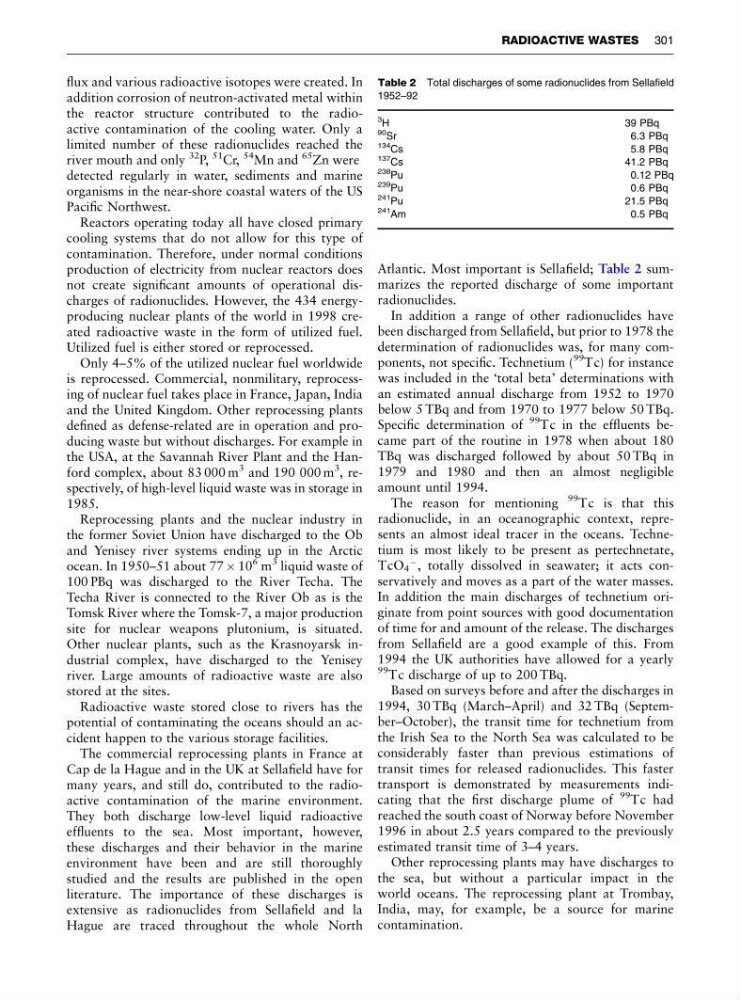
Atlantic. Most important is Sellafield; Table 2 summarizes the reported discharge of some important
radionuclides.
In addition a range of other radionuclides have
been discharged from Sellafield, but prior to 1978 the
determination of radionuclides was, for many components, not specific. Technetium (
99 Tc) for instance
was included in the ‘total beta’ determinations with
an estimated annual discharge from 1952 to 1970
below 5 TBq and from 1970 to 1977 below 50 TBq.
Specific determination of
99 Tc in the effluents became part of the routine in 1978 when about 180
TBq was discharged followed by about 50 TBq in
1979 and 1980 and then an almost negligible
amount until 1994.
The reason for mentioning
99 Tc is that this
radionuclide, in an oceanographic context, represents an almost ideal tracer in the oceans. Technetium is most likely to be present as pertechnetate,
TcO 4
À , totally dissolved in seawater; it acts conservatively and moves as a part of the water masses.
In addition the main discharges of technetium originate from point sources with good documentation
of time for and amount of the release. The discharges
from Sellafield are a good example of this. From
1994 the UK authorities have allowed for a yearly
99 Tc discharge of up to 200 TBq.
Based on surveys before and after the discharges in
1994, 30 TBq (March–April) and 32 TBq (September–October), the transit time for technetium from
the Irish Sea to the North Sea was calculated to be
considerably faster than previous estimations of
transit times for released radionuclides. This faster
transport is demonstrated by measurements indicating that the first discharge plume of
99
Tc had
reached the south coast of Norway before November
1996 in about 2.5 years compared to the previously
estimated transit time of 3–4 years.
Other reprocessing plants may have discharges to
the sea, but without a particular impact in the
world oceans. The reprocessing plant at Trombay,
India, may, for example, be a source for marine
contamination.
Table 2 Total discharges of some radionuclides from Sellafield
1952–92
3 H
39 PBq
90 Sr
6.3 PBq
134 Cs
5.8 PBq
137 Cs
41.2 PBq
238 Pu
0.12 PBq
239 Pu
0.6 PBq
241 Pu
21.5 PBq
241 Am
0.5 PBq
RADIOACTIVE WASTES 301
addition corrosion of neutron-activated metal within
the reactor structure contributed to the radioactive contamination of the cooling water. Only a
limited number of these radionuclides reached the
river mouth and only
32
P,
51
Cr,
54
Mn and
65 Zn were
detected regularly in water, sediments and marine
organisms in the near-shore coastal waters of the US
Pacific Northwest.
Reactors operating today all have closed primary
cooling systems that do not allow for this type of
contamination. Therefore, under normal conditions
production of electricity from nuclear reactors does
not create significant amounts of operational discharges of radionuclides. However, the 434 energyproducing nuclear plants of the world in 1998 created radioactive waste in the form of utilized fuel.
Utilized fuel is either stored or reprocessed.
Only 4–5% of the utilized nuclear fuel worldwide
is reprocessed. Commercial, nonmilitary, reprocessing of nuclear fuel takes place in France, Japan, India
and the United Kingdom. Other reprocessing plants
defined as defense-related are in operation and producing waste but without discharges. For example in
the USA, at the Savannah River Plant and the Hanford complex, about 83 000 m
3 and 190 000 m
3
, respectively, of high-level liquid waste was in storage in
1985.
Reprocessing plants and the nuclear industry in
the former Soviet Union have discharged to the Ob
and Yenisey river systems ending up in the Arctic
ocean. In 1950–51 about 77 Â 10
6 m
3 liquid waste of
100 PBq was discharged to the River Techa. The
Techa River is connected to the River Ob as is the
Tomsk River where the Tomsk-7, a major production
site for nuclear weapons plutonium, is situated.
Other nuclear plants, such as the Krasnoyarsk industrial complex, have discharged to the Yenisey
river. Large amounts of radioactive waste are also
stored at the sites.
Radioactive waste stored close to rivers has the
potential of contaminating the oceans should an accident happen to the various storage facilities.
The commercial reprocessing plants in France at
Cap de la Hague and in the UK at Sellafield have for
many years, and still do, contributed to the radioactive contamination of the marine environment.
They both discharge low-level liquid radioactive
effluents to the sea. Most important, however,
these discharges and their behavior in the marine
environment have been and are still thoroughly
studied and the results are published in the open
literature. The importance of these discharges is
extensive as radionuclides from Sellafield and la
Hague are traced throughout the whole North
Atlantic. Most important is Sellafield; Table 2 summarizes the reported discharge of some important
radionuclides.
In addition a range of other radionuclides have
been discharged from Sellafield, but prior to 1978 the
determination of radionuclides was, for many components, not specific. Technetium (
99 Tc) for instance
was included in the ‘total beta’ determinations with
an estimated annual discharge from 1952 to 1970
below 5 TBq and from 1970 to 1977 below 50 TBq.
Specific determination of
99 Tc in the effluents became part of the routine in 1978 when about 180
TBq was discharged followed by about 50 TBq in
1979 and 1980 and then an almost negligible
amount until 1994.
The reason for mentioning
99 Tc is that this
radionuclide, in an oceanographic context, represents an almost ideal tracer in the oceans. Technetium is most likely to be present as pertechnetate,
TcO 4
À , totally dissolved in seawater; it acts conservatively and moves as a part of the water masses.
In addition the main discharges of technetium originate from point sources with good documentation
of time for and amount of the release. The discharges
from Sellafield are a good example of this. From
1994 the UK authorities have allowed for a yearly
99 Tc discharge of up to 200 TBq.
Based on surveys before and after the discharges in
1994, 30 TBq (March–April) and 32 TBq (September–October), the transit time for technetium from
the Irish Sea to the North Sea was calculated to be
considerably faster than previous estimations of
transit times for released radionuclides. This faster
transport is demonstrated by measurements indicating that the first discharge plume of
99
Tc had
reached the south coast of Norway before November
1996 in about 2.5 years compared to the previously
estimated transit time of 3–4 years.
Other reprocessing plants may have discharges to
the sea, but without a particular impact in the
world oceans. The reprocessing plant at Trombay,
India, may, for example, be a source for marine
contamination.
Table 2 Total discharges of some radionuclides from Sellafield
1952–92
3 H
39 PBq
90 Sr
6.3 PBq
134 Cs
5.8 PBq
137 Cs
41.2 PBq
238 Pu
0.12 PBq
239 Pu
0.6 PBq
241 Pu
21.5 PBq
241 Am
0.5 PBq
RADIOACTIVE WASTES 301