

uncertainties in the reconstructed pre-1979 atmospheric histories depend on the atmospheric lifetimes
of the compounds. The range of lifetimes for the
compounds are 29–76 years for CFC-11, 77–185
years for CFC-12, 54–143 years for CFC-113, and
21–43 years for CC1 4 . The uncertainties are a few
percent, and they are highest for the early period.
The continuous direct atmospheric measurements,
which began in the late 1970s, are uncertain to
within 1–2%. It is important to evaluate the uncertainties in the atmospheric source function, because they translate into uncertainties when used to
put timescales on ocean processes. Because of their
long atmospheric residence times, the CFCs are
homogeneously distributed in the Northern and
Southern Hemisphere, with the Northern Hemisphere about 8% higher than the Southern
Hemisphere.
CFCs in the Oceans
Analytical Techniques
Water samples collected from the ocean are measured for CFCs and CCl 4 using an electron capture
detection gas chromatography system. Analysis of
water samples is done onboard ship, usually within
hours of collection. The unit of measure is pmol kg
À1
or 10
À12 moles kg
À1
. These are extremely low level
concentrations that are easily susceptible to
contamination from shipboard refrigerants, solvents,
lubricants, etc.
Chemical Stability
Under oxygenated oceanic conditions both CFC-11
and CFC-12 are believed to be chemically stable.
CFC-11 has been shown to be unstable in anoxic
marine waters; both CFC-11 and CFC-12 have been
shown to be unstable in anoxic sediments. The
compound CCl 4 undergoes temperature-dependent
hydrolysis, which limits its usefulness in the ocean
when sea surface temperatures exceed B181C. CFC113 also has some stability problems at higher
temperatures.
Gas Flux and Solubility
The CFCs are gases, and like other gases they get
into the ocean via air–sea exchange. There is a direct
correlation between gas exchange rate and wind
speed, and the direction of the gas flux between the
air and ocean is from high to low concentration. For
CFCs the atmospheric concentrations generally exceed those in the ocean. The concentration of CFCs
dissolved in the surface layer of the oceans is
dependent upon the solubility, atmospheric concentration, and other physical factors affecting the gas
saturation including upwelling, entrainment due to
mixing, ice cover, etc. The solubility of CFCs and
CCl 4 has been measured in the laboratory. The
1900
1920
1940
1960
1980
2000
0
100
200
300
400
500
CFC-11
CFC-12
CCI
CFC-113
4
Year
(ppt)
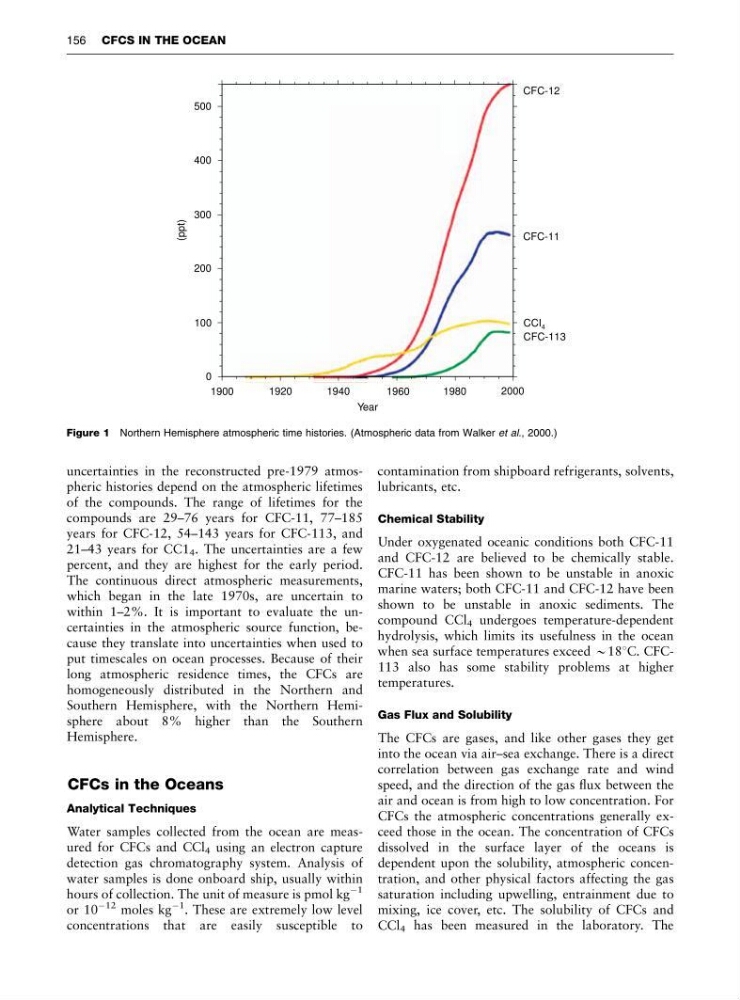
Figure 1 Northern Hemisphere atmospheric time histories. (Atmospheric data from Walker et al., 2000.)
156 CFCS IN THE OCEAN
of the compounds. The range of lifetimes for the
compounds are 29–76 years for CFC-11, 77–185
years for CFC-12, 54–143 years for CFC-113, and
21–43 years for CC1 4 . The uncertainties are a few
percent, and they are highest for the early period.
The continuous direct atmospheric measurements,
which began in the late 1970s, are uncertain to
within 1–2%. It is important to evaluate the uncertainties in the atmospheric source function, because they translate into uncertainties when used to
put timescales on ocean processes. Because of their
long atmospheric residence times, the CFCs are
homogeneously distributed in the Northern and
Southern Hemisphere, with the Northern Hemisphere about 8% higher than the Southern
Hemisphere.
CFCs in the Oceans
Analytical Techniques
Water samples collected from the ocean are measured for CFCs and CCl 4 using an electron capture
detection gas chromatography system. Analysis of
water samples is done onboard ship, usually within
hours of collection. The unit of measure is pmol kg
À1
or 10
À12 moles kg
À1
. These are extremely low level
concentrations that are easily susceptible to
contamination from shipboard refrigerants, solvents,
lubricants, etc.
Chemical Stability
Under oxygenated oceanic conditions both CFC-11
and CFC-12 are believed to be chemically stable.
CFC-11 has been shown to be unstable in anoxic
marine waters; both CFC-11 and CFC-12 have been
shown to be unstable in anoxic sediments. The
compound CCl 4 undergoes temperature-dependent
hydrolysis, which limits its usefulness in the ocean
when sea surface temperatures exceed B181C. CFC113 also has some stability problems at higher
temperatures.
Gas Flux and Solubility
The CFCs are gases, and like other gases they get
into the ocean via air–sea exchange. There is a direct
correlation between gas exchange rate and wind
speed, and the direction of the gas flux between the
air and ocean is from high to low concentration. For
CFCs the atmospheric concentrations generally exceed those in the ocean. The concentration of CFCs
dissolved in the surface layer of the oceans is
dependent upon the solubility, atmospheric concentration, and other physical factors affecting the gas
saturation including upwelling, entrainment due to
mixing, ice cover, etc. The solubility of CFCs and
CCl 4 has been measured in the laboratory. The
1900
1920
1940
1960
1980
2000
0
100
200
300
400
500
CFC-11
CFC-12
CCI
CFC-113
4
Year
(ppt)
Figure 1 Northern Hemisphere atmospheric time histories. (Atmospheric data from Walker et al., 2000.)
156 CFCS IN THE OCEAN