

Morita, 1978 ; Tabor et al., 1982). Extreme psychrophiles which failed to grow at temperatures in excess of 10°C are known from the deep Norwegian Sea (Norkrans and Stehn,
1978) and from Antarctic waters (Baross and Morita, 1978). Yayanos and Dietz (1982)
reported the inactivation of a barophilic deep-sea bacterium from the central North
Pacific ocean after exposures to temperatures between 10 and 32°C. Thus, the incubation
temperature of 20°C, originally thought to allow the isolation of both mesophilic and
psychrophilic bacteria (Harder and Veldkamp, 1968 ; Bensoussan et al., 1979), inhibits the
growth of autochthonous deep-sea bacteria having lower maximum growth temperatures. Besides 20°C, we therefore applied a second incubation temperature of 2°C for
quantitative estimations and isolations of psychrophilic and mesophilic sediment bacteria
in the upwelling area off West-Africa (Rüger, 1982) and in the deep-sea of the eastern
equatorial Atlantic.
MATERIALS AND METHODS
Viable counts of psychrophilic and mesophilic sediment bacteria have been determined in
the upwelling area off NW- Africa and in the deep-sea of the eastern equatorial Atlantic by
using the spread plate method. The nutrient agar consisted of peptone, 1.5 g, yeast
extract, 0.3 g, FePO
4
.4H
2
O,0.01 g, agar, 15.0 g, seawater, 750 ml, and distilled water, 250
ml ; pH 7.6. Serial dilutions of sediment from the topmost layer (0 - 2 cm) were prepared
with 75 % seawater. The agar plates and seawater solutions were chilled to 4°C before use.
Immediately after recovery of the box corer or van Veen grab, the spread plate cultures
were prepared. A cold tray was used to ensure that the sample and agar plate temperatures
did not exceed 4°C during the inoculation procedures. Four plates per dilution were
incubated for 12 and 4 weeks at 2°C and 20°C, respectively. The positions of sampling
stations at the 60 th and 65 th cruises of RV “Meteor” in 1982 and 1983 are given in Fig.
1-4. Bacterial strains were isolated from both the 2°C and 20°C plates. The Gram
reactions of the strains were determined with the nonstaining KOH method described by
Buck (1982). The optimal and maximal growth temperatures of the 2°C isolates were
determined by incubation at 4, 12, 18 and 24°C. Growth was recorded after 3,7 and 14
days of incubation in a nutrient broth, having the same constituents as the nutrient agar.
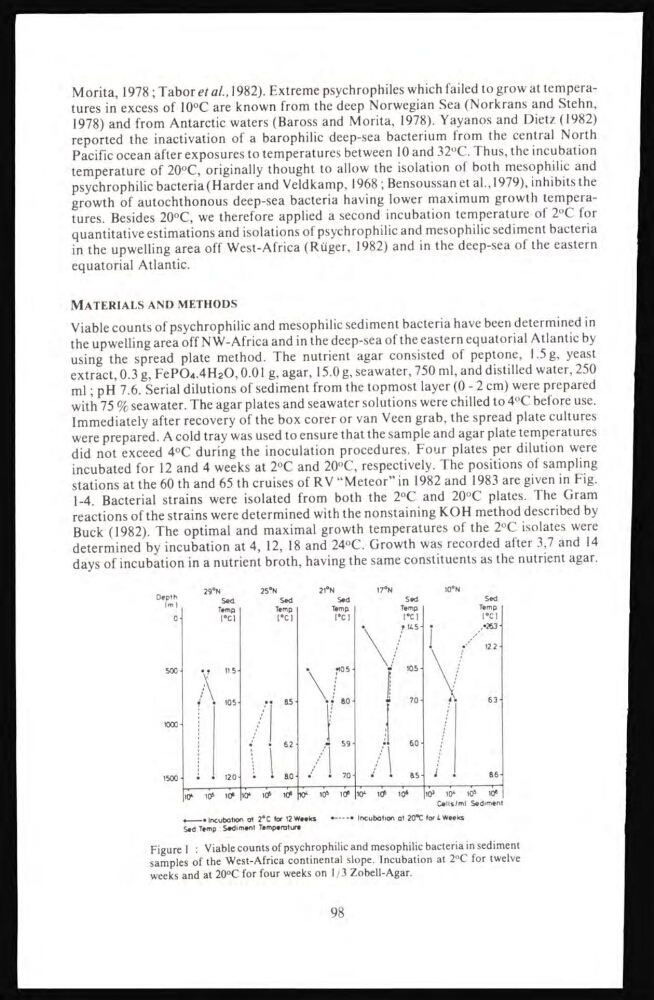
Figure 1 : Viable counts of psychrophilic and mesophilic bacteria in sediment
samples of the West-Africa continental slope. Incubation at 2°C for twelve
weeks and at 20°C for four weeks on 1/3 Zobell-Agar.
98
1978) and from Antarctic waters (Baross and Morita, 1978). Yayanos and Dietz (1982)
reported the inactivation of a barophilic deep-sea bacterium from the central North
Pacific ocean after exposures to temperatures between 10 and 32°C. Thus, the incubation
temperature of 20°C, originally thought to allow the isolation of both mesophilic and
psychrophilic bacteria (Harder and Veldkamp, 1968 ; Bensoussan et al., 1979), inhibits the
growth of autochthonous deep-sea bacteria having lower maximum growth temperatures. Besides 20°C, we therefore applied a second incubation temperature of 2°C for
quantitative estimations and isolations of psychrophilic and mesophilic sediment bacteria
in the upwelling area off West-Africa (Rüger, 1982) and in the deep-sea of the eastern
equatorial Atlantic.
MATERIALS AND METHODS
Viable counts of psychrophilic and mesophilic sediment bacteria have been determined in
the upwelling area off NW- Africa and in the deep-sea of the eastern equatorial Atlantic by
using the spread plate method. The nutrient agar consisted of peptone, 1.5 g, yeast
extract, 0.3 g, FePO
4
.4H
2
O,0.01 g, agar, 15.0 g, seawater, 750 ml, and distilled water, 250
ml ; pH 7.6. Serial dilutions of sediment from the topmost layer (0 - 2 cm) were prepared
with 75 % seawater. The agar plates and seawater solutions were chilled to 4°C before use.
Immediately after recovery of the box corer or van Veen grab, the spread plate cultures
were prepared. A cold tray was used to ensure that the sample and agar plate temperatures
did not exceed 4°C during the inoculation procedures. Four plates per dilution were
incubated for 12 and 4 weeks at 2°C and 20°C, respectively. The positions of sampling
stations at the 60 th and 65 th cruises of RV “Meteor” in 1982 and 1983 are given in Fig.
1-4. Bacterial strains were isolated from both the 2°C and 20°C plates. The Gram
reactions of the strains were determined with the nonstaining KOH method described by
Buck (1982). The optimal and maximal growth temperatures of the 2°C isolates were
determined by incubation at 4, 12, 18 and 24°C. Growth was recorded after 3,7 and 14
days of incubation in a nutrient broth, having the same constituents as the nutrient agar.
Figure 1 : Viable counts of psychrophilic and mesophilic bacteria in sediment
samples of the West-Africa continental slope. Incubation at 2°C for twelve
weeks and at 20°C for four weeks on 1/3 Zobell-Agar.
98