

30
30
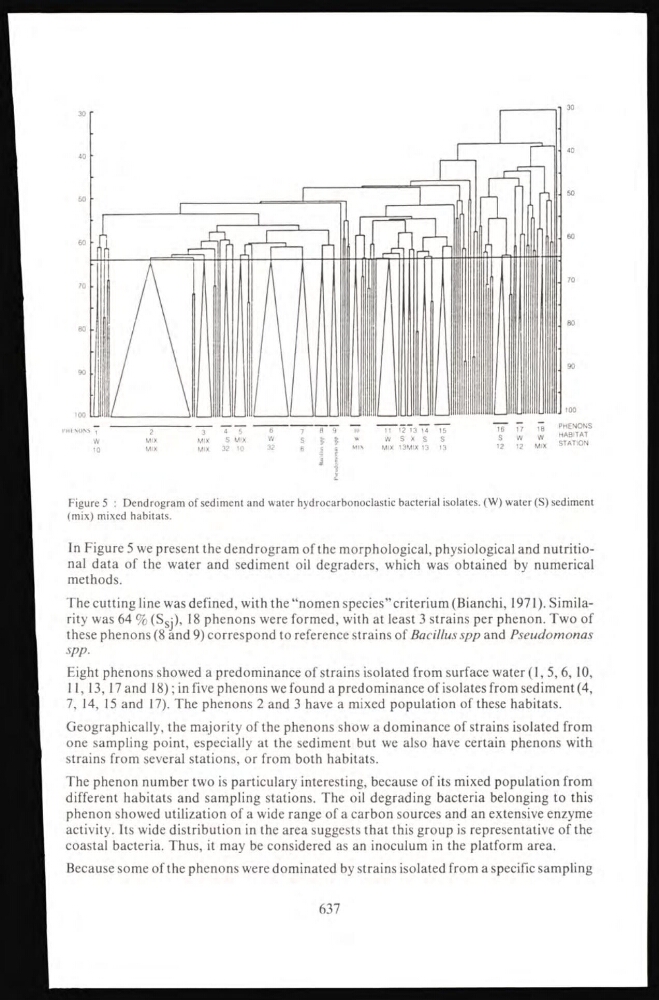
Figure 5 : Dendrogram of sediment and water hydrocarbonoclastic bacterial isolates. (W) water (S) sediment
(mix) mixed habitats.
In Figure 5 we present the dendrogram of the morphological, physiological and nutritional data of the water and sediment oil degraders, which was obtained by numerical
methods.
The cutting line was defined, with the “nomen species”critérium (Bianchi, 1971). Similarity was 64 % (S sj ), 18 phenons were formed, with at least 3 strains per phenon. Two of
these phenons (8 and 9) correspond to reference strains of Bacillus spp and Pseudomonas
spp.
Eight phenons showed a predominance of strains isolated from surface water (1, 5, 6,10,
11,13,17 and 18) ; in five phenons we found a predominance of isolates from sediment (4,
7, 14, 15 and 17). The phenons 2 and 3 have a mixed population of these habitats.
Geographically, the majority of the phenons show a dominance of strains isolated from
one sampling point, especially at the sediment but we also have certain phenons with
strains from several stations, or from both habitats.
The phenon number two is particulary interesting, because of its mixed population from
different habitats and sampling stations. The oil degrading bacteria belonging to this
phenon showed utilization of a wide range of a carbon sources and an extensive enzyme
activity. Its wide distribution in the area suggests that this group is representative of the
coastal bacteria. Thus, it may be considered as an inoculum in the platform area.
Because some of the phenons were dominated by strains isolated from a specific sampling
637