

River
Sampling site
Number of bacteria (MPN 100 cm' 3 x 10 2 )
At 0 %
At 35 %
FRESHWATER
Ribble
Tickled Trout
680
150
Wyre
Garstang
430
430
Lune
Halton
590
511
Bela
Milnthorpe
2400
1950
Kent
LevensBridge
1415
34
Leven
Haverth waite
34
24
Gipping
Bramford
540
93
ESTUARINE
Lune
GlassonDock
670
670
Orwell
Pin Mill
580
150
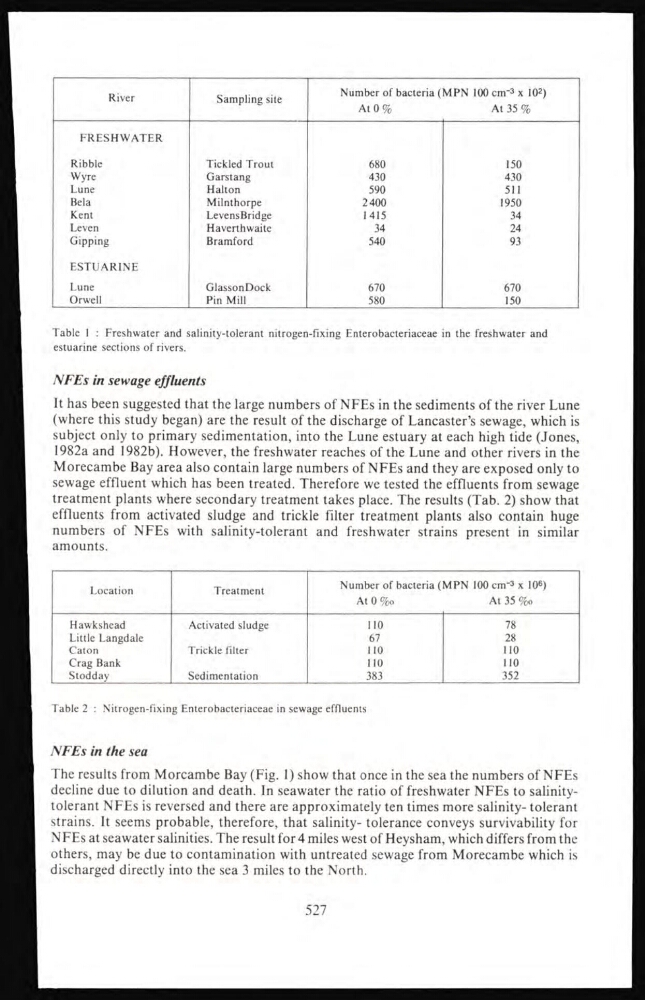
Table 1 : Freshwater and salinity-tolerant nitrogen-fixing Enterobacteriaceae in the freshwater and
estuarine sections of rivers.
NFEs in sewage effluents
It has been suggested that the large numbers of NFEs in the sediments of the river Lune
(where this study began) are the result of the discharge of Lancaster’s sewage, which is
subject only to primary sedimentation, into the Lune estuary at each high tide (Jones,
1982a and 1982b). However, the freshwater reaches of the Lune and other rivers in the
Morecambe Bay area also contain large numbers of NFEs and they are exposed only to
sewage effluent which has been treated. Therefore we tested the effluents from sewage
treatment plants where secondary treatment takes place. The results (Tab. 2) show that
effluents from activated sludge and trickle filter treatment plants also contain huge
numbers of NFEs with salinity-tolerant and freshwater strains present in similar
amounts.
Location
Treatment
Number of bacteria (MPN 100 cm' 3 x 10 6 )
At 0 %o
At 35 %o
Hawkshead
Activated sludge
110
78
Little Langdale
67
28
Caton
Trickle filter
110
110
Crag Bank
110
110
Stodday
Sedimentation
383
352
Table 2 : Nitrogen-fixing Enterobacteriaceae in sewage effluents
NFEs in the sea
The results from Morcambe Bay (Fig. 1) show that once in the sea the numbers of NFEs
decline due to dilution and death. In seawater the ratio of freshwater NFEs to salinitytolerant NFEs is reversed and there are approximately ten times more salinity- tolerant
strains. It seems probable, therefore, that salinity- tolerance conveys survivability for
NFEs at seawater salinities. The result for 4 miles west of Heysham, which differs from the
others, may be due to contamination with untreated sewage from Morecambe which is
discharged directly into the sea 3 miles to the North.
527
Sampling site
Number of bacteria (MPN 100 cm' 3 x 10 2 )
At 0 %
At 35 %
FRESHWATER
Ribble
Tickled Trout
680
150
Wyre
Garstang
430
430
Lune
Halton
590
511
Bela
Milnthorpe
2400
1950
Kent
LevensBridge
1415
34
Leven
Haverth waite
34
24
Gipping
Bramford
540
93
ESTUARINE
Lune
GlassonDock
670
670
Orwell
Pin Mill
580
150
Table 1 : Freshwater and salinity-tolerant nitrogen-fixing Enterobacteriaceae in the freshwater and
estuarine sections of rivers.
NFEs in sewage effluents
It has been suggested that the large numbers of NFEs in the sediments of the river Lune
(where this study began) are the result of the discharge of Lancaster’s sewage, which is
subject only to primary sedimentation, into the Lune estuary at each high tide (Jones,
1982a and 1982b). However, the freshwater reaches of the Lune and other rivers in the
Morecambe Bay area also contain large numbers of NFEs and they are exposed only to
sewage effluent which has been treated. Therefore we tested the effluents from sewage
treatment plants where secondary treatment takes place. The results (Tab. 2) show that
effluents from activated sludge and trickle filter treatment plants also contain huge
numbers of NFEs with salinity-tolerant and freshwater strains present in similar
amounts.
Location
Treatment
Number of bacteria (MPN 100 cm' 3 x 10 6 )
At 0 %o
At 35 %o
Hawkshead
Activated sludge
110
78
Little Langdale
67
28
Caton
Trickle filter
110
110
Crag Bank
110
110
Stodday
Sedimentation
383
352
Table 2 : Nitrogen-fixing Enterobacteriaceae in sewage effluents
NFEs in the sea
The results from Morcambe Bay (Fig. 1) show that once in the sea the numbers of NFEs
decline due to dilution and death. In seawater the ratio of freshwater NFEs to salinitytolerant NFEs is reversed and there are approximately ten times more salinity- tolerant
strains. It seems probable, therefore, that salinity- tolerance conveys survivability for
NFEs at seawater salinities. The result for 4 miles west of Heysham, which differs from the
others, may be due to contamination with untreated sewage from Morecambe which is
discharged directly into the sea 3 miles to the North.
527